“Take that uniform off, Rebecca. You haven’t earned it.”
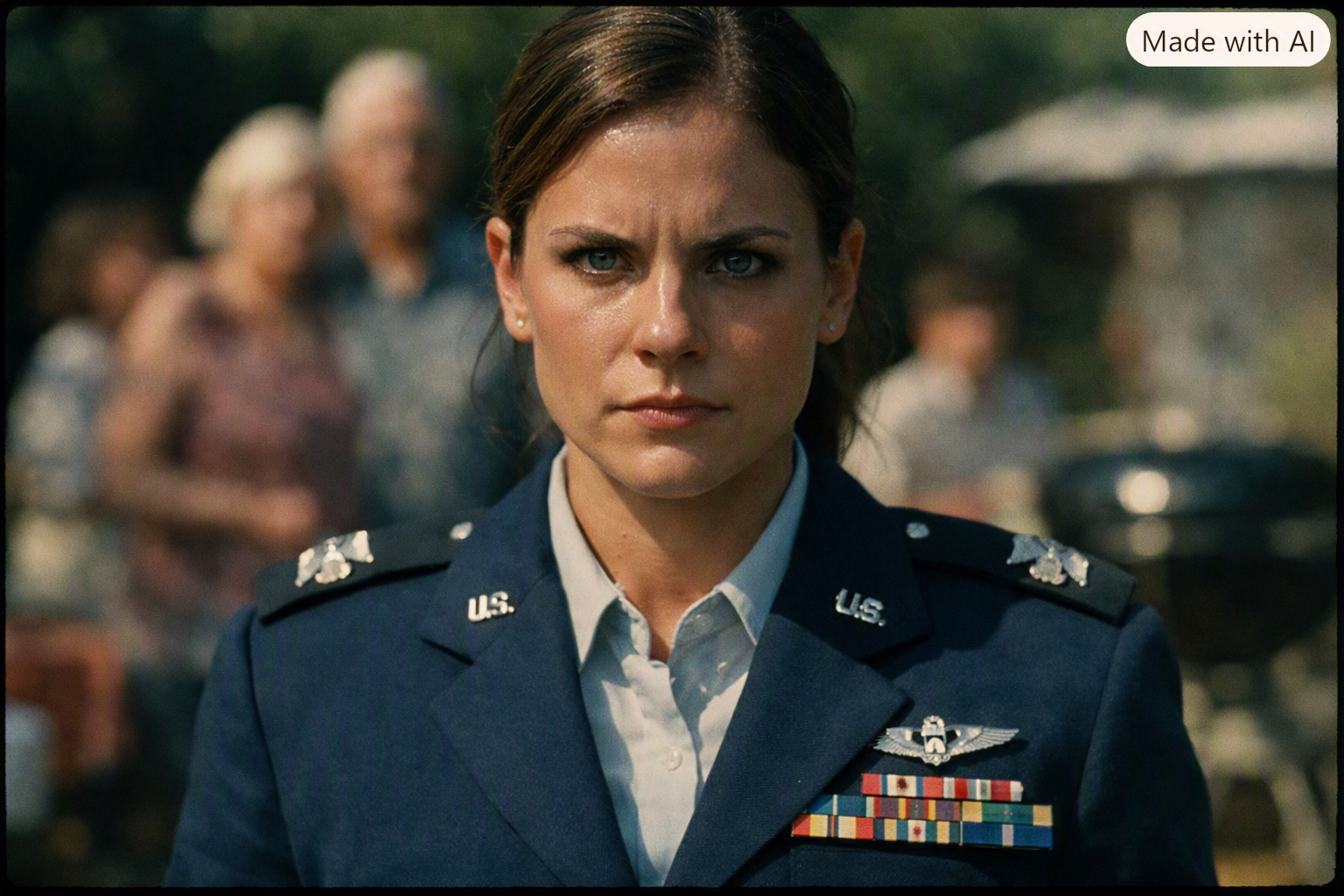
My father’s voice cut clean through the Georgia heat. I was thirty-six years old. Silver Colonel’s eagles sat on my shoulders. Rows of ribbons above my heart. Every single one earned in the dark.
I had driven straight from Fort Liberty with no time to change. I had a classified briefing at 0700 the next morning. I hadn’t thought the uniform would be a problem.
I was wrong.
Tyler’s backyard cookout was everything I expected — country music, smoke from the grill, twenty relatives pretending not to watch. A banner between two pine trees read: CONGRATS, TYLER. My brother had landed a new contracting job. To my father, that was a conquest worth celebrating.
To my father, Tyler could do no wrong.
To my father, I had never done anything right.
He crossed the yard with a beer in one hand and tongs in the other, boots grinding against the lawn. Conversations dropped dead. My mother froze beside the potato salad and looked away. She had spent forty years looking away.
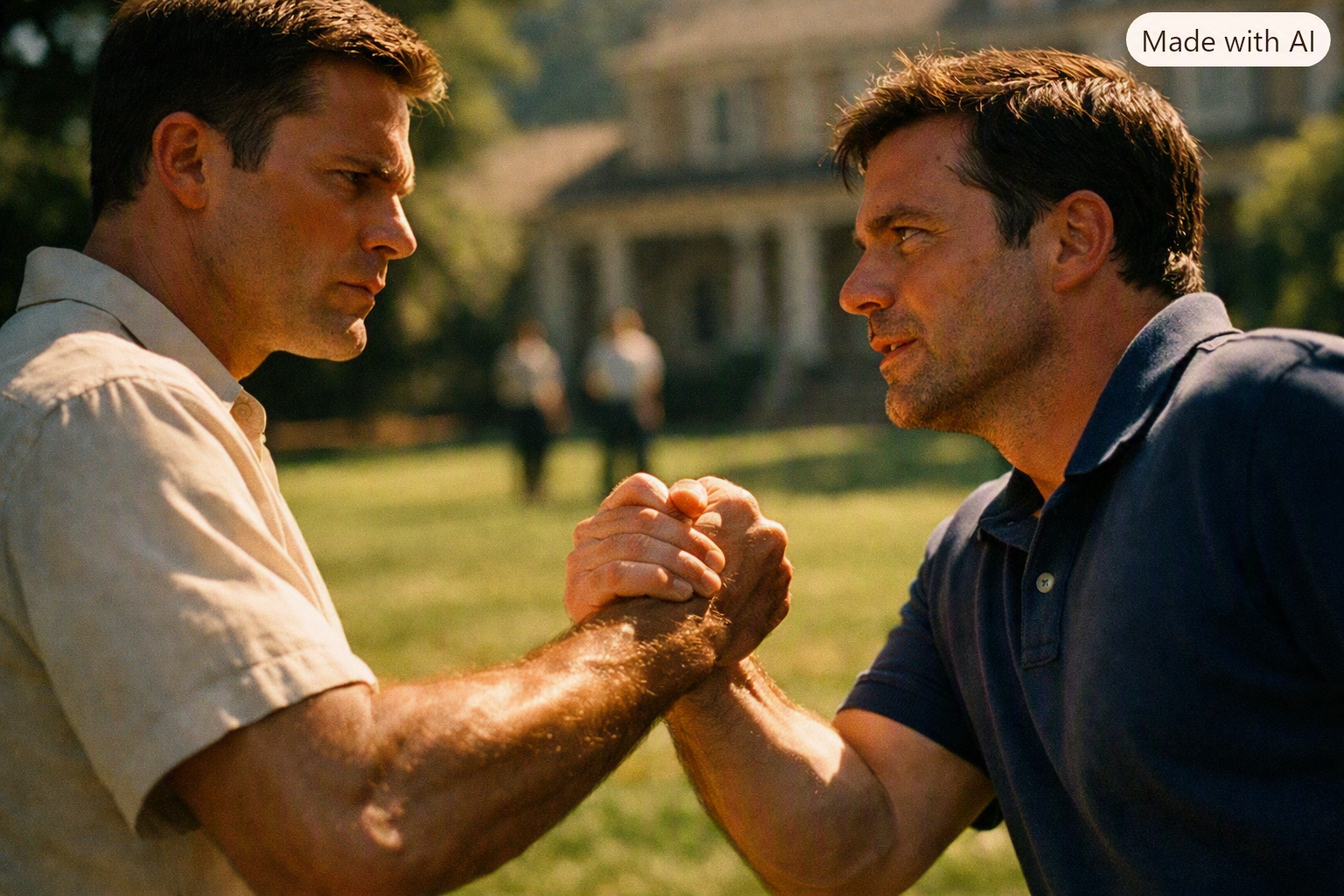
He stopped two feet in front of me and looked me over with a contempt I had known since childhood.
“Take that uniform off,” he said again, loud enough for everyone. “You haven’t earned it.”
The yard went completely silent.
He kept going. Said I’d spent my life playing soldier. Said real fighters were men. Said the Army had gone soft if it was handing out rank to people like me. Then he turned to Tyler, almost as an afterthought, and said Tyler’s work was more honest than anything I’d ever done.
I stood still. Stillness was how I had survived him as a child, and it still worked.
I was already shifting my weight to leave when a voice came from the porch.
“No.”
My Uncle Grant stepped out of the shadow of the awning. He said it quietly — just that one word — but it landed like a door slamming shut.
“She absolutely does not.”
Grant was a retired Green Beret. When he walked into a room, people adjusted their posture. My father stiffened. Crossed his arms. Stared at his older brother with open disbelief.
“Then explain it,” Dad snapped.
Grant didn’t answer immediately. I watched the conflict move across his face — the soldier’s instinct to protect classified information fighting against the instinct to defend his niece. His jaw clenched hard.
“You remember that hostage extraction in Syria?” he finally said. “Eight years ago.”
Dad frowned. “The diplomats?”
“The operation that brought those Americans home alive.”
“I saw it on the news.” Dad’s voice was impatient. He hated losing the room.
Grant raised his arm and pointed directly at me. “She planned it.”
The yard tilted. Tyler blinked like he was looking at a stranger. My mother pressed both hands over her mouth. My father laughed — actually laughed — because denial was easier than the alternative.
“That’s ridiculous,” he said.
Grant’s voice stayed level and absolute. “Most of it is classified. But enough went public afterward that I can say this: half the people you spent your life admiring know your daughter’s name.”
I looked away. I stared at the wooden fence. Not from shame — I hated this part. The sudden attention. The way people instantly built a myth out of something that was mostly exhaustion and impossible decisions in the dark.
Then Grant stepped closer to me. His eyes moved to my left sleeve, to the subdued patch stitched there. I watched the color leave his face.
He leaned in. His voice dropped to barely a whisper.
“Viper?”
That one word dropped into the silence like a stone into still water.
My father’s face went from contempt to confusion to something close to fear. He didn’t know what the word meant. That made it worse.
“What the hell is Viper?” he demanded. His voice cracked.
Grant lowered his arm slowly. His body stayed tense. Mine did too. That callsign was buried inside black-ink operations. It was never supposed to be spoken aloud in a backyard in Georgia. I could see on Grant’s face the exact moment he understood he couldn’t take it back.
“Grant,” my father pushed, stepping away from the grill. “I asked you a question.”
For the first time in thirty-six years, I didn’t wait for someone else to speak for me.
“It means,” I said, and my voice was steadier than I felt, “that while you were sitting in your recliner complaining about the state of the world, I was out in the dark, holding it together.”
Tyler had stepped off the porch. He wasn’t looking at me with jealousy. He was looking at me like he didn’t know me at all — not in a bad way. In the way you look at something when the scale of it finally registers.
“You planned the Syrian extraction?” he said. “The one where they went into the compound?”
“I don’t push papers, Tyler.”
My father’s face had gone a deep, ugly red. His whole architecture — built on his own authority and my irrelevance — was coming apart in front of twenty witnesses.
“It’s diversity quotas,” he said. His voice was thinner now. He pointed the tongs at me like that would help. “They hand out medals for anything these days.”
Grant stepped between us. “You pathetic, small man.” He said it quietly, which made it worse. “You have a war hero standing in your backyard. A woman who carries secrets you don’t have the clearance to dream about. And you told her to take off her uniform?”
“Uncle Grant.” My voice came out in a register I rarely used outside of work. Not Rebecca. Colonel Hayes. “Enough.”
Grant stopped. Stepped back. A battle-hardened Green Beret, and he stood down immediately.
I looked at my father.
“I didn’t come here to ruin Tyler’s day. I didn’t come here to prove anything. I came because Mom asked me to. Because despite everything you’ve ever said to me, I still believed in honoring family.” I reached up and adjusted my collar. “But you were right about one thing. I don’t belong in your world.”
My mother stepped forward, her eyes wet. “Rebecca, please — don’t leave.”
“I have a briefing at 0700, Mom. Real people are depending on me.” I gave her the kindest smile I had. “I’m sorry.”
I turned and walked toward the front gate. The silence held. Nobody moved. I could feel the heat of twenty pairs of eyes on my back, tracking the lines of the uniform I had bled for.
At my car, I finally let out the breath I’d been holding since I was eight years old.
The little girl who had needed his approval didn’t exist anymore.
My father would spend years trying to rewrite what had happened. He would find explanations, qualifications, reasons. He was too proud to stop and too small to admit what he’d done.
But the callsign was out. The name had been spoken in front of twenty witnesses. And every single person in that backyard now knew that the daughter he had dismissed as irrelevant had, in the dark, on the other side of the world, brought Americans home alive.
I started the engine and pulled onto the road.
For the first time in my life, I was leaving and not carrying their weight with me.
Original fictional stories. AI-assisted creative content.