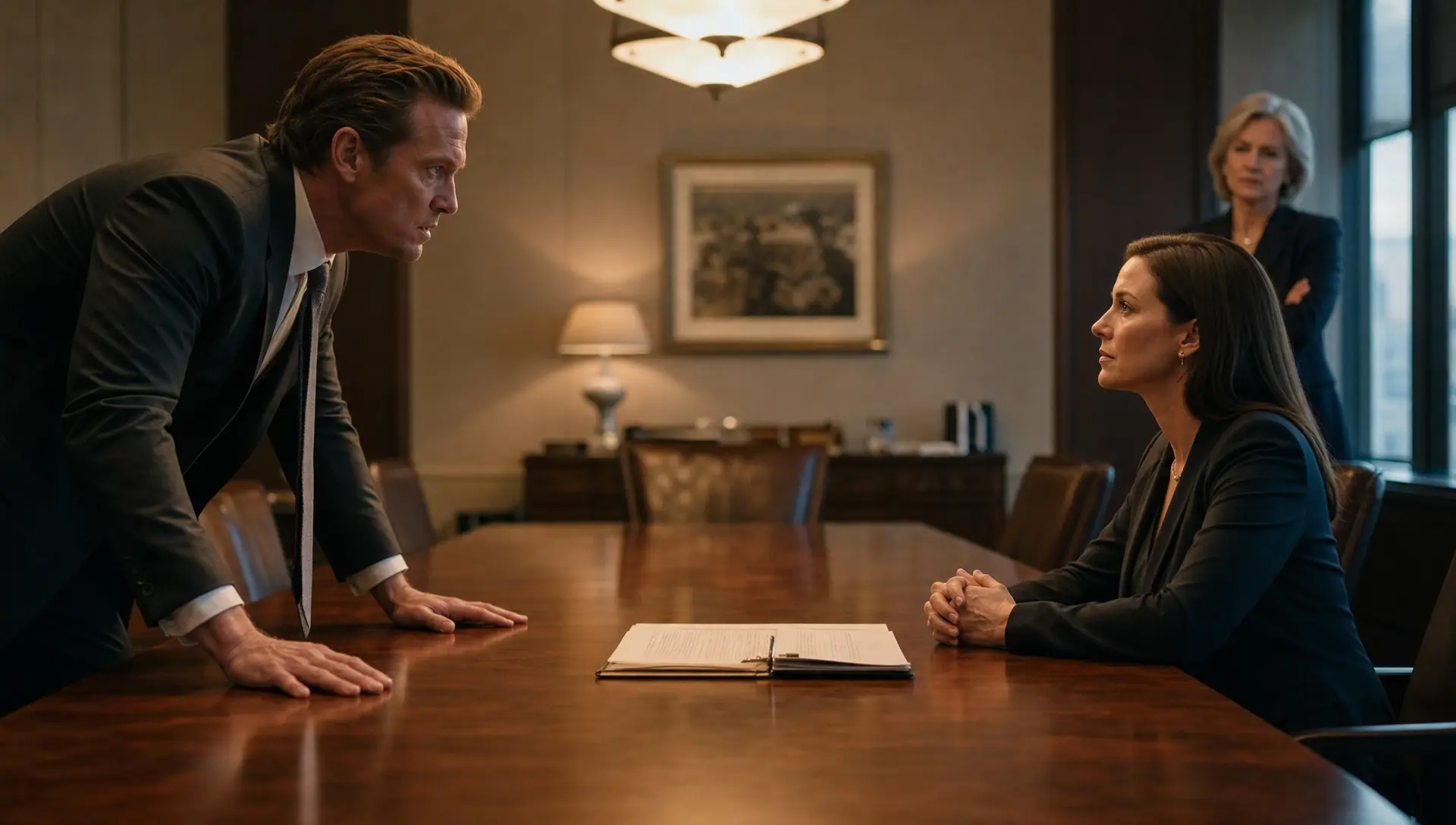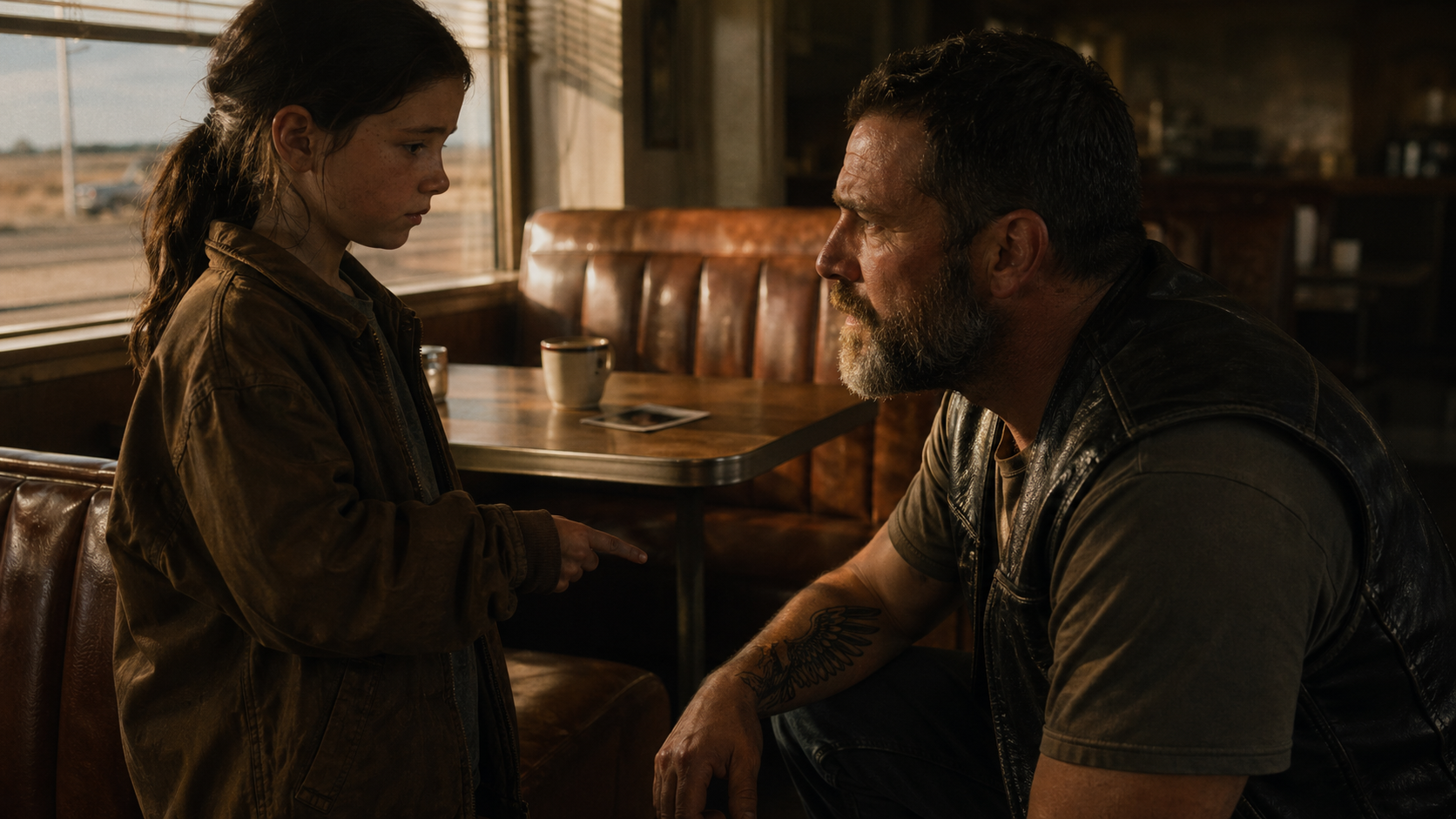
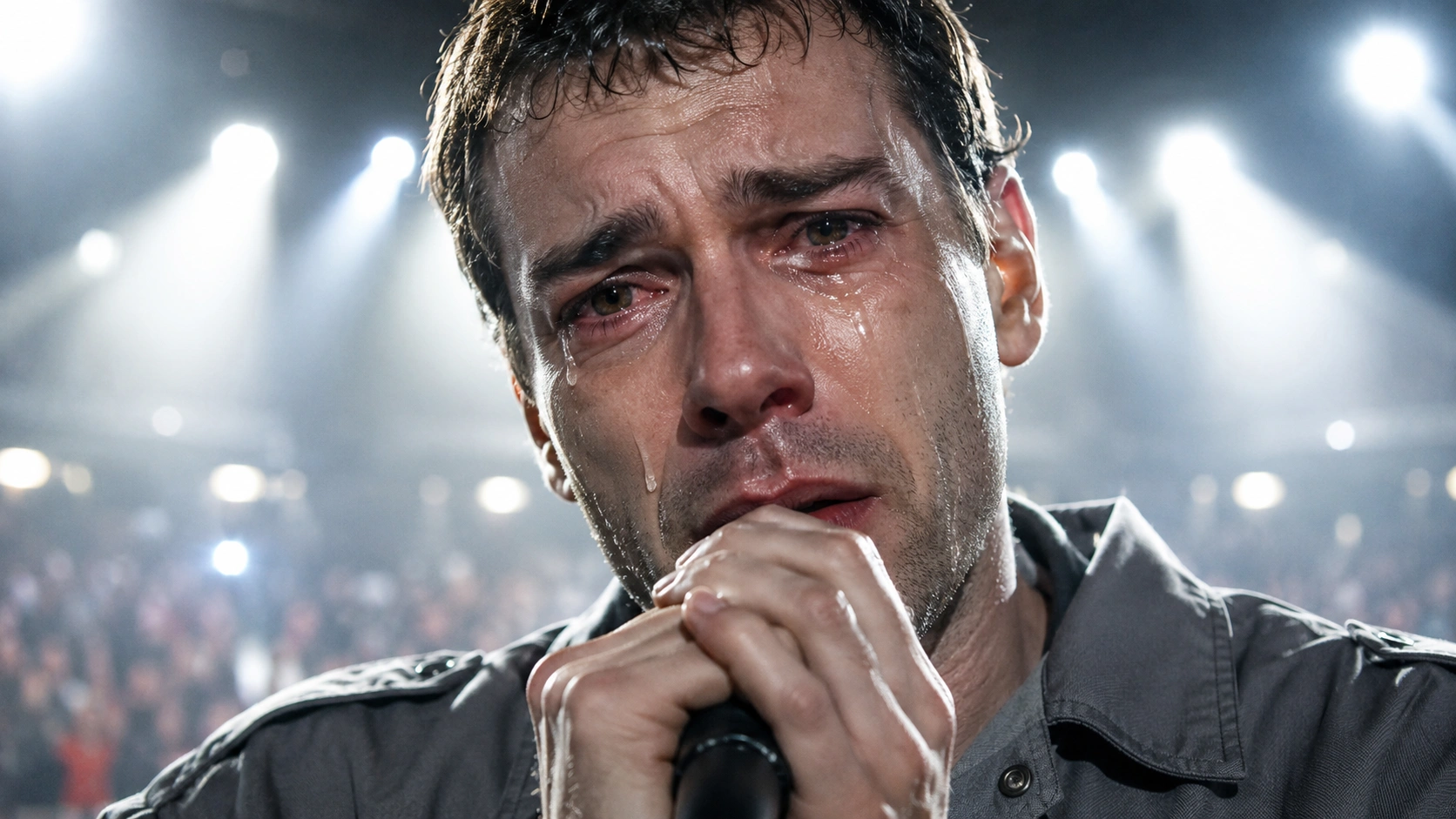
Megan Cole didn’t walk into a room. She swept through it. And when she did, every head turned, every whisper died, and every camera found her face like sunlight finds a mirror.
Tonight was no different.
The Avalon Theater was packed. Five hundred seats at five hundred dollars each. Two million viewers streaming live from their couches. “Voices for Hope” — a charity gala for children with heart conditions. Megan’s name was on every banner. Her face was on every screen. Her voice was the reason people opened their wallets.
She stood backstage, adjusting her earpiece, scrolling through her phone. Her manager, Craig Fenton, hovered behind her like a nervous shadow.
“We’re at 1.9 million concurrent,” he said. “Biggest stream yet.”
“Good.” She didn’t look up.
“The duet with Marcus is at nine-thirty. Don’t forget the key change—”
“Craig.” She lowered her phone. “I wrote that bridge. Don’t tell me how to sing it.”
He raised both hands. “Just making sure.”
She smiled, the kind of smile that meant the conversation was over. Craig disappeared.
Out in the hall, a janitor named Danny Ward pushed a mop across the marble floor behind the stage curtain. Thirty-two years old. Single. One daughter — Emma, age six, currently asleep at his mother’s apartment across town. He wore an oversized uniform with “AT Facilities” stitched on the chest. Yellow rubber gloves. A rag draped over one shoulder.
He wasn’t supposed to be here tonight. His regular shift was mornings. But Eddie, the night guy, had called in sick, and Danny needed the overtime.
“Forty-two bucks an hour for holiday rate,” his supervisor had said. “You in?”
“I’m in.”
So here he was, mopping floors while crystal champagne glasses clinked twenty feet away. He didn’t mind the work. He minded the invisibility — the way people looked through him like he was a smudge on glass.
But Danny had a secret. Not the dramatic kind. The quiet kind. The kind that lived in the back of his throat every time music played.
He’d been a singer once.
Not famous. Not rich. But real. He’d studied vocal performance at the University of Michigan on a full scholarship. Baritone with a freakish upper range — his professor once said his passaggio was the cleanest she’d heard in twenty years. He’d sung in recitals, competitions, even a few small clubs in Detroit.
Then life happened. His father got sick. The bills piled up. He dropped out at twenty-three to work full-time. By twenty-five, his father was gone and so was the music. He picked up maintenance work, then custodial. The singing stayed inside him like a locked room he never opened.
Until four hours ago.
He’d been cleaning near the stage while the band rehearsed. Megan was running through “Higher Ground” — her signature hit, the song that had made her a household name. The one with the legendary C6 in the final chorus. Music critics called it “the note that sold ten million records.”
Danny stopped wiping the railing and listened.
The lower register was flawless. Megan’s tone was rich, controlled, professional. But as the melody climbed, something changed. She tensed. Her shoulders lifted. Her neck stiffened.
And when she reached for the C6 — her voice cracked. Not dramatically. Subtly. A half-step flat, covered quickly with a cough.
Danny’s eyes narrowed.
She tried again. Same result. This time, she waved the band off.
“We’ll just use the track for that part,” she told the sound engineer.
“Same as the last twelve shows?” the engineer asked.
Megan shot him a look that could’ve cut steel. “Did I stutter?”
The engineer went quiet. Danny went back to mopping. But the information sat in his brain like a splinter.
She was lip-syncing the high note. Had been for a while.
Now, four hours later, the gala was in full swing. Danny was backstage, finishing up the green room when he heard Megan’s heels clicking toward the stage. He kept his head down and pushed his cart into the wings.
That was his mistake — being visible at the wrong moment.
Megan was mid-stride, radiating confidence, when she spotted him. He was standing near the curtain edge, mop in one hand, bucket in the other, headphones around his neck playing something soft.
She paused. Looked him up and down.
“What are you listening to?” she asked.
Danny pulled the headphones off. “Excuse me?”
“The music. On your little headphones. What is it?”
“Oh. Uh — Puccini. ‘Nessun Dorma.'”
Something flickered in her eyes. Amusement. Maybe curiosity. Hard to tell with Megan. She turned to her assistant, Rachel, and whispered something. Rachel’s eyes widened, then she grinned.
Megan walked onstage. The crowd erupted.
“Good evening, everyone!” Her voice filled the hall like honey poured into crystal. “Welcome to Voices for Hope. Tonight, we raise our voices — and our wallets — for the children who need us most.”
Applause. Standing ovation. The cameras loved her. The donors loved her. The world loved her.
She performed two songs. Both were stunning. The crowd ate it up.
Then, between sets, she paused. Tilted her head. Let the silence build.
“You know what I love about music?” she said into the microphone. “It doesn’t care who you are. It doesn’t care what you wear, where you come from, or what you do for a living.” She paused. “So let’s test that.”
A murmur rippled through the audience.
“I noticed someone backstage tonight. A janitor. A man who cleans these floors so we can stand on them and feel special.” She let the words land. “And I heard — through the grapevine — that he thinks he can sing.”
Danny’s stomach dropped.
“Hey, you. The janitor in the back. Come out here.”
Five hundred heads turned. The cameras swiveled. Two million viewers leaned in.
Danny stood frozen in the wing, mop still in hand. His heart hammered against his ribs.
“Don’t be shy,” Megan called, her smile wide and warm for the cameras. “Come on, sweetheart. This is your moment.”
A stagehand nudged him. “She means you, bro.”
Danny set the mop down. His legs moved before his brain caught up. He stepped into the light, and it hit him like a wall — blinding, hot, suffocating.
The audience stared. Some smiled politely. Some exchanged uncomfortable glances. A few phones came up.
Megan glided toward him, microphone in hand. “What’s your name?”
“Danny. Danny Ward.”
“Danny.” She said it like she was tasting something bland. “Danny, I hear you listen to opera while you mop. That’s adorable.”
A ripple of laughter from the crowd. Not mean, exactly. But not kind, either.
“Tell me, Danny — can you sing?”
He swallowed. “I used to.”
“Used to. Love that. Well, tonight you get a chance to prove it.” She turned to the audience. “Shall we let Danny sing?”
The crowd cheered. Not for him. For the spectacle.
Megan snapped her fingers toward the band leader. “Play ‘Higher Ground.'”
The murmur became a gasp. “Higher Ground.” Her song. The impossible song. The one with the C6 that no one could hit.
The band leader hesitated, looking at Megan for confirmation. She nodded once, eyes glittering.
“Give him a mic,” she said to Rachel.
Rachel handed Danny a wireless microphone. His hands shook as he took it.
Megan leaned close. She reached down and clicked off her own mic with a practiced flick. But Danny’s mic was still live. Hot. Broadcasting to the hall and two million screens.
“Fail in silence, kid,” she whispered.
The words echoed through every speaker, every phone, every television.
The room went dead quiet. Five hundred people stopped breathing. Two million jaws dropped.
Megan’s face froze. For one flicker of a second — half a heartbeat — something cracked behind her eyes. She hadn’t known his mic was on. But she recovered fast, plastering the smile back on.
“Just a little joke,” she said into her now-reactivated mic. “A little backstage humor. Right, Danny?”
Danny didn’t answer. He stared at her. And in that stare was something she didn’t expect: stillness.
Not anger. Not fear. Stillness.
The band started playing. The opening chords of “Higher Ground” filled the hall — slow, building, like a storm approaching from a distance.
Megan stepped back, arms crossed, smirk in place. She was waiting for the trainwreck. She was counting on it. The janitor would choke, the audience would laugh gently, she’d rescue the moment with a flawless performance of her own, and the donations would roll in. That was the script.
Danny closed his eyes.
He thought about Emma. About the way she sang in the bathtub — off-key, joyful, fearless. About the way she’d say, “Daddy, why don’t you sing anymore?” And he’d always answer, “Maybe tomorrow, baby.”
Tomorrow never came. Until now.
He opened his mouth.
The first note came out rough. Scratchy. Like a door that hadn’t been opened in years. A few people winced. Megan’s smirk deepened.
But then something shifted.
Danny found the groove. The second line came smoother. The third, cleaner. By the end of the first verse, his voice had settled into something rich and resonant — a baritone that filled the hall from floor to ceiling without effort, like water finding its level.
The audience stirred. Phones lowered. Eyebrows rose.
Megan uncrossed her arms.
The chorus hit. Danny’s voice climbed. The melody of “Higher Ground” rose through the middle register, then higher, then higher still. His tone didn’t thin. It didn’t strain. It opened up, fuller and brighter with every step.
A woman in the third row put her hand over her mouth.
Craig Fenton, watching from backstage, dropped his clipboard.
The bridge came. The part where the song pulls back before the final push. Danny softened, letting the band carry the weight, his voice dropping to a near-whisper that somehow reached every corner of the room.
“When you’ve been down so low, the ground becomes your ceiling…”
He sang the lyric like he meant every word. Because he did.
Then the final chorus. The build. The climb.
This was the moment. The C6. The note that had defined Megan’s career. The note she’d been faking for twelve shows straight.
The band surged. The drums rolled. The hall held its breath.
Danny looked up at the lights. He thought about his father, who used to say, “If God gave you a voice, son, don’t let the world make you a mute.”
He opened his mouth and let go.
The C6 came out like a beam of light — pure, clean, effortless. It hung in the air, sustaining, growing, vibrating through the walls and the seats and the bones of every person in the room.
Five seconds. Ten seconds. Fifteen. He held it like it cost him nothing.
Then he let it go.
Silence.
One second. Two seconds.
Then the Avalon Theater exploded.
Five hundred people surged to their feet. The ovation was deafening — not polite applause, not charity-gala clapping, but a roar. Primal. Real. The kind of sound that happens when something genuine cuts through a room full of performance.
Megan stood frozen at the edge of the stage. Her arms hung loose at her sides. Her smirk was gone. In its place was something she hadn’t shown a room in years — raw, unguarded shock. And underneath the shock, something she hadn’t expected at all: a sting behind her eyes.
Not rage. Not jealousy.
She was moved.
Danny lowered the mic. His hands were still shaking. His eyes were wet.
The cameras were on him. All of them.
In the control room, the stream’s chat exploded. Comments flying faster than the moderators could read. “WHO IS THIS GUY?” “THE JANITOR JUST DESTROYED MEGAN COLE.” “Play that whisper back. PLAY IT BACK.”
Because they’d heard it. All two million of them. “Fail in silence, kid.” It was already being clipped, screen-recorded, and uploaded to every platform on earth.
Megan stepped forward. She was a professional. She’d handled worse. She could spin this, save face, pivot to the next song.
But she didn’t.
She walked across the stage toward Danny. Slowly. The heels clicking on the hardwood were the only sound in the room. She stopped in front of him, looked into his face, and for a long moment, said nothing.
Then she lifted her microphone.
“I owe you an apology,” she said. Her voice cracked — not from the nodules. From something deeper. “I brought you up here to be a punchline. And you just sang the most honest thing this stage has ever heard.”
The audience went silent again. Not uncomfortable silence. Stunned silence.
Megan turned to the crowd. “I’ve been lying to you. For over a year, I’ve been using a pre-recorded track for the high notes. I have vocal cord nodules. I was scared that if you knew, I’d lose everything.” She paused. “And then this man — this janitor who I tried to embarrass — he stood right here and did the thing I’ve been pretending to do.”
She looked back at Danny. Her mascara was starting to run.
“I’m sorry,” she said. “I am so sorry.”
Five hundred people held their breath. Two million viewers watched a famous woman crack open on live television — not from scandal, but from honesty.
Danny looked at her for a long time. Then he did something nobody expected.
He raised his microphone and said, “Your lower register is the most beautiful thing I’ve ever heard. You don’t need the C6 to be great. You just need to stop hiding.”
Megan blinked. A tear fell. She wiped it fast, but the cameras caught it.
Then Danny extended his hand toward her. “Sing with me.”
She stared at his hand. Yellow rubber glove marks still on his wrist. Calluses from mop handles.
She took it.
Danny turned to the band leader. “Play it again. From the bridge. Her key.”
The band started. Megan’s jaw trembled. She lifted the mic.
And she sang. Not the C6 — the bridge. The low, aching middle part that nobody ever talked about because it wasn’t flashy enough. The part where the melody sits in the chest and hurts.
Her voice poured out raw and broken and real. And it was stunning.
Danny joined her. His baritone underneath, her alto on top. Two voices braiding together in a way that made the room vibrate.
They didn’t look at the audience. They looked at each other.
When the last note faded, the Avalon Theater didn’t erupt. It breathed. A single, collective exhale. Then the applause came — not a roar this time, but something warmer. Something that meant the room had witnessed something it didn’t know it needed.
Megan let go of Danny’s hand. She stepped back. She whispered, “Thank you.” Off-mic. Just for him.
He nodded. Then he walked offstage, put on his gloves, and picked up his mop.
By midnight, “Danny the Janitor” was the number one search in the United States. The clip of Megan’s apology had forty million views. The duet had sixty million. And the clip of “Fail in silence, kid” had a hundred million — but the story underneath it had shifted. It wasn’t a takedown. It was a turning point.
The next morning, Danny woke up to forty-seven missed calls.
His mother was the first one he answered.
“Daniel James Ward, why is your face on the television?”
“Long story, Mom.”
He sat up in bed. Emma was already awake, eating cereal on the couch.
“Daddy, you’re on the iPad,” she said, holding it up.
He looked. It was a clip of him hitting the C6, slowed down and replayed from six different angles. Eighteen million views. And climbing.
His phone buzzed. Unknown number. He answered.
“Mr. Ward? This is Sharon Kessler from Atlantic Records. Do you have a moment?”
He blinked. “I’m eating cereal with my daughter.”
“I understand. Can we schedule a call for later today? We’d like to discuss a recording contract.”
He looked at Emma. She was watching him with wide eyes, milk dripping from her spoon.
“Daddy, are you gonna sing on the radio?”
He smiled. “Maybe, baby.”
“You said maybe means yes when you smile.”
He laughed. “Yeah. I guess it does.”
Two weeks later, Megan Cole held a press conference. But not the kind her PR team had planned. She didn’t dodge. She didn’t spin.
“I lied to my fans,” she said. “I used backing tracks to cover a medical condition I was too proud to admit. I humiliated a man on live television to protect my ego. And he responded with more grace than I deserved.”
A reporter asked, “Have you spoken to Danny Ward since the gala?”
Megan paused. A flicker of something private crossed her face.
“Yes,” she said. “We’ve talked.”
She didn’t say more. But the way she said “we’ve talked” made three reporters raise their eyebrows.
Because they had talked. The first call happened the morning after the gala. Danny hadn’t expected it. His phone rang at 7 AM from a number he didn’t recognize.
“It’s Megan.” A pause. “Don’t hang up.”
“I’m not hanging up.”
“I couldn’t sleep. I kept replaying what I did to you, and I feel sick.”
“You should.”
“I know.” Another pause. “Can I buy you a coffee? I need to say some things to your face.”
“You don’t need to buy me anything.”
“Fine. Can I sit across from you in a diner while you drink coffee you paid for?”
He almost smiled. Almost. “There’s a place on Fourth and Main. Helen’s. Seven-thirty.”
“I’ll be there.”
She showed up at seven-twenty. No makeup. Baseball cap. Sunglasses she took off as soon as she sat down. She looked like a different person — younger, smaller, uncertain.
Danny was already in the booth, coffee in hand.
“You look different without the spotlight,” he said.
“So do you,” she said. “Less yellow gloves.”
They sat in silence for a moment. The waitress brought Megan a coffee without asking. She wrapped both hands around it like it was the only warm thing in the room.
“I need you to know something,” Megan said. “What I did wasn’t random. I saw you with those headphones, listening to Puccini, and something about it made me angry. Not at you. At myself. Because you were standing there with a mop, listening to the most beautiful music ever written, and you looked… peaceful. Content. And I was about to walk onstage in a ten-thousand-dollar dress and fake the biggest moment of my own song.”
Danny said nothing. He let her talk.
“I hated you for being real when I couldn’t be. That’s the truth. And I punished you for it in front of the whole country.”
“Yeah,” Danny said. “You did.”
“I’m not asking you to forgive me.”
“Good. Because I’m not there yet.”
“I know.” She took a sip of coffee. “But I wanted you to hear it from me, not from a publicist statement.”
Danny studied her face. The arrogance was gone. What was left looked tired and honest and a little lost.
“My daughter watched the clip this morning,” he said.
Megan’s face tightened. “How old?”
“Six.”
She closed her eyes. “God.”
“She asked me why the pretty lady was mean to her daddy.”
Megan set the cup down. Her hand was shaking.
“What did you tell her?” she asked quietly.
“I told her sometimes people do mean things when they’re scared. And that the pretty lady said sorry.”
Megan looked at him. Really looked at him. And something shifted in the space between them — not forgiveness, not romance, not anything with a name yet. Just recognition. Two people who had been stripped bare in front of millions, and who were sitting in a diner at seven-thirty in the morning, trying to figure out what was real.
“Can I ask you something?” Megan said.
“Go ahead.”
“When you sang that note — the C6 — were you trying to show me up?”
Danny shook his head. “No. I was trying to remember who I was before I forgot.”
She stared at him for a long time. Then she nodded, slowly, like she understood something she didn’t have words for.
They talked for two hours. About music. About fear. About the difference between talent and courage. About his daughter. About her father, who had pushed her into performing at age eight and never let her stop. About the first time she realized she was losing her voice and the panic that followed.
When Megan left, she paused at the door.
“Danny?”
“Yeah?”
“That thing you said onstage — about my lower register?”
“What about it?”
“No one’s ever said that to me. Not once. Everyone only ever talked about the high notes.”
She walked out. The bell above the door rang behind her.
Danny finished his coffee, left a five-dollar tip, and drove to his mother’s apartment to pick up Emma.
They didn’t see each other again for three weeks. Then Megan called.
“Atlantic offered you a deal,” she said. “I heard.”
“News travels.”
“It travels when your manager is friends with your manager.” A beat. “Congratulations.”
“Thanks.”
“Listen — I checked into a vocal rehab program in Nashville. I start Monday. I’m going to be honest about the nodules, take a break from touring, work on my actual range. No more tracks.”
“That’s good.”
“But before I go, I wanted to ask you something insane.”
“Okay.”
“Would you record a duet with me? A real one. No backing tracks. No C6. Just voices.”
Danny was quiet for a moment. “People will say you’re using me.”
“People will say a lot of things.”
“Why me?”
“Because you’re the only person who ever heard the part of my voice I was afraid to use. And you told me it was beautiful.”
He thought about it. About what it would look like, what people would say, what the internet would do with it.
“Yeah,” he said. “I’ll do it.”
They recorded the song in a small studio in Brooklyn. Just piano, two microphones, and a sound engineer named Lou who kept wiping his eyes behind the mixing board.
Megan sang in her natural range — no straining, no acrobatics. Just warmth and ache and truth. Danny’s baritone wrapped around her voice like a hand holding something fragile.
The song was called “Glass Ceiling.” Danny wrote the lyrics. Megan wrote the melody. It was about two people who spent their lives looking up at a barrier they couldn’t break through — one from above, one from below — and realizing they’d been staring at the same sky.
It was three minutes and forty-two seconds long. No C6 anywhere.
It went to number one in nine days.
The internet lost its mind. Half the comments were about the gala, the whisper, the humiliation. The other half were about something nobody expected: the way Danny and Megan looked at each other in the music video. Not scripted looks. Not directed. Just… two people seeing each other.
“Are they together?” became the number one Google autocomplete for both their names.
They weren’t. Not yet.
But the calls continued. Daily, then nightly. They talked about everything — her therapy, his recording sessions, Emma’s school play, the weird pressure of sudden fame. Sometimes they just sat on the phone in silence, which for two people whose lives revolved around sound was the most intimate thing they could do.
The first time Danny invited Megan to dinner was two months after the duet dropped. Not a restaurant. His apartment. Spaghetti. Emma was there.
Emma stared at Megan with enormous eyes from across the table.
“You’re the pretty lady,” she said.
Megan froze, fork halfway to her mouth.
Danny looked at his plate.
“The one who was mean to Daddy,” Emma added.
The room went quiet. Megan set her fork down.
“Yes,” she said. “I was. And it was wrong. I said sorry to your daddy, and I’m saying sorry to you too.”
Emma considered this with the terrifying seriousness of a six-year-old.
“Did you mean it?” Emma asked.
“Every word.”
“Okay.” Emma went back to her spaghetti. “Your earrings are pretty.”
Megan exhaled so hard she almost laughed. Danny covered his mouth with his napkin.
After Emma went to bed, they sat on the couch with coffee. The apartment was small. The couch was old. The coffee was cheap. None of it mattered.
“She’s incredible,” Megan said.
“She gets it from her grandmother.”
Megan laughed. Then, quietly: “My father never once asked me if I was okay. He only ever asked if I was ready. For the next show, the next audition, the next recording. Ready, ready, ready. Never okay.”
“Are you okay?” Danny asked.
She looked at him. Her eyes filled. She nodded slowly.
“Getting there.”
He reached over and took her hand. She didn’t pull away.
Six months after the gala, Danny released his debut album. It wasn’t what anyone expected — not pop, not R&B, not a victory lap. It was twelve songs, mostly acoustic, mostly about ordinary things: mopping floors at midnight, his daughter’s laugh, his father’s last good day, the sound of a voice coming back after years of silence.
One track was called “Diner at Seven-Thirty.” The lyrics didn’t mention Megan by name, but every interviewer asked. Danny always said the same thing: “It’s about the moment you see someone for who they really are instead of who they’ve been performing as.”
Nobody bought the deflection. Everyone streamed the song.
Megan’s comeback came quietly. A small theater tour. Two hundred seats per show. No arenas, no pyrotechnics, no backing tracks. Just her, a piano, and a voice that sat in the middle register like it had always belonged there.
The reviews were the best of her career. One critic wrote that she’d “traded spectacle for soul and come out richer.”
She and Danny didn’t go public. They didn’t make announcements. But they showed up at each other’s shows. They were photographed getting coffee. Emma was spotted in Megan’s Instagram story, drawing at a kitchen table that fans recognized from Danny’s apartment.
The internet figured it out. It always does.
And the reaction surprised everyone — including them. The same platforms that had torn Megan apart after the gala now rallied behind the story. “She humiliated him, apologized for real, and he gave her a second chance” became the narrative. A redemption arc the algorithm couldn’t resist.
One year after the gala, Danny proposed.
It wasn’t onstage. It wasn’t public. It wasn’t content.
It was in Helen’s diner, 7:30 AM, the same booth where they’d had their first real conversation. Emma was there, in on the plan, vibrating with the effort of not spoiling it.
Megan sat down. Coffee appeared. Danny slid a small box across the table.
“You told me once that no one ever noticed the best part of your voice,” he said. “I want to spend the rest of my life noticing.”
Megan opened the box. A simple ring. Nothing flashy. Nothing that screamed fame or money or image.
She put it on before she said yes. Then she said yes anyway.
Emma climbed out of the booth and threw her arms around both of them, knocking over a coffee cup in the process. The waitress applauded. The cook stuck his head out of the kitchen and whooped.
Three months later, they married in a backyard ceremony in Danny’s mother’s neighborhood. Sixty guests. No cameras, no press, no livestream. Emma was the flower girl. Danny’s mother cried before the ceremony even started. Megan’s estranged father wasn’t invited.
Danny sang his vows. Megan sang hers back.
There was no C6. There didn’t need to be.
When the officiant said, “You may kiss the bride,” Emma tugged on Danny’s sleeve.
“Daddy?”
“Yeah, baby?”
“Is this the tomorrow you were talking about?”
He picked her up with one arm, pulled Megan close with the other, and said, “Yeah. This is the one.”
The three of them stood there in the afternoon light — a janitor who remembered his voice, a singer who found hers, and a six-year-old who thought the whole thing was about the cake.
And for once, nobody was performing. Nobody was pretending. Nobody needed an audience of millions to know that what they had was real.
Original fictional stories. AI-assisted creative content.