My name is Daniel Bennett.
I’m a widower, a father, and the man who almost let the wrong woman into my daughter’s life.
Almost.
My daughter Lily is seven. She has her mother’s eyes, her mother’s laugh, and a habit she picked up at four years old that I never had the heart to break — she carries a photograph whenever she’s afraid.
Not any photograph.
One.
A county fair photo from three summers before Emily died. Me on the left, Emily on the right, Lily in the middle between us with cotton candy on both cheeks, squinting into the sun.
Lily was four when Emily passed. She doesn’t remember the fair itself anymore. But she remembers the picture.
She’s had it at every doctor visit since the diagnosis. On the first day of kindergarten. On the plane when we flew out to see my parents last Christmas.
She had it in her little white cardigan pocket the afternoon Vanessa Hale tried to light it on fire.
Vanessa and I had been together fourteen months.
She was polished. Attentive. She smiled at Lily in all the right public moments and posted careful family-style photos online with captions like blended and blessed.
But behind closed doors, she talked about Emily like she was an ongoing problem to be solved.
“Lily needs to stop clinging to the past,” she told me once, three months in. “You can’t build a new family around a shrine.”
“That’s her mother,” I said.
“That’s a memory she’s using to keep you single.”
I should have ended it right there.
I didn’t.
I told myself Vanessa just needed more time. That she was adjusting. That grief made people say strange things.
What Vanessa actually needed was to never become my wife.
But I didn’t know that yet.
My father, Arthur Bennett, hosted the wedding at his estate outside the city.
The property is old money quiet. Gardens behind the main house, a stone terrace, guest wings on the east side. The kind of place that makes brides cry before they’ve even seen the flowers.
It made Vanessa very happy.
She’d spent six months planning exactly where the photos would be taken, which rooms would be opened to guests, and how her entrance would look from the upper terrace. She had opinions about everything.
She had never once asked Lily what she needed for the day.
I thought that was a gap I could fill myself. I’d hold Lily’s hand during the ceremony, sit with her at dinner, make sure she wasn’t overwhelmed by the crowd.
I was wrong about how fast things would move.
The wedding was at four in the afternoon.
By two, the house was full.
Hair stylists, bridesmaids, a florist making last adjustments, caterers carrying trays through the side corridor, relatives drifting between rooms with glasses of champagne.
Lily had been quiet all morning. She’d eaten breakfast in two bites and spent an hour in her room before coming downstairs in her pale blue dress, shoes already slightly scuffed, one hand pressed against her cardigan pocket.
I kissed her forehead. “You okay, bug?”
“There are a lot of strangers.”
“I know. Want to stay close to me?”
She nodded.
I kept her with me until a caterer pulled me aside near the hallway about a seating card issue near table six. I crouched to Lily’s level.
“I’ll be back in two minutes. Stay here, okay?”
She nodded again.
She didn’t stay.
Lily was nervous and she was looking for me and she slipped into the wrong room.
The bridal suite.
Vanessa was standing in front of a floor mirror, two women adjusting the back of her gown, a bridesmaid behind her touching up the veil.
Lily stood in the doorway.
She had the photograph out. She always held it when she was overwhelmed. Both hands, pressed against her chest like a small compass.
Vanessa saw it in the mirror first.
Her expression shifted — not slowly, not subtly. It shifted the way a door swings when someone kicks it.
“What is that?”
Lily froze.
“It’s my mommy and daddy and me,” she whispered.
Vanessa turned around. Slow. Deliberate. The way someone turns when they want to make a point about the fact that they’re turning.
“You brought her picture to my wedding?”
The room went still. The stylists kept their hands moving but their eyes stopped.
Lily looked down at the floor. “It helps when I’m scared.”
“Scared.” Vanessa’s voice had that particular edge people use when they’re performing calm. “You’re seven. At a party. There’s nothing to be scared of.”
“It’s loud.”
“Every wedding is loud.” She stepped forward. “Put it away.”
“I just need to hold it.”
“Lily.” Vanessa’s voice dropped. “Today is my day. You are going to put that away, smile, and act like part of this family instead of doing this — this shrine thing — in my suite on my wedding day.”
One bridesmaid shifted. Another smiled into her champagne.
Lily’s chin started to tremble.
“I won’t take it out again,” she whispered. “I promise. I’ll just keep it in my pocket.”
She reached to tuck it away.
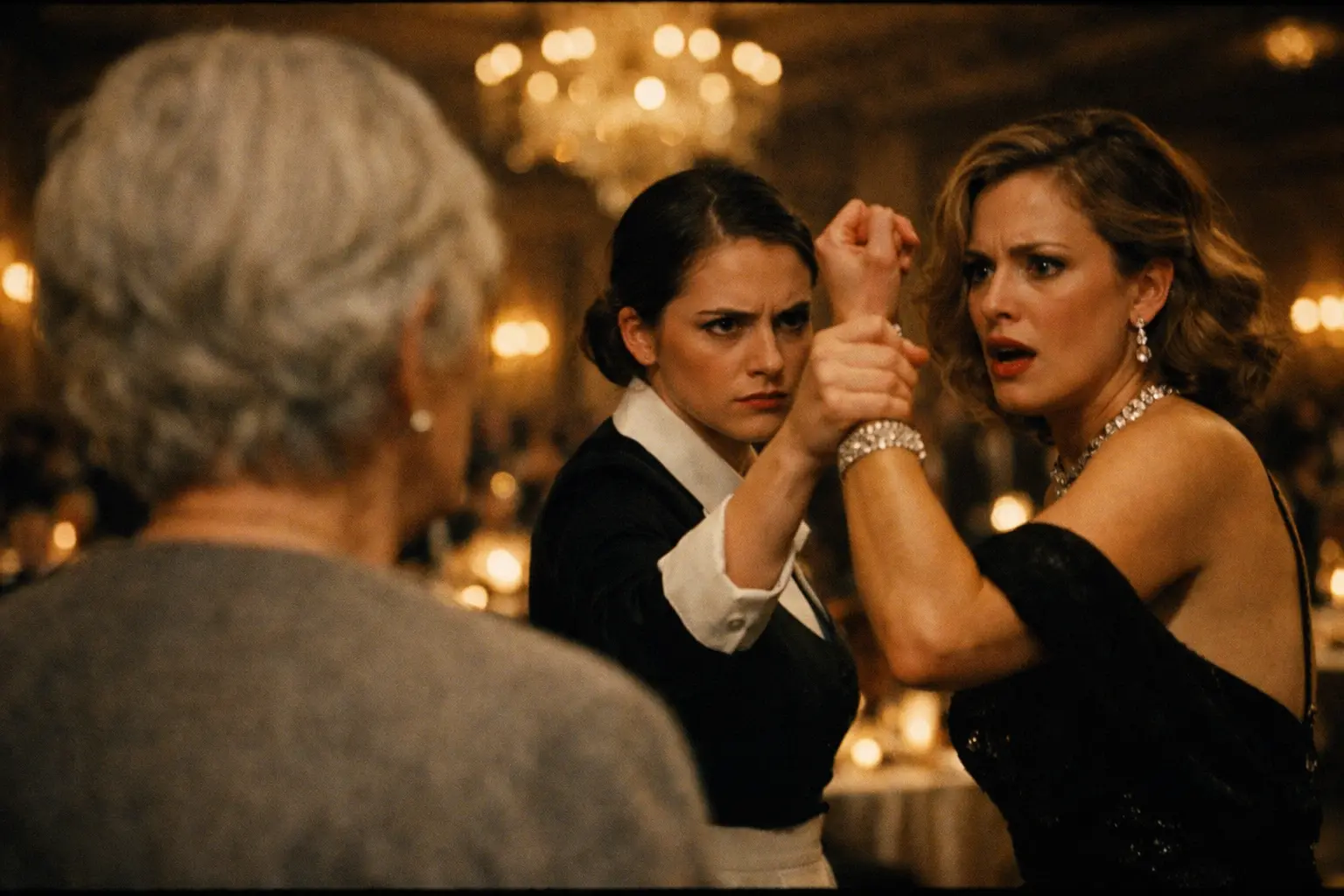
Vanessa crossed the room in four steps and took it out of her hands.
“Please!” Lily grabbed for it. “Please, that’s mine—”
Vanessa held it up between two fingers, high, so the whole room could see. A county fair photo. Crinkled edges. One corner bent from being carried everywhere for three years.
“This,” Vanessa announced, “is exactly the problem.” She looked around at her bridesmaids like she was making a point at a dinner party. “No limits. No adjustment. Constant drama over a dead woman at every single milestone.”
“She’s not wrong,” one bridesmaid said quietly.
“That’s MINE!” Lily’s voice came out high and desperate. “Give it back!”
“If you want to be part of this family,” Vanessa said, looking directly at my daughter, “then stop worshipping the old one.”
Then she reached to the candle table and picked up a long silver lighter.
Lily saw it and screamed. “NO—”
The corner of the photograph caught in one second.
The dry paper moved fast.
Lily lunged. Vanessa dropped the burning photo into a decorative gold tray on the table.
Lily dropped to her knees, trying to reach into the tray with both hands, crying so hard the words weren’t coming out clean anymore — just sounds. Pleading, animal sounds from a place no seven-year-old should ever have to go.
That’s when I came back through the doorway.
I heard her before I saw her.
That cry.
Parents know the scale of their children’s fear. I had heard Lily afraid before. Scraped knees. Bad dreams. The hospital waiting room when she was five.
This was different. This was the sound of something being taken that couldn’t be given back.
I was through the door in two strides.
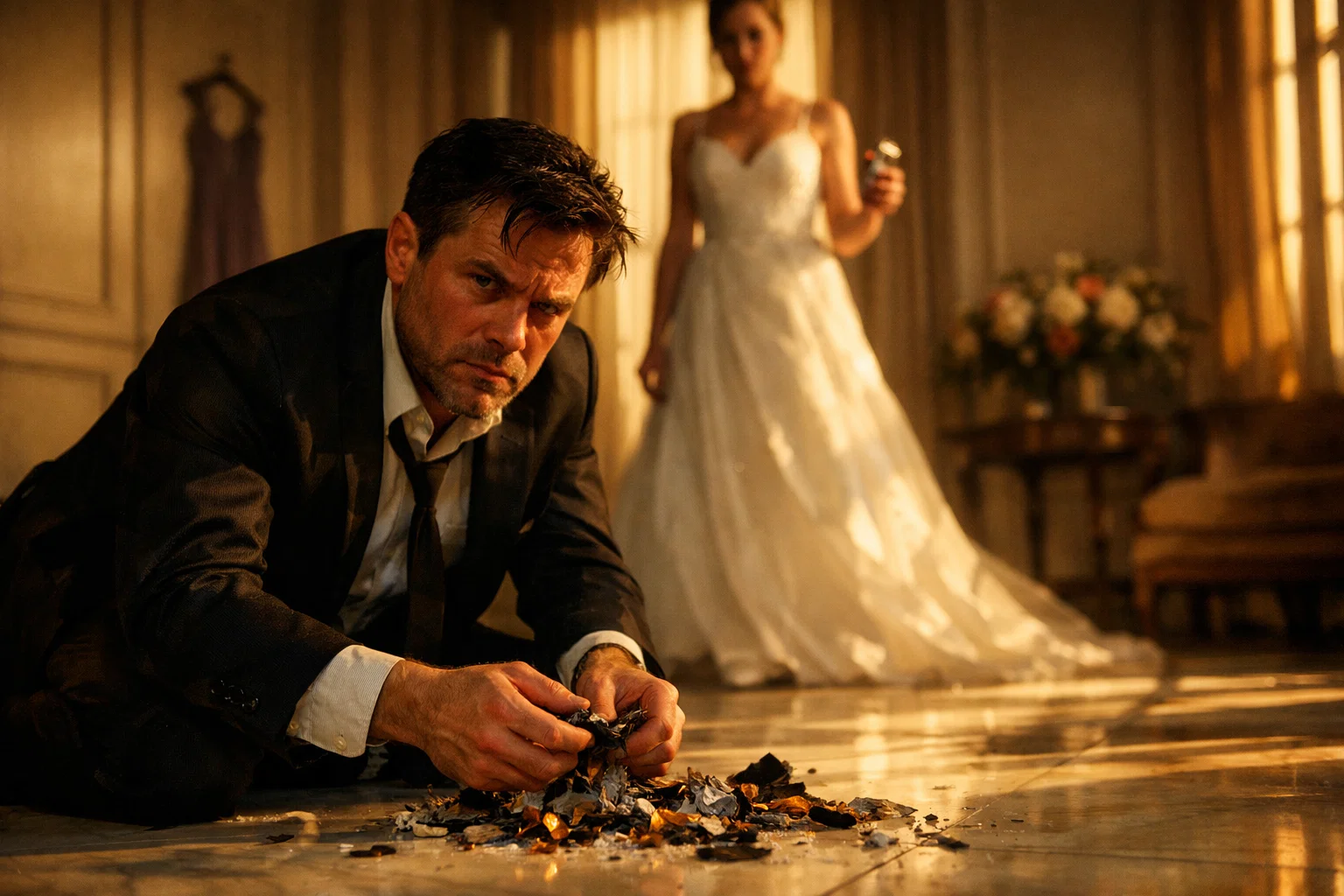
I shoved the tray sideways with my hand. Ash and fragments scattered across the marble. I dropped to my knees beside Lily and pulled her against me.
“I’ve got you. I’ve got you.”
“She burned Mommy,” Lily sobbed. “She burned Mommy.”
I looked up at Vanessa.
She was standing two feet away, still holding the lighter, looking at me like I had made a scene.
“She needs to learn—” Vanessa started.
“Don’t.” I kept my voice low. “Don’t say another word.”
“Daniel, this is exactly what I mean. She controls every room she walks into with that—”
“What the hell is wrong with you?” I wasn’t keeping my voice low anymore.
The room flinched.
Vanessa straightened. “You need to calm down. I’m not going to raise a child who uses her dead mother as a weapon.”
“She’s seven.” I was shaking. “She’s seven years old and she was scared and she needed her picture. That is all that happened.”
Lily had her arms around my neck and she was still crying, quietly now, whispering into my collar — “I’m sorry, Mommy. I’m sorry I couldn’t keep it. I’m sorry.”
Something in me cracked open.
I started gathering fragments off the floor, not sure why. Just needing to do something with my hands.
That’s when I saw the back.
The front of the photo was the county fair.
The back was something else entirely.
A partial seal. A faint fingerprint outline, the kind you leave when you press a stamp. A hand-drawn number grid in Emily’s precise handwriting — twelve numbers across four rows, each in a different color of ink.
And a row of tiny printed digits along the lower edge that I recognized immediately.
My blood didn’t run cold.
It dropped.
My father, Arthur Bennett, is not a man who trusts digital systems.
After a security breach at one of his companies eight years ago, he built an analog backup for the legacy vault — the private storage system controlling three family trusts, international bearer bonds, and the override documents for the estate succession.
No cloud copy. No lawyer duplicate. No digital file.
He placed the access map — a fingerprint authorization marker and the hand-drawn override grid — on the back of one photograph he believed would be protected forever.
A photograph nobody would think mattered.
Emily had known, because my father trusted her with the family archive.
After she died, the photo stayed with Lily.
My father had spent six months quietly trying to locate it, too proud to tell me directly that he’d lost track of the only physical backup to a vault worth more than most people could name.
And Vanessa had just burned half of it to win an argument with a child.
I didn’t say any of that yet.
I was still gathering fragments when my father walked in.
Arthur Bennett doesn’t raise his voice often. He doesn’t need to. He’s the kind of man who can end a conversation with three words and a look.
He stopped at the doorway.
He saw Lily against my shoulder.
He saw me on one knee on the marble, holding burnt paper.
He saw Vanessa standing in her gown with the lighter still in her hand.
He said, very quietly, “What happened.”
Not a question. A fact he was collecting.
Vanessa moved first. “She brought that woman’s picture into my suite again and—”
“I didn’t ask for your version,” my father said. “I asked what happened.”
I stood up slowly.
I held out the fragments.
“She burned Lily’s photo.”
His eyes went to the front first — the county fair, Lily’s cotton candy, Emily’s smile.
Then they moved to the back.
The numbered grid.
The fingerprint seal.
The partial color columns in Emily’s handwriting.
Every trace of color left his face.
I watched my father — a man who had negotiated with governments, outlasted three board coups, and buried his own parents without breaking — go pale in a bridal suite because of what a lighter and a power game had just cost him.
He crossed the room.
He lowered himself to one knee, tuxedo and all, ash on the marble around him, and he spoke to my daughter at eye level.
“Sweetheart,” he said, gently. “Did she take this from you?”
Lily nodded.
“Did you ask her not to?”
“I asked a lot,” Lily said. Her voice was still wet and small. “I begged her.”
My father closed his eyes for one second.
When he opened them, the room was a different size.
He stood.
He looked at Vanessa.
She had started backing up toward some version of an explanation — something about not knowing, something about the context, something about stress and the day and—
“You were supposed to know,” my father said, “that if a crying child begs you not to destroy the only photograph she has of her dead mother, you do not destroy it.”
Silence.
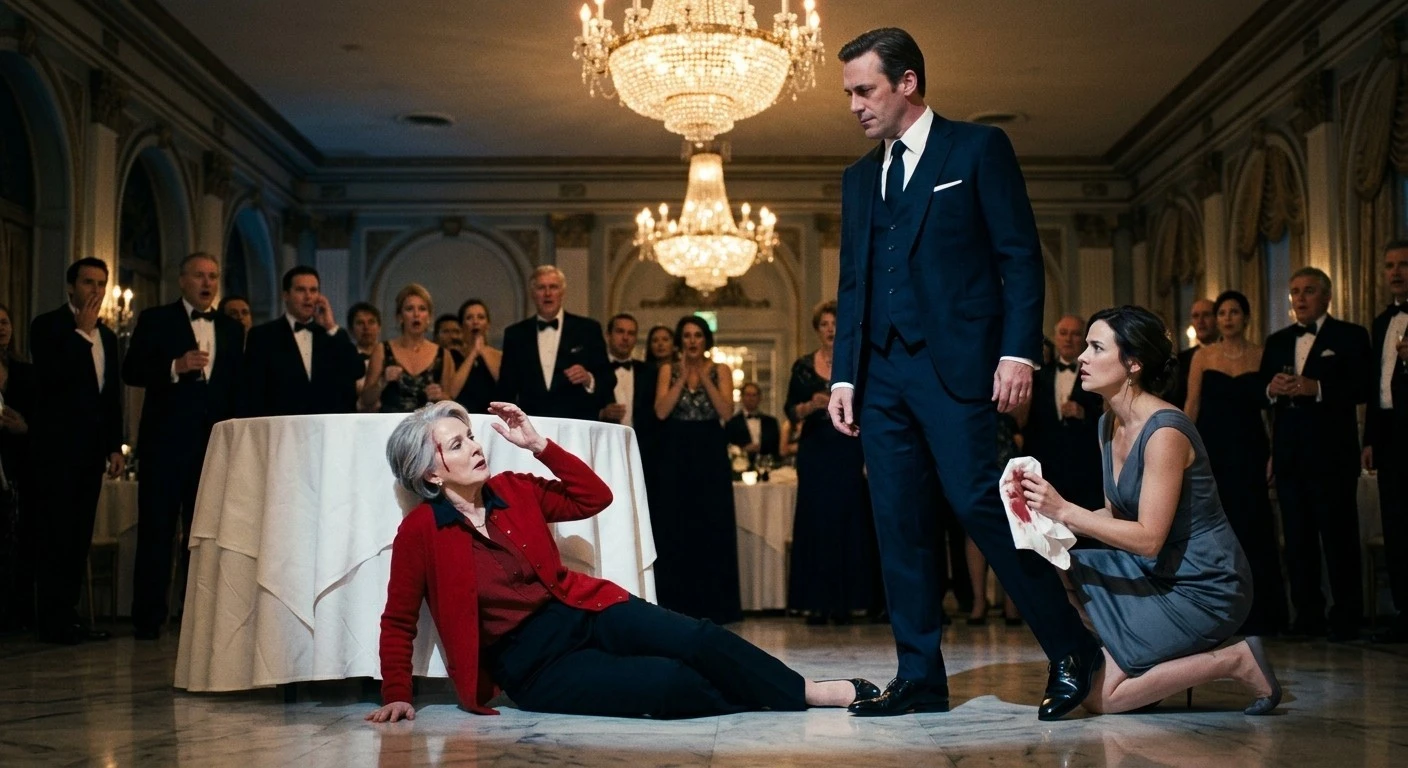
Not uncomfortable silence. Suffocating silence. The kind where people stop pretending to look at anything except the floor.
“Now,” he continued, “since you want facts, I’ll give you one. That photograph contained the only physical backup to a legacy vault holding the controlling documents for three family trusts, international bearer bonds, and the private succession instructions for this estate. There is no other copy.”
A bridesmaid made a sound.
Someone dropped something. Ceramic on marble.
Vanessa blinked slowly. “What?”
My father looked at the wedding planner, who had appeared in the doorway when she heard the commotion.
“The ceremony is canceled.”
He looked past her to his attorney, who had just come up the corridor.
“Call security. Remove every vendor on Miss Hale’s side after final payment for work completed. No one leaves with family property. Freeze all pending transfers connected to the marriage contract.”
Vanessa laughed.
Not because anything was funny.
Because her brain hadn’t caught up to what was happening yet.
“You can’t cancel a wedding because I burned some picture.”
My father looked at her the way you look at something that has already decided its own outcome.
“Yes,” he said. “I can.”
“Daniel—” She turned to me. “Tell him this is insane.”
I looked at my daughter, who was sitting on the floor with her back against the wall, knees pulled up, quietly pressing the largest surviving fragment of the photo against her chest.
“Get out of my family,” I said.
Vanessa’s attorney arrived forty seconds later.
My father’s attorney was already waiting.
Here is what my father explained to me in the hour that followed, once Vanessa had been escorted to a guest room under the supervision of two staff members while the lawyers sorted the immediate paperwork:
The family trusts had been structured with a conduct clause.
Standard language in any inheritance arrangement, usually broad enough to be difficult to enforce — fraud, abandonment, criminal conviction. The kind of clause attorneys insert and expect never to trigger.
My father’s clause was specific.
He had added it himself, personally, after a family situation years earlier that he had never fully explained to me.
The clause read: No act of abuse, coercion, or intentional destruction of sentimental or protected family property against a minor beneficiary.
Witnesses required.
Today, Vanessa had provided him a room full of them.
And three guests had been recording on their phones from the moment Lily started crying.
“Under Section 8 of the marital trust schedule,” my father said to Vanessa’s attorney, with the calm of a man reading a weather report, “she disqualified herself from beneficiary status before the ceremony was completed.”
Vanessa had gone from laughing to white.
“This is insane,” she said. “It was a photo!”
“No,” I said. “It was Lily’s last whole picture with her mother. That should have been enough on its own.”
“You’re ruining my life over a child’s feelings—”
“Yes,” my father said. “I am. Goodbye, Vanessa.”
She tried everything in the next twenty minutes.
She tried to cry. No tears came.
She grabbed for my father’s arm. He stepped away without looking at her.
She turned on the bridesmaids for not defending her. Two of them had already quietly collected their bags.
She turned on the planner, who informed her professionally that the contract was voided under the cancellation clause my father had insisted on.
She turned on me, on the guests, on the unfairness of the world.
And then, in the kind of moment you can never fully describe to someone who wasn’t there, she dropped to the floor of the bridal suite in her designer gown and started pawing through the ash and fragments, trying to piece the photograph back together.
Not because she cared about Lily.
Because she was looking for the grid.
She had heard what my father said about the vault.
And now she was on her hands and knees in a ten-thousand-dollar dress, sifting burnt paper scraps off white marble, while thirty guests watched from the doorway.
That image — the woman who had stood there ninety minutes earlier telling a child to stop clinging to the past — crawling through ruins trying to find the very thing she’d destroyed.
Truth has a way of doing that.
It doesn’t humiliate you with words.
It just removes the mask and lets the room see what’s underneath.
The lawyers worked fast.
My father had security photograph and bag every remaining fragment from the tray, the floor, and the surrounding area.
A forensic imaging specialist was brought in three days later.
By combining the physical fragments, high-resolution scans of Lily’s older photos that had captured the back of the picture by accident, and enhanced recovery of the faded ink grid, they reconstructed enough of the override sequence to access the vault under supervised conditions.
Two weeks later, the vault was opened.
The trusts were secured.
The estate paperwork was filed.
The inheritance structure held.
Vanessa, meanwhile, discovered that reputation burns faster than paper.
The wedding venue staff talked to the florist. The florist mentioned it to a planner colleague. The planner had already dropped Vanessa publicly on professional networks, citing a breach of contract and an unspecified conduct issue.
Clips from three separate phones spread through family contacts, then local society circles, then further.
Sponsors tied to the polished lifestyle brand Vanessa had built over four years of carefully curated social media quietly ended their partnerships.
Her prenup leverage — which had been structured around the assumption the marriage would be completed — evaporated with the canceled ceremony.
And because my father had documented the conduct breach with his attorney present and on record within the hour, there was nothing she could threaten, dispute, or negotiate that would change the underlying facts.
She had done it.
In front of witnesses.
To a child.
To a child who had begged her to stop.
That part mattered most.
The first week afterward was hard for Lily.
She asked me, twice, whether she had failed her mother by not protecting the photo better.
Both times, I sat down on the floor with her — just like I had on the marble in that bridal suite — and I told her the truth.
“No, bug. You didn’t fail anybody. You loved your mom so much that you carried her everywhere you went. That’s the only thing that matters. Paper is just paper. Love isn’t.”
“But I lost it.”
“You didn’t lose it. Somebody tried to take it. Those are different things.”
She thought about that for a while.
“Is Mommy still in the picture even if the picture is gone?”
“Mommy is in everything you remember. The picture was just a door. You don’t need the door anymore because you’ve already got the room.”
She put her head against my shoulder.
“Okay,” she said quietly.
My father came to the house the following Saturday carrying a flat archival box.
He set it on the kitchen table without ceremony.
Inside, wrapped in tissue paper, was a restored print.
The forensic specialists who had been working on the vault fragments had taken one additional step: they had pulled earlier family archive photos where the county fair picture was partially visible in the background, isolated and enhanced Lily’s copy from scanned references, and produced a reconstruction of the original using enhancement software and careful hand-restoration on the print itself.
It wasn’t perfect.
One edge was slightly softer than the original. The cotton candy on Lily’s cheek was a little less defined.
But Emily’s smile was there.
My arm around both of them.
Lily in the middle. Eyes squinted against the sun.
Whole.
Lily stood in front of the kitchen table for a long time looking at it.
Then she sat down and cried, not the way she’d cried on that marble floor — raw and desperate and afraid — but quietly. The way you cry when something you thought was gone comes back.
I sat beside her and cried too.
My father stood at the kitchen window with his back to us, looking at the yard, giving us the moment.
After a while, Lily got up and hugged him.
He held very still for a second — the way formal men do when emotion catches them off-guard — and then he put both arms around her.
“Thank you, Grandpa,” she said.
He cleared his throat twice.
“It’s yours,” he said. “It was always yours.”
A month later, my father asked if Lily would like to help choose a destination for what he called “a proper memory trip.”
She chose Paris first because she had seen it in a book. Then, studying a map with great seriousness at his dining room table, she pointed to a lake in Switzerland and said it looked quiet.
My father booked three weeks.
Just the three of us.
No press. No business calls. No estate talk.
We had breakfast every morning at sidewalk tables until the coffee was gone and Lily had eaten everything on her plate and some of mine.
We visited a market in Montmartre where she spent forty-five minutes choosing a small painted ceramic bird.
We sat by the lake in the Swiss town she’d picked from the map and fed bread to birds that weren’t afraid of people.
My father, who had once been too formal to kneel on marble without a second thought, spent an entire afternoon crouched on a stone dock feeding sparrows with Lily, letting her place seeds on his palm so the birds would land.
At dinner that night, Lily fell asleep at the table with her cheek on her folded arms.
My father and I sat across from each other while the candles burned low.
“She’s going to be fine,” he said.
“I know.”
“Emily would have—” He stopped. Looked at his hands. “She was right about you. She told me once, before she got sick, that you were the kind of man who would get back up. She made me promise not to push you. Said you’d find your own footing.”
I didn’t trust myself to answer that.
So I just nodded.
He nodded back.
That was enough.
We came home in late October.
Vanessa was still trying to reassemble a life she had disqualified herself from in a single afternoon.
A cousin told me she had returned to my father’s estate once, apparently on the theory that the original photo fragments might still be somewhere in the renovation debris from the lounge remodel that followed the wedding.
She showed up in heels to look through contractor bins.
No one stopped her.
There was nothing there to find.
She had burned the thing she didn’t respect.
And then spent the rest of her season digging through ruins for the pieces.
Lily keeps the restored photo in a small frame on her nightstand now.
White wood frame, slightly crooked on the left side because she hung it herself.
Sometimes before she sleeps, she touches the corner of the frame the way you tap something to make sure it’s real.
Sometimes she says goodnight out loud.
And every single time I hear her do it, I am grateful.
Not for the vault.
Not for the clause.
Not for the public collapse or the planner’s statement or the sponsors who walked or any of the tidy justice the world handed us that afternoon.
I’m grateful for the two seconds Vanessa stood in that suite with a lighter in her hand.
Because in those two seconds, she told me exactly who she was.
Before she ever signed her name in my family.
Before Lily ever had to call her anything.
Before it cost us more than one photograph and three weeks of tears.
If you have a person in your life who smiles in public and tears down your children in private — believe what you see in private.
That is who they are.
The public face is for the audience.
The private face is the truth.
Lily learned that her mother’s love doesn’t need paper to survive.
I learned that the people who destroy what a child holds sacred in order to feel powerful are showing you exactly what they would do with more power.
And my father learned, apparently for the first time, how to sit on a dock and feed sparrows with his granddaughter.
That last one mattered most.
Original fictional stories. AI-assisted creative content.