The city had been rebuilt. That was the first thing Robert Cole noticed when the taxi crossed the bridge — the way new stone sat next to scorched stone, the way glass towers grew out of rubble like something refusing to stay buried. He had expected ruins. He had not expected life.
He asked the driver to stop two blocks from the park.
He wanted to walk the rest.
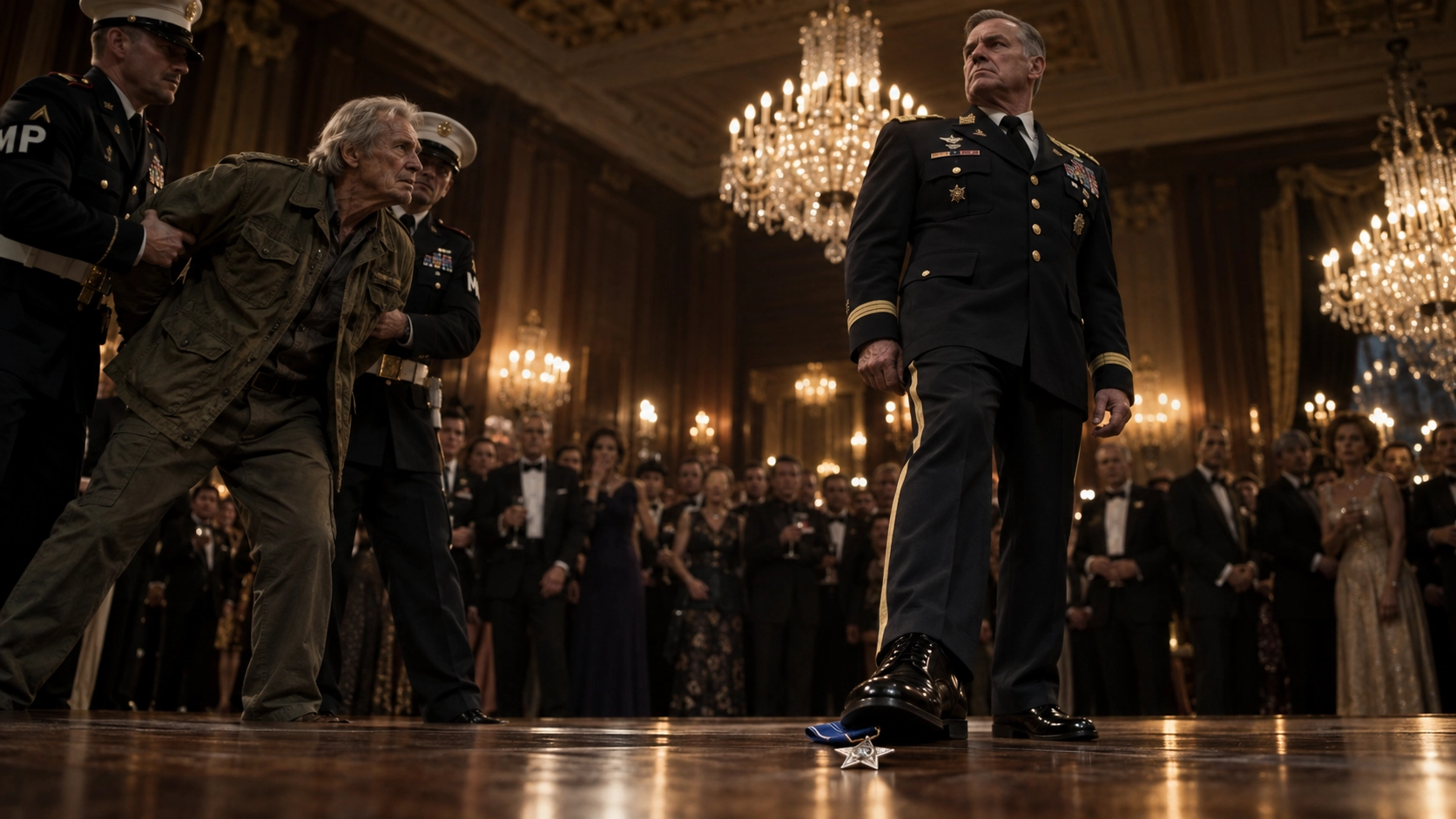
His name meant nothing here now. General Cole. The man who had authorized the northern offensive. The man whose signature had set seventeen thousand soldiers in motion on a gray October morning eleven years ago. He had been decorated for it. Twice. The operation had been called a success — strategic objectives achieved, casualties within projected parameters.
Projected parameters.
He had written that phrase himself.
Lucas had been in the third wave.
Robert had known. He had known his son’s unit, his son’s position, his son’s assignment. He had signed the order anyway, because a general cannot make exceptions for his own blood without betraying every other son on the field. He had told himself that. He had told himself that every day for seven years.
He wasn’t sure he believed it anymore.
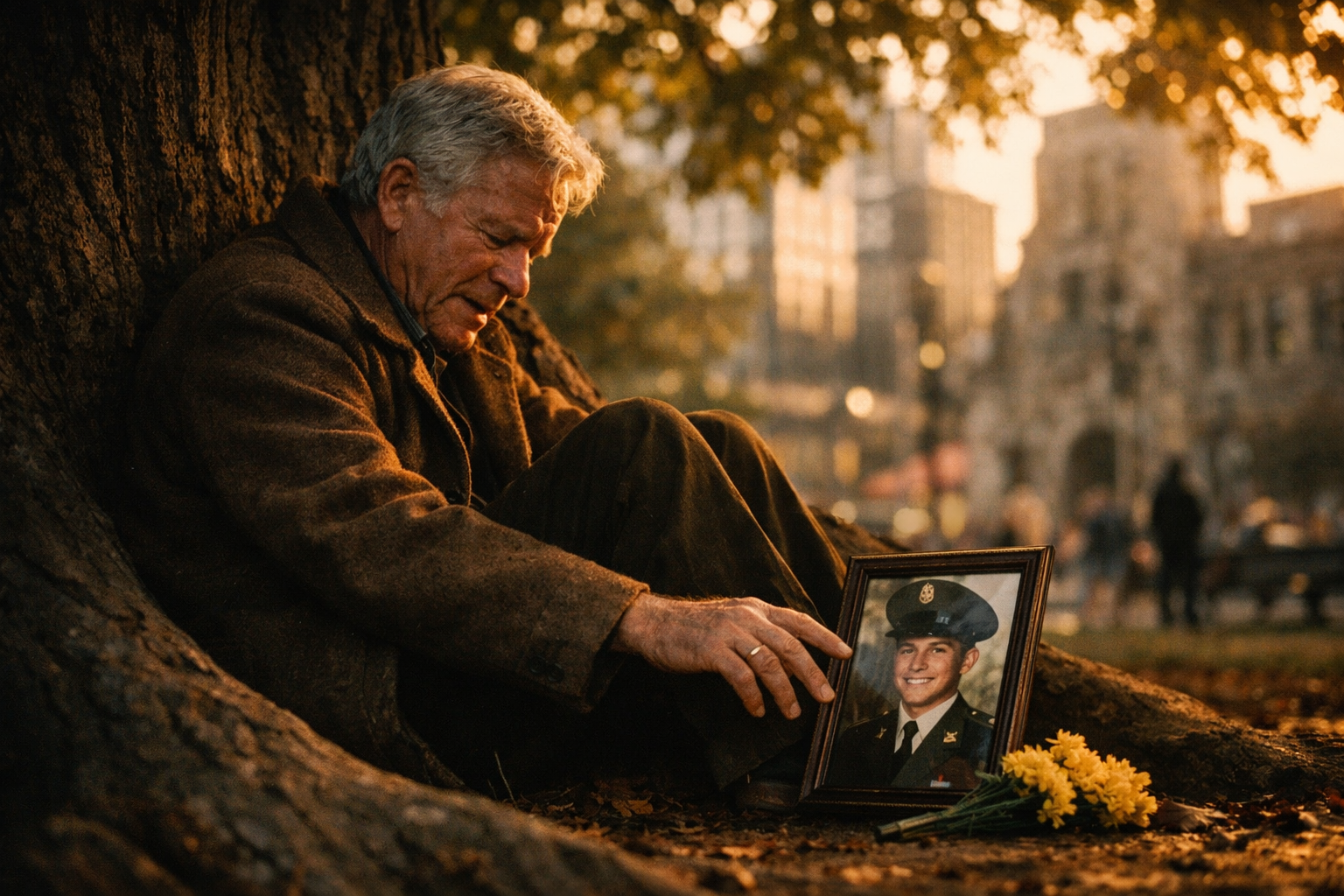
The park had survived mostly intact — older than the war, older than the country that had fought it. An oak at the far end, enormous, its roots breaking through the ground like knuckles. He had seen it once in a reconnaissance photograph, a smudge of dark canopy on a tactical map. Now he stood beneath it.
He lowered himself to the ground slowly. The replaced knee. The weight of the coat — his father’s coat, the brown wool one, the one thing he still owned from before all of it.
He took the photograph from his pocket.
Lucas in uniform. Grinning. Squinting into the sun the way he always had, like the world was a little brighter than it needed to be.
Robert propped the photograph against the roots.
He set the yellow flowers beside it. Lucas had always liked yellow.
He sat.
The city moved around him — a woman walking a dog, children somewhere beyond the tree line, the sound of a tram. People who had rebuilt their lives inside the coordinates of his decision. He had no right to their forgiveness. He had not come for it.
He had come because Lucas deserved to be mourned in the place where he had fallen.
The light dropped low and golden. Robert reached out and rested two fingers on the edge of the photograph.
His throat closed.
“Happy birthday, son.” His voice barely made it above a whisper. A long pause. His hand trembled. “Forgive me for not being there when you needed me.”
He meant both things.
He meant: I was not on that street when the order came down from the sky.
He meant: I was the sky.
He pressed his hand over his mouth for a moment. Then he let it go — the tears, the jaw, the thing he had held clenched for seven years because generals do not grieve publicly, because grief is a luxury of people who did not choose this.
He had chosen this.
He wept.
After a while, the tears stopped. They always did.
He wiped his face. He looked at the photograph one more time — the grin, the squint, the boy he had raised and the soldier he had deployed and the man he would never know.
“You’d have been thirty-three today,” he said quietly. “I keep thinking about what you would have done by now. Whether you’d have forgiven me. Whether I would have let you.”
He sat with that for a moment.
Then he picked up the photograph, held it carefully, and put it back in his pocket over his heart.
He left the yellow flowers at the base of the oak.
He stood up slowly, the replaced knee complaining, the old coat settling around him.
He walked back through the city he had broken and that had put itself back together without him — past the new stone and the scorched stone, past the glass towers and the bridge and the river that had run through every map he had ever studied.
Robert Cole walked out of that city with his son’s photograph in his pocket and his father’s coat on his back.
He did not know if what he had done was right.
He knew only that he was still here, and Lucas was not, and that the difference between those two facts was a signature on a piece of paper.
He had come to sit with that.
He supposed he always would.
Original fictional stories. AI-assisted creative content.