The boy’s name was Tommy. Four years old, maybe five. His jacket hung loose, sleeves frayed at the edges.
He stood in front of the bakery kiosk, staring at the rolls behind the glass. His stomach twisted into knots. He hadn’t eaten since yesterday morning.
The cashier, Linda, was busy with her phone. Tommy’s small hand reached up, trembling, fingers brushing the edge of a cinnamon roll on the bottom shelf.
Almost there.
Linda’s head snapped up. “Hey!”
Tommy froze.
She lunged forward and slapped his hand hard. The crack echoed across the sidewalk. Tommy yanked his arm back, tears springing to his eyes.
“Thief! Little thief!” Linda’s voice rose, shrill and angry. “You think you can just take things?”
Tommy stumbled backward, clutching his stinging hand. His lip quivered. He couldn’t find words.
“Get out of here before I call the cops!”
A door opened behind the kiosk. Footsteps approached. Heavy, deliberate.
Mr. Carson—the owner—stepped into view. Sixty-two years old, silver hair, weathered hands that had built this business from nothing.
He’d watched the whole thing through the back window.
“Linda.” His voice was quiet. Controlled.
She spun around, startled. “Mr. Carson! This kid was stealing—”
“I saw.”
Tommy backed away another step, ready to run.
Mr. Carson knelt down slowly, joints creaking. He was now eye level with the boy.
“Hey there, son. What’s your name?”
Tommy’s voice came out as barely a whisper. “Tommy.”
“Tommy. That’s a good name.” Mr. Carson’s eyes were kind. “You hungry?”
The boy nodded, tears spilling down his cheeks.
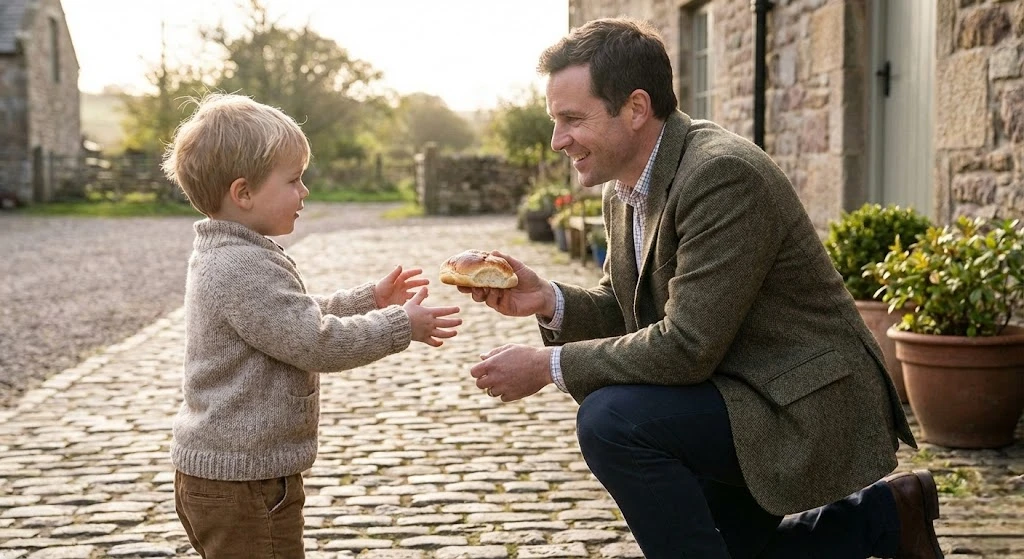
Mr. Carson stood and reached into the display case. He pulled out the cinnamon roll Tommy had tried to take, then grabbed a chocolate milk from the cooler.
He placed both in Tommy’s hands.
“There you go.”
Tommy stared at the food like it might vanish. “Really?”
“Really.”
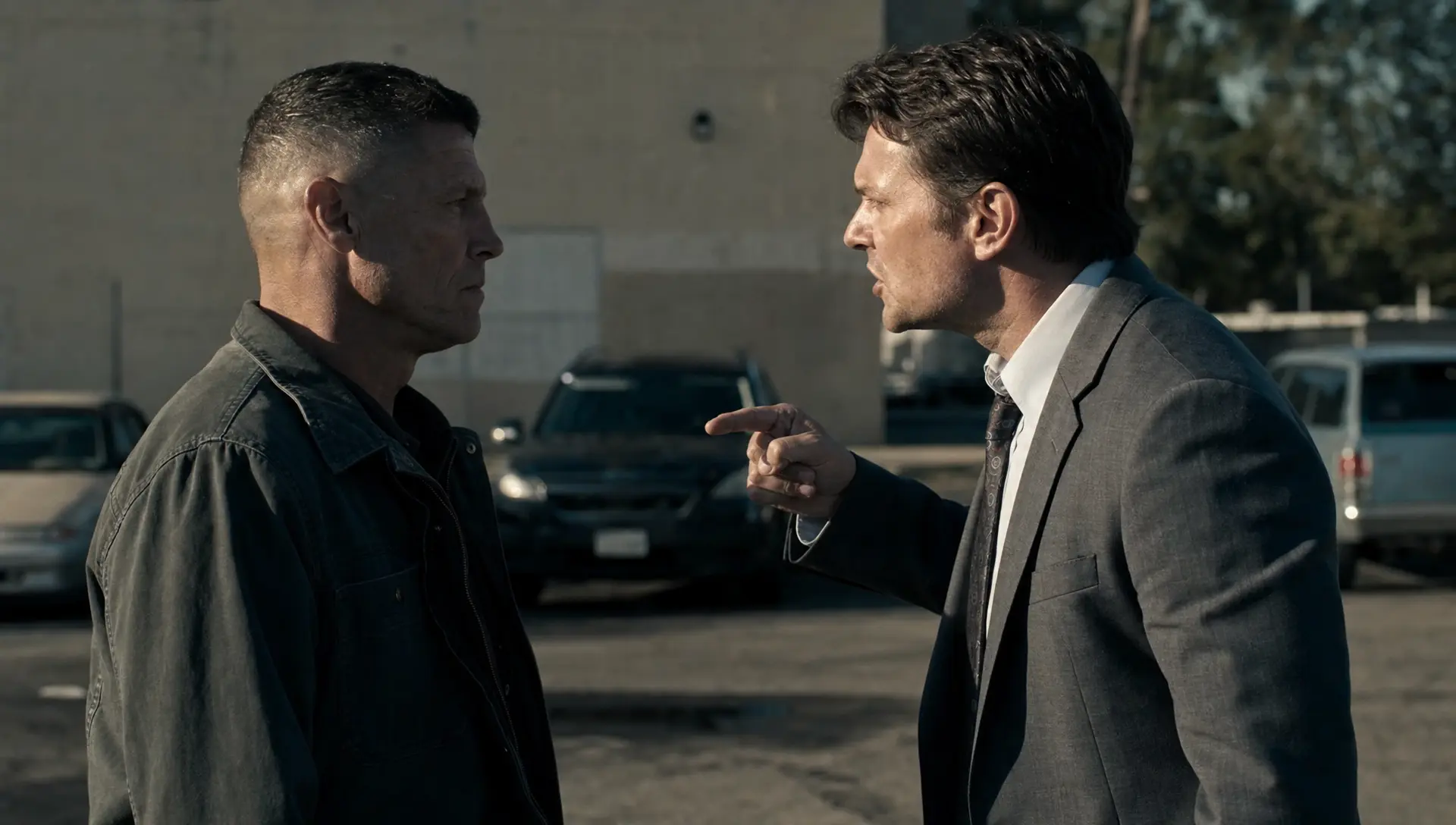
Linda sputtered behind them. “Sir, you can’t just—he was stealing!”
Mr. Carson turned to face her. The warmth in his eyes had disappeared.
“He’s a child. A hungry child.”
“That doesn’t give him the right to—”
“Where are your parents, Tommy?” Mr. Carson asked gently.
Tommy’s voice cracked. “Mom’s sick. Dad left. She can’t work right now.”
The words hung in the air.
Mr. Carson’s jaw tightened. He looked at Linda with something that wasn’t quite anger—it was deeper. Disappointment.
“You saw a starving child and your first instinct was to hit him?”
Linda’s face flushed. “I was just doing my job. Protecting the merchandise.”
“Your job is to serve customers with dignity. All of them.”
“He’s not a customer! He’s—”
“He’s someone who needed help.” Mr. Carson’s voice dropped lower. “And you chose cruelty.”
A small crowd had gathered on the sidewalk. Phones were out. Recording.
Linda glanced around, realizing too late how this looked.
Mr. Carson turned back to Tommy. “You eat that, okay? And come back tomorrow. I’ll have breakfast ready for you.”
Tommy’s eyes went wide. “Every day?”
“Every day you need it.”
The boy’s face crumpled. He threw his arms around Mr. Carson’s waist, the roll and milk clutched tight in his small hands.
“Thank you,” he sobbed into the old man’s shirt. “Thank you.”
Mr. Carson’s hand rested gently on Tommy’s head. “You’re welcome, son.”
He straightened and addressed Linda again. “We need to talk. Inside.”
Her confidence evaporated. “Mr. Carson, I didn’t mean—”
“Inside. Now.”
The crowd parted as Linda walked toward the back door, shoulders hunched.
Mr. Carson called after Tommy, who’d taken a few steps away. “Hey, Tommy? What’s your address?”
Tommy told him.
“I’m going to send someone by to check on your mom. Get her some help. Okay?”
The boy nodded, unable to speak through the mouthful of cinnamon roll.
Inside the kiosk, Mr. Carson closed the door. Linda stood by the counter, arms crossed defensively.
“I’ve worked here three years,” she started.
“I know.”
“I’ve never stolen anything. Never been late.”
“I know that too.”
“So why are you looking at me like that?”
Mr. Carson pulled out a chair and sat down heavily. “Because I’m wondering where you lost your humanity.”
Linda flinched.
“That boy is five years old, Linda. Five. He wasn’t stealing for fun. He was surviving.”
“People steal all the time. If I let one person—”
“He. Is. Five.” Each word deliberate. “His mother is sick. He’s alone. Hungry. Scared. And you hit him.”
Silence.
“I grew up like Tommy,” Mr. Carson said quietly. “Thirty cents in my pocket, holes in my shoes. A grocer in my neighborhood used to slip me day-old bread when no one was looking.” He paused. “That man saved my life.”
Linda’s eyes dropped to the floor.
“I built this business so I could be that person for others. So I could give back what was given to me.”
“I’m sorry,” Linda whispered.
“Tell him. Not me.”
He stood and walked to the register, pulling out a wad of cash. He counted out two hundred dollars and set it on the counter.
“This is for Tommy’s mother. For groceries. Medicine. Whatever they need.”
Linda stared at the money.
“And this,” Mr. Carson pulled out an envelope from the desk drawer, “is your final paycheck.”
Her head snapped up. “What?”
“You’re fired.”
“Mr. Carson, please—I made a mistake!”
“You made a choice. You saw a child in need and responded with violence.” His voice was steady, final. “I can’t have someone like that representing my business.”
“I have bills! Rent!”
“So does Tommy’s mother.” He pushed the envelope toward her. “Clean out your locker. Leave your key.”
Linda’s hands shook as she took the envelope. Tears streamed down her face, but Mr. Carson’s expression didn’t soften.
She grabbed her purse and walked to the door. Before leaving, she turned back.
“I really am sorry.”
“I believe you. But sorry doesn’t undo what you did.”
The door closed behind her.
Mr. Carson stood alone in the kiosk, the afternoon sun slanting through the windows. He picked up the cash for Tommy’s mother and tucked it into his jacket.
He had a house call to make.
Two hours later, Mr. Carson knocked on the door of a rundown apartment building. A weak voice answered from inside.
“Who is it?”
“My name’s Carson. I own the bakery on Fifth. Your son Tommy came by today.”
The door cracked open. A woman in her thirties, pale and thin, peered out. Dark circles shadowed her eyes.
“Is he in trouble?”
“No, ma’am. Quite the opposite.” Mr. Carson held out the cash. “He tried to take some food because he was hungry. I wanted to make sure you both have what you need.”
Her eyes widened. She tried to speak but couldn’t.
“There’s also a community health clinic on Maple Street. Free services for folks between jobs. I know the director—I’ll give her a call.”
Tommy appeared behind his mother, the empty milk carton still in his hand. When he saw Mr. Carson, his face lit up.
“Mom, that’s him! That’s the nice man!”
She looked from the money to Mr. Carson to her son, tears spilling over. “I don’t know what to say.”
“Say you’ll let me help.”
She nodded, taking the cash with shaking hands. “Thank you. God bless you.”
“Get yourself checked out. Get some rest. And send Tommy by the kiosk every morning. I’ll make sure he eats.”
Three weeks later, Tommy’s mother started a new job as a receptionist at the health clinic that had treated her pneumonia. She worked part-time while rebuilding her strength.
Tommy came by the kiosk every morning before preschool, where Mr. Carson had enrolled him using a small scholarship fund he’d quietly established.
The story spread through the neighborhood. Business at the kiosk doubled. People wanted to support the man who’d stood up for a hungry child.
Linda never came back. She found work at a different shop across town, but the video of that day followed her. She’d learned that kindness matters—and cruelty has consequences.
Mr. Carson hired a new cashier, a young woman named Rosa who had herself once been homeless. She understood what it meant to be desperate.
On Tommy’s sixth birthday, Mr. Carson brought a small cake to the kiosk. Tommy blew out the candles surrounded by neighbors who’d watched him transform from a scared, hungry child into a bright, hopeful boy.
His mother stood beside him, healthy now, tears of gratitude in her eyes.
“Make a wish,” Mr. Carson said.
Tommy closed his eyes tight. When he opened them, he looked up at the old man who’d changed everything.
“I wished that everyone could have someone like you.”
Mr. Carson’s throat tightened. He ruffled Tommy’s hair. “The world needs more people who care, that’s for sure.”
That night, Mr. Carson locked up the kiosk and walked home through the quiet streets. He thought about Linda, about choices, about the grocer who’d slipped him bread forty years ago.
He’d paid it forward. And somewhere, he hoped, Tommy would too.
The slap had ended a job. The kindness had saved a life. And everyone who witnessed it learned that day what really matters—not protecting merchandise, but protecting people.
Justice served. Karma delivered. A child fed, a mother healed, and a cruel act replaced with compassion that rippled through an entire community.
Original fictional stories. AI-assisted creative content.