THE WOMAN BEHIND ROOK
The diner had been quiet for twenty minutes before she walked in.
Not the kind of quiet that means nothing is happening.
The kind that means everyone already knows something is about to.
Nearly fifty bikers sat in the booths and barstools of the Red Crow Diner. Old leather. Coffee going cold. Rain bending the neon outside into trembling shapes on the checkered floor.
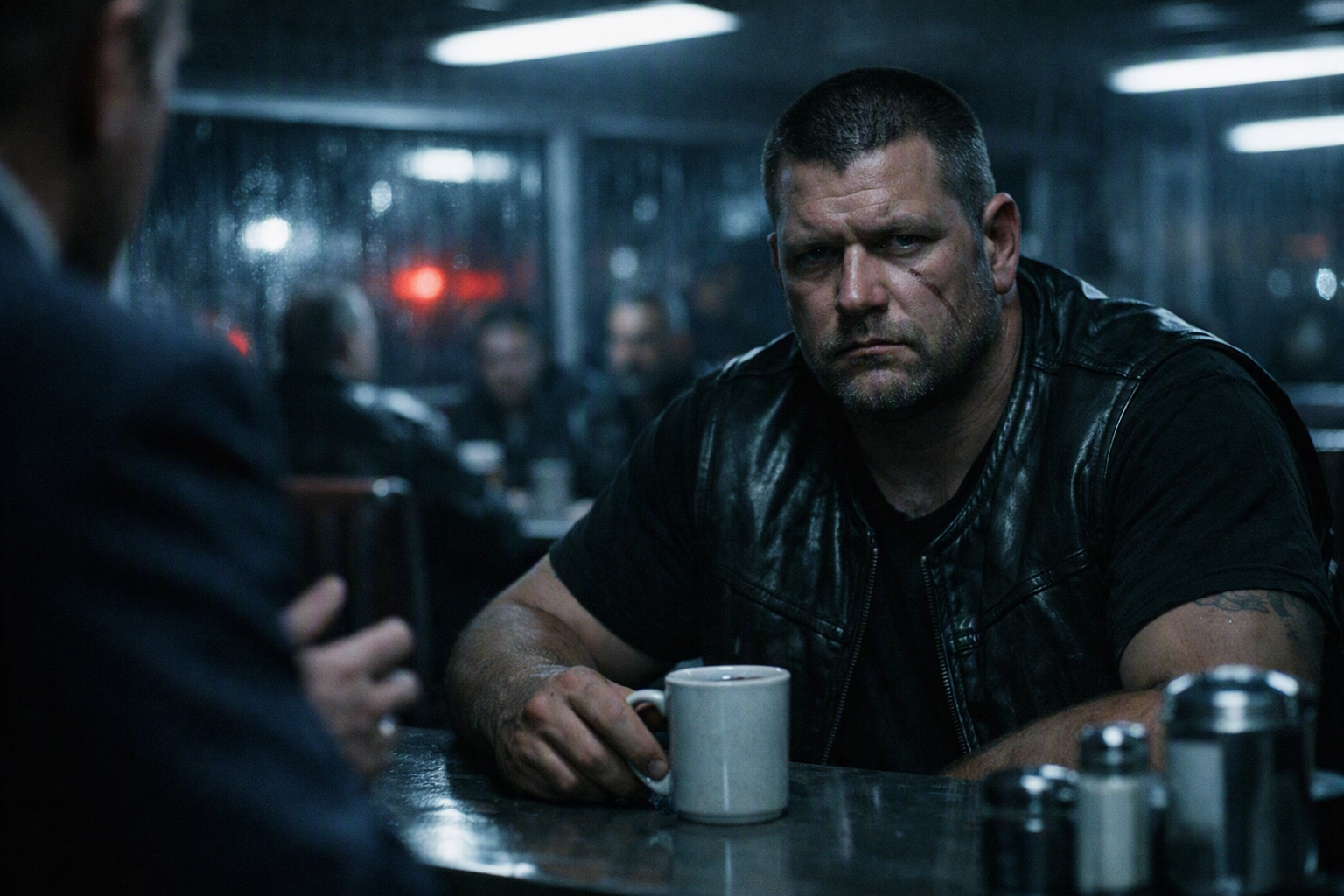
Caleb “Rook” Maddox sat at the far end of the counter.
He was watching the door when she came through it.
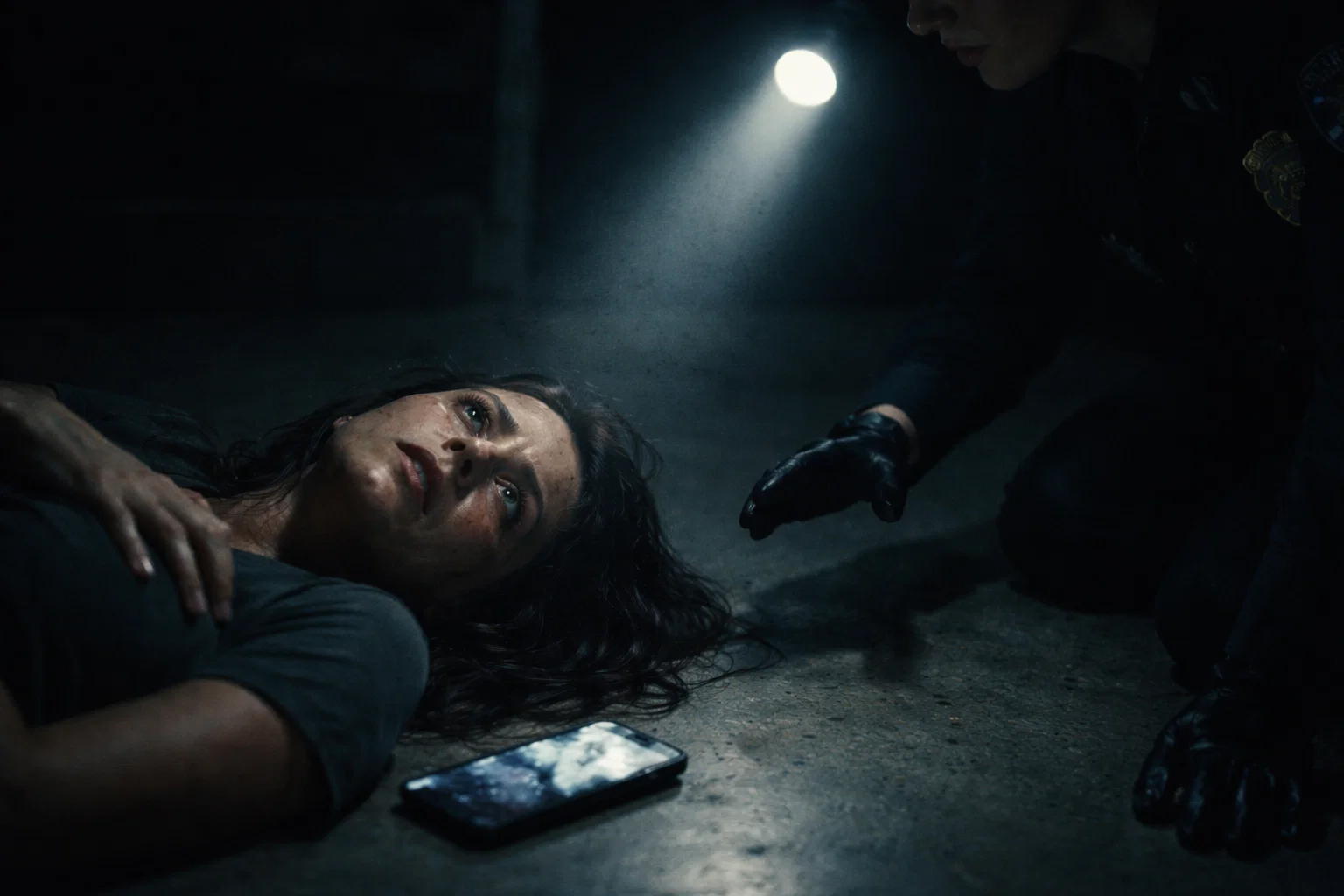
She was bleeding above her eyebrow. Her jacket was torn at the shoulder. She was holding the bruised side of her face with one hand and scanning the room like she expected everyone inside to hand her straight back to whoever had done this.
She looked at Rook.
He looked back.
“Please,” she said.
He pointed at the stool beside him.
“Sit down.”
Her name was Emily Carter.
He learned it in pieces, the way you learn anything real — not all at once, but in the gaps between fear.
She had run from a house in Millbrook. Her husband was Richard Vane — a name that meant nothing to her until she said it out loud in a diner full of bikers and watched what happened to the air.
“How long?” Rook asked.
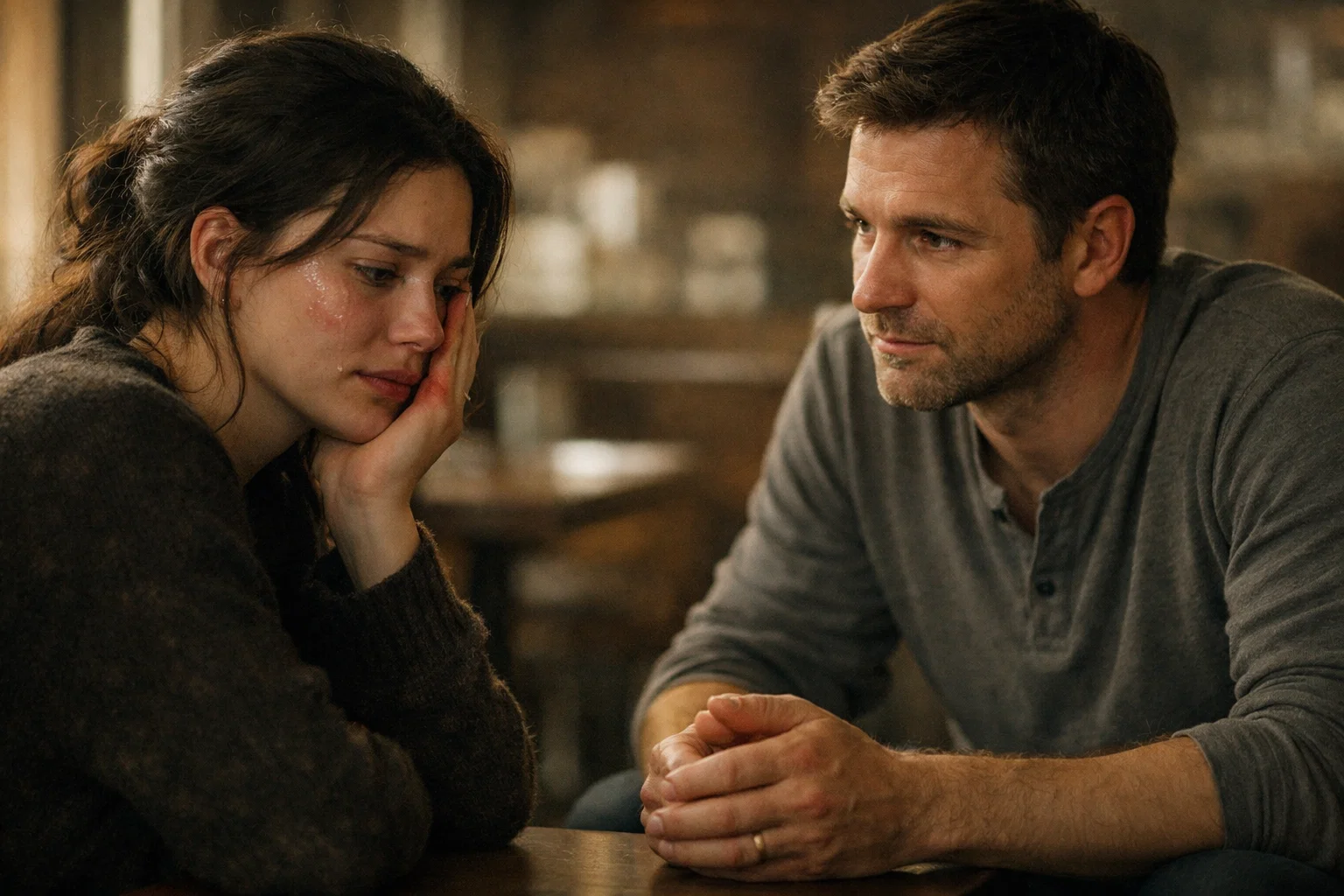
“Three years married.” She kept her hands wrapped around a mug the waitress had placed in front of her without asking. “He changed slowly. That’s the part nobody believes.”
“I believe it.”
She looked at him.
“Most people say that before they stop believing it.”
“I know,” Rook said. “I was one of them.”
She didn’t ask what he meant. Not yet.
Outside, headlights swept across the rain-dark lot.
A car had stopped at the edge of the highway.
The engine was still running.
The door opened.
Richard Vane entered wearing a navy suit that cost more than most of the motorcycles parked outside. He had the kind of controlled calm that came from a lifetime of being obeyed in every room he entered.
The diner held its breath.
Richard found Emily immediately.
Then he found Rook.
“She’s my wife,” Richard said to the room. “She left during an argument. I’ve come to bring her home.”
Nobody moved.
Nobody said a word.
Rook picked up his coffee.
“She asked us for help.”
“She’s unwell.”
“She looks pretty clear to me.”
Richard’s jaw tightened. “You have no idea who you’re dealing with.”
“Tell me, then.”
“I’d rather not embarrass you in front of your friends.”
“Then don’t.”
Emily’s hands shook against the mug. She didn’t run. She stayed.
That was the first thing Rook noticed about her — not the bruises, not the fear. The fact that she stayed.
Richard switched tactics the way men like him always do when the room doesn’t move.
“Emily has suffered severe anxiety since we lost our child—”
“We never had a child,” Emily said.
Her voice was quiet, but it cut through everything.
Richard smiled.
Emily didn’t look away.
“He told people I miscarried. He created the records. He used them to explain why I stopped answering my phone.”
“She’s confused,” Richard said, softer now, performing the concern of a worried husband.
Rook stood.
He didn’t raise his voice.
He didn’t move toward Richard.
He simply stood, and the room changed.
Rook was taller than Richard and twice as wide. A scar ran from his left ear to his jaw. He placed himself between the man in the suit and the woman at the counter without a word.
“You came into the wrong diner.”
Richard stared at the Black Vultures patch.
“I know exactly which diner this is.”
“Then you know I’m not going to let her leave with you.”
“You’re harboring a mentally ill woman against medical advice.”
“No. I’m sitting with someone who asked for help.”
Richard looked past him.
“Emily. I’ll forget this happened. I’ll get you treatment. Come home.”
Emily spoke into her coffee.
“No.”
“You don’t mean that.”
“I do.”
Richard took a step forward.
Several bikers shifted without standing.
He stopped.
“You’re surrounded by criminals who think this is a movie.”
Rook looked around the room.
“That man owns a repair shop in Poughkeepsie. He’s got a daughter. That one over there drives long-haul. That one with the gray beard teaches high school history. Every one of them has a phone with a working camera.”
He looked back at Richard.
“Tonight they’re witnesses.”
Before Richard could answer, vehicles pulled into the lot.
A black pickup. A dark SUV. Another.
The door opened.
A woman in her forties entered in a dark rain jacket, leather case in hand. She scanned the room once and found Richard’s face.
“Rebecca Shaw,” he said. “You’re outside your jurisdiction.”
“I’m not here as a prosecutor,” Rebecca said. “I’m here as the attorney representing Emily Carter.”
She placed her case on a table.
“I also brought copies of the case you had buried eight years ago.”
Richard went very still.
“Whatever she’s told you—”
“She hasn’t told me anything yet.” Rebecca opened the case. “I’ve been building this file since before she knew you existed.”
Emily turned to Rook.
“Who are these people?”
“People who can open what he locked.”
“That doesn’t make sense.”
Richard’s voice dropped. “It will, Emily. And when it does, you’ll understand that you’ve put your life in the hands of people with nothing to lose.”
Rook turned his head slightly.
“We have plenty to lose.”
“Then you’ll walk away.”
“After.”
A detective named Marcus Reed entered behind Rebecca.
Richard looked at him.
“Marcus Reed. Fired for misconduct.”
“Retired,” Marcus said, “after refusing to bury the complaint you filed against a witness.” He smiled without humor. “Nice to see you again.”
A third arrival — Dr. Lena Ortiz, emergency medicine, weekend rider — stepped in behind them.
Rook turned to Emily.
“Dr. Ortiz can examine your injuries. Only if you want. You decide.”
Emily looked at the doctor.
Then at Richard.
Then back at Rook.
“Yes.”
Lena guided Emily to a rear booth behind a privacy screen.
Richard moved to follow.
Marcus blocked his path.
“You stay here.”
Richard smiled at the room — the smile of a man who believes even losing is temporary.
Then Rebecca removed a photograph from her case.
The smile left.
The photograph showed a young woman standing outside an apartment building.
Her name was Hannah Price.
She had been missing for six years.
A second photograph: Melissa Grant, officially dead from a single-car accident on a clear night.
A third photograph: Rook, younger, beside a woman in a hospital bed.
Richard looked at it.
Rook’s voice came out flat.
“My sister. Anna Maddox.”
Emily heard the name from behind the screen.
She stopped breathing.
Richard’s face showed nothing.
“I’ve never met your sister.”
“You married her,” Rook said. “Under a different name. Daniel Vale.”
The room went quiet again — the deep kind.
Rook continued:
“Nevada. Eleven years ago. You isolated her, controlled her accounts, convinced her family she was unstable. When she ended up in the hospital, you had already planned the story.”
Emily stepped from behind the screen.
Lena reached for her gently.
Emily moved past her.
“That’s what he did to me,” she said. “Exactly.”
“Yes,” Rook said.
“She died?”
Rook nodded.
“Three months after she left him.”
Emily stared at Richard.
He had nothing to say.
The bikers watched.
Still no one moved toward him.
Still no one needed to.
Rebecca placed a recorder on the table.
Anna’s voice came through the speaker.
It was weak. It was terrified. It was completely clear.
If anything happens to me, Daniel Vale is responsible. His real name may be Richard. He keeps documents in a storage unit outside Newark. Unit 317. The code is our wedding date backward.
Richard’s face went white.
He recovered quickly.
“A dead woman’s recording. Fabricated.”
Rebecca held up a court order.
“Then you won’t mind that federal agents are opening Unit 317 right now.”
Sirens rose in the distance.
Not local.
Multiple vehicles, coming fast.
Richard looked toward the windows.
Rook watched him.
“That’s who I called.”
Richard took a breath. Then he smiled — the smile of a man with a last card.
“You’ll lose the case without the documents. And the documents are being destroyed as we speak.”
Orange light appeared beyond the treeline.
Marcus went to the window.
“Fire.”
Rebecca whispered:
“The storage unit.”
Richard checked his watch.
“The house burns next. Emily’s mother is still inside. She arrived this morning — I told Emily she’d already left.”
Emily’s face drained.
“My mother—”
“Come with me,” Richard said quietly. “I stop the call. We go home. All of this becomes a misunderstanding.”
Emily took one step toward the door.
Rook moved without thinking.
“No.”
She turned on him.
“He’ll kill her.”
“If you go with him, he kills both of you.”
“You don’t know that.”
“I do.”
Richard smiled.
“Nine minutes.”
Rook looked at the waitress behind the counter.
“Old storm radio. Does it still work?”
She pulled it from under the counter.
He took it.
“Marcus — Millbrook, which county?”
“Dutchess.”
Rook switched to an emergency frequency and called out an address code that made Richard go still — a code that didn’t mean 911, that meant something older and more tangled than any dispatch protocol.
Voices responded almost immediately.
Volunteer fire crew six minutes out.
Off-duty deputy two roads over.
A tow operator already heading there.
Emily watched him work the radio.
Richard watched his window close.
The sirens outside were close now. Very close.
Federal vehicles swung into the lot.
Richard reached into his suit.
Fifty bikers rose as one.
Marcus drew.
Rook stepped in front of Emily.
Richard held up a second phone.
He pressed one button.
Far away, something detonated.
Emily screamed.
The radio crackled.
—one adult female outside — alive — repeat, female is outside—
Emily’s legs gave.
Rook caught her.
Richard stared at the phone like it had made a mistake.
Federal agents poured in with weapons raised.
“Richard Vane! Hands up! NOW!”
He didn’t resist.
He let them cuff him.
As they walked him toward the door, he passed Rook.
“You still sent Anna back,” he said quietly.
Rook’s hands closed.
He didn’t move.
Richard walked out.
The door closed.
Emily sat in a booth wrapped in a blanket Lena had found somewhere.
Rook stayed near the counter.
She watched him.
“What he said about your sister — was it true?”
Rook looked at his abandoned coffee.
“She came to me. Said her husband was controlling her, drugging her, watching her.”
“You didn’t believe her?”
“I believed she was scared. I thought the fear came from withdrawals. She’d been sober two years but — I kept seeing who she used to be, not who she was.”
“She asked to stay?”
“She asked to stay.” He was quiet for a moment. “I told her to go home and talk to her husband. Three days later she was in the hospital. She died three months after that.”
Emily looked at the rain on the window.
“You didn’t know what he was.”
“I chose not to look.”
She understood there was nothing she could say to fix that. So she said the only thing that was true.
“You believed me.”
Rook finally looked at her.
“Too late for Anna.”
“Not too late for me.”
An agent opened the door.
“Mr. Maddox — we found something in Vane’s car.”
An evidence bag. An old photograph inside it.
Anna Maddox stood beside a teenage girl in front of a painted mural.
Black birds crossing a city skyline.
Rook looked at the girl.
Emily rose from the booth.
“I know her,” she said.
He turned.
“What?”
“I know her.” Emily took one step closer to the photograph. “She was my counselor when I was sixteen. At a youth shelter in Newark. She taught art.”
Rook stared.
“She couldn’t draw.”
“She was terrible.” Emily’s voice caught. “She said the bad drawings were part of the lesson.”
For a moment, the two of them stood over a photograph of a dead woman who had, without knowing it, connected them both to the same monster.
“He didn’t find you by accident,” Rook said.
“No.”
“He used her work to find you.”
Emily looked at the birds in the mural.
“She hid something there.”
The shelter had been closed for five years.
The building was scheduled for demolition in three weeks.
They drove to Newark at dawn — Emily, Rook, Marcus, Rebecca, and Agent Blake.
Federal agents went in first.
The recreation room was stripped bare except for one thing.
The mural.
Faded under years of dust and bad lighting, but still there.
Black birds crossing a blue-gray skyline.
Rook touched the wall where Anna’s brushstroke curved.
Emily found the loose wooden panel without looking — muscle memory from a decade ago, from an exercise about hiding the things you were afraid to say.
Behind it: envelopes from former residents, handwritten on shelter paper.
Children who had long since moved on.
And at the back, a flat metal box.
Rook opened it.
Flash drive. Photographs. A handwritten list titled:
People Who Help Richard Find Them.
Emily read the names.
She stopped at one.
Dr. Elaine Porter.
Her therapist.
The woman who had told her, session after session, that her memories were unreliable. That her husband was trying to help her. That leaving would make her condition worse.
She hadn’t had a condition.
She’d had a therapist who was being paid to keep her in place.
Blake’s team arrested Porter before noon.
The flash drive held more than names.
Video of Richard threatening Anna.
Financial records tying him to six charity foundations.
A recording of Richard’s voice saying, Her brother thinks she’s using again. Keep it that way.
Rook listened to it once.
He didn’t listen to it again.
Emily stood beside him.
“He built the doubt,” she said. “He didn’t just use it.”
“I still made the choice.”
“You can carry the regret without turning it into your whole identity.” She paused. “You told me something like that once.”
“I said it differently.”
“I improved it.”
The case exploded from there.
Hannah Price was alive in Montana, hiding under a different name, convinced Richard would find her if she surfaced.
When she learned he was in federal custody and Anna’s evidence had survived — she agreed to testify.
Claire Evans flew in from Canada.
Tasha Reynolds was found in a care facility paid for by a Vane foundation — medicated into legal incompetence after she tried to go to the police two years earlier.
The web Richard had built was not about violence.
It was about systems.
Therapists and charity directors and a detective who wrote the right reports. A network designed to make women disappear into their own unreliability.
Two days after the shelter search, that network struck back.
A deputy transferring Dr. Porter was ambushed.
Porter walked out of a government vehicle and disappeared.
She knew where Margaret Carter was hospitalized.
By the time agents reached the room, the bed was empty.
Forged transfer paperwork. A nurse who had no reason to doubt it.
Emily’s phone buzzed.
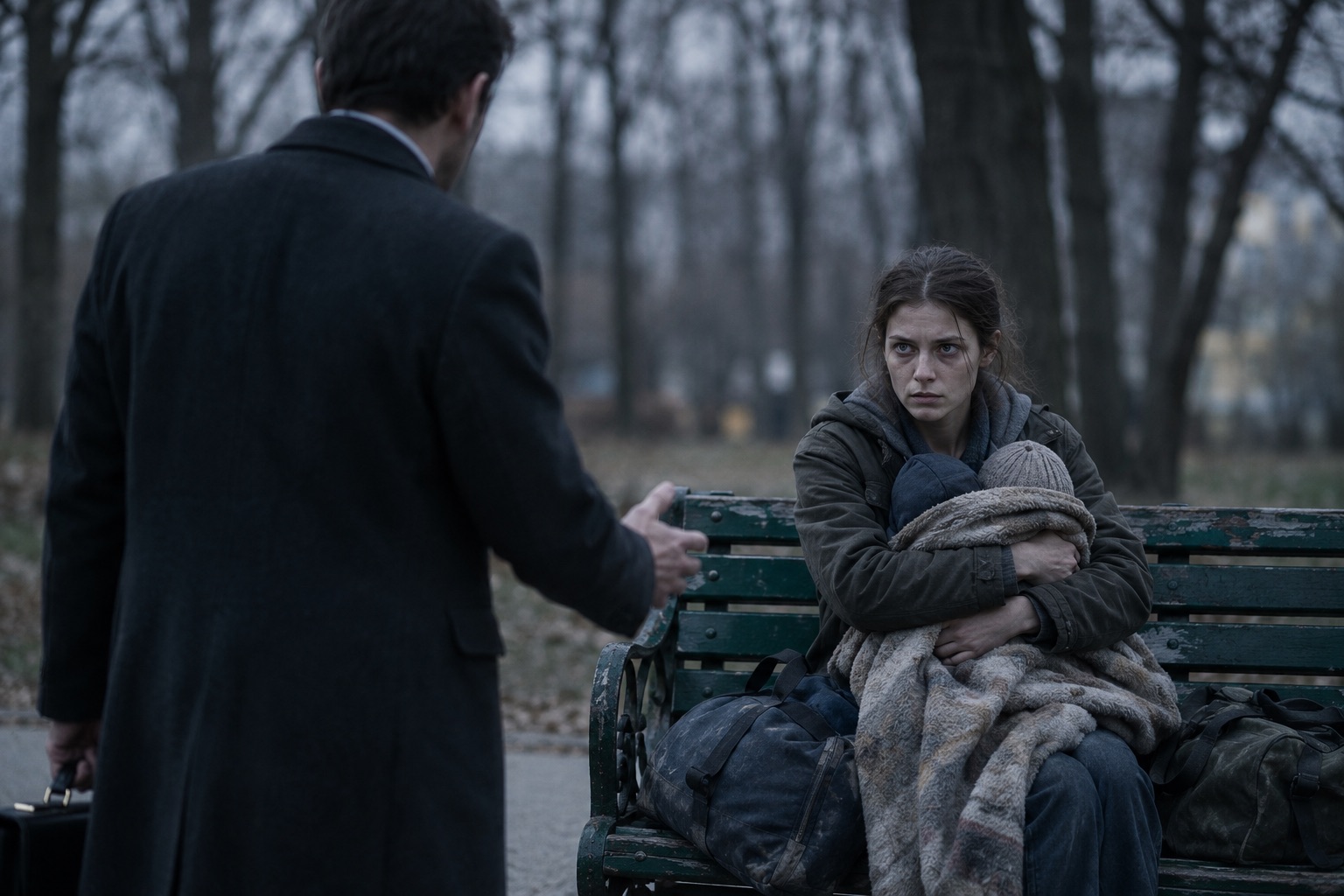
A photograph of her mother in a chair. A concrete wall behind her. A rusty radiator.
Trade the drive for your mother. Come alone.
Rook looked at the picture and recognized the building.
The old Vane textile mill. He’d stored flood relief supplies there three years ago.
“We give them the real drive,” he said.
Blake shook his head.
“We already copied it ten times over,” Rook said. “Let them think they won.”
The plan was simple.
Emily would go in. Federal teams would surround the building. The Black Vultures would stay back.
Rook told Marcus to use the old service tunnel.
The mill was dark when Emily walked in.
Her footsteps echoed on concrete.
Porter waited near the center of the floor, two armed men flanking her. A third man stood behind Margaret, who sat tied to a chair and was trying not to show how frightened she was.
Porter smiled.
“I always told Richard you were more resilient than you looked.”
“He was wrong about a lot of things,” Emily said.
“The drive.”
Emily held it up.
“Let her go first.”
“Set it on the floor.”
Margaret shook her head hard.
“Don’t.”
Emily set it down.
One of the men plugged it into a laptop.
“It’s real.”
“Of course it is.” Porter picked it up. “Now—”
A gunshot from outside.
The lights went dead.
Federal agents breached the front.
The armed men swung toward the sound.
And then, from the rear loading doors — the sound of motorcycle engines.
Two.
Four.
More.
The doors burst open.
Black Vultures rode in with headlights blazing — not to fight, but to blind, to flood the darkness with light and noise and the sudden presence of something completely unplanned for.
In the confusion, Porter grabbed Emily.
Rook came around the third concrete pillar.
Porter pressed the gun to Emily’s neck.
“Back up.”
Rook stopped.
“You failed her,” Porter said. “Anna came to you and you sent her back. Everything that happened after that is on you.”
Rook looked at Emily.
His voice was completely flat.
“You’re right about one thing. I failed her.”
Porter smiled.
“But you don’t get to use that to hold someone else forever.”
Margaret’s foot shot out and caught her guard in the knee.
He stumbled.
Emily drove her elbow hard into Porter’s ribs.
The gun fired into the ceiling.
Rook closed the distance in two strides, stripped the weapon from Porter’s hand, and put her on the floor without hitting her again.
Agents flooded the room.
The other men dropped their weapons.
Margaret was freed.
Emily crossed the floor and wrapped her arms around her mother.
Marcus appeared at Rook’s shoulder.
“You okay?”
Rook watched Emily and Margaret hold each other in the dark.
“No.”
He kept watching.
“But they are.”
He breathed out.
“That’s enough.”
Richard Vane’s trial began six months later.
It lasted four weeks.
His attorneys attacked every witness.
Hannah was unstable. Tasha was unreliable. Emily was financially motivated. The Black Vultures were a criminal organization running a revenge campaign.
The media picked it up. Old photos of club members outside bars appeared on news channels. Anonymous sources leaked weapons trafficking allegations.
It was false. All of it.
But false and believable are two different things.
Several Black Vultures lost business. A bank froze the club’s charity account. The diner owner started getting calls at midnight.
Rook sat in the clubhouse and considered whether the right thing was to dissolve the chapter.
Marcus said no.
“You don’t burn down a house because someone lied about the people inside.”
“The men have families.”
“So do the women they helped.”
Emily attended the meeting.
She stood near the back and waited until Rook acknowledged her.
“You can’t disappear now,” she said.
“It’s not your decision.”
“No. But I can tell you when fear is making it for you.”
He remembered saying that to her once.
She met his eyes.
“Richard wants the jury to see dangerous criminals. Then they stop hearing what the women say.”
Diesel — a mechanic, three kids, sixteen years in the club — spoke from the back.
“Tell the truth.”
Shepherd — a veteran, two tours, still woke up at two a.m. — added:
“And open the books.”
They did both.
They invited independent journalists to audit the club’s finances and review their community work. The public discovered hurricane relief, free vehicle repair for struggling families, addiction recovery funding for veterans.
Imperfect men. Some with records. Some who still fought too hard.
Not an army of predators.
The jury heard it all.
Rook testified on the third day.
The defense attorney tried to use Anna.
“You believed she was using drugs?”
“Yes.”
“You refused to shelter her?”
“Yes.”
“You told her to return to the defendant?”
“Yes.”
“And your own conduct contributed to her death.”
Rook looked at the jury.
“Yes.”
The attorney paused.
She had expected a denial.
“You admit responsibility?”
“I admit failure.”
“Isn’t this case your way of punishing my client for your guilt?”
“No.”
“What is it, then?”
Rook looked across the gallery — at Emily, at Hannah, at Claire, at Tasha.
“It’s what happens when people he expected to stay isolated end up in the same room.”
The defense tried one more angle.
“You wanted to hurt Mr. Vane the night at the diner.”
“Yes.”
“You admit that.”
“I admit it.”
The attorney smiled.
“But I didn’t,” Rook said.
The smile disappeared.
Emily testified last.
Richard watched her from the defense table. Thinner. Still polished.
The prosecutor asked:
“Why did you walk into that diner?”
“I thought I was going to die.”
“Why did you approach Mr. Maddox specifically?”
“I didn’t know him.”
“Then why him?”
Emily thought about the dark vest, the scar, the fifty men who didn’t stand up.
“He looked like the most dangerous man in the room.”
She paused.
“I was wrong.”
The courtroom waited.
“He asked what I wanted. Nobody had done that in three years.”
The defense tried Porter’s old medical records — unreliable memories, fragile mental state.
Emily answered calmly:
“Those records were created by someone who is now serving thirty-two years for helping imprison me.”
Richard stood.
The judge told him to sit.
He didn’t.
“She is lying!”
“Mr. Vane—”
“She came back every time! She came back because she wanted to!”
Emily looked at him.
“I came back because you made me believe leaving was failure.”
“You loved me.”
“I loved who you pretended to be.”
Richard pointed at Rook.
“And now you think he saved you?”
Emily shook her head.
“No.”
She looked at the jury.
“He helped. My mother helped. The women before me helped — even the ones who didn’t survive. Anna helped. The firefighters helped. The attorneys helped.” She paused. “I saved part of myself too.”
Richard stared at her.
For the first time, he wasn’t at the center of anything.
The jury found him guilty on every major count.
Multiple life sentences, no parole.
Dr. Porter: thirty-two years.
Nine other convictions across the network — foundation directors, police officers, medical administrators.
Anna’s death was officially reclassified: not an isolated suicide. The result of coercive control and systematic criminal abuse.
Her record no longer described her only as unstable.
It described the evidence she had tried to preserve.
After sentencing, reporters asked Rook if justice had been served.
He answered:
“A verdict is accountability. Justice takes longer.”
Justice was Margaret sleeping through the night without checking the locks three times.
Justice was Hannah using her real name at the pharmacy.
Justice was Tasha signing her own medical releases for the first time in four years.
Justice was not a moment.
It was the slow return of ordinary choices.
Rook and Rebecca built Anna’s Door — a crisis network. Shelters, legal advocates, emergency transport, medical support. The Black Vultures provided rides when professionals requested it. No vigilante rescues. No decisions made for survivors without their say.
Emily joined the advisory board.
She argued with Rook regularly.
“You can’t call it protection if you don’t ask.”
“I know.”
“You arranged transit for that woman in Albany without asking her caseworker.”
“I asked Marcus.”
“That’s not the same.”
“I know.”
“You keep saying that.”
“I keep learning.”
Margaret moved with Emily to a small house near the mountains. Emily found her own therapist — someone she chose, not someone assigned to her.
Some days she was fine.
Some days a closing door or a dark hallway sent her heart slamming back into a room she thought she’d left.
Rook never told her she was safe.
He’d learned that safety wasn’t something you could hand someone else.
He asked instead:
“What do you need?”
Sometimes she needed him to stay.
Sometimes she needed him to go.
He respected both.
They argued. They ate bad food at good diners. They drove quiet roads on summer evenings when Emily decided she wanted to learn to ride.
One night he found her standing outside Anna’s memorial garden behind the clubhouse.
“You’re avoiding the fundraiser.”
“I hate speeches.”
“You gave three.”
“Exactly.”
They sat together in the dark.
Emily eventually said:
“I don’t want you to be my rescuer.”
“I know.”
“I want to know you.”
He looked at her.
“You do know me.”
“Then maybe something else.”
He was quiet.
“Only if you decide,” he said.
She smiled.
“You are learning.”
The contract came six weeks later.
A surviving member of Richard’s financial network — a man who believed killing the club’s president would collapse Anna’s Door and scatter the witnesses still cooperating with federal investigators.
A truck forced Rook’s motorcycle off a rural highway at night.
He walked away from it.
Barely.
Broken ribs. A bad leg injury. Three days in a hospital bed.
Emily received the call.
She stood in the kitchen of her mother’s house for a long moment.
She thought about what it felt like to be afraid and whether that feeling had the right to decide where she went.
It didn’t.
She drove to the hospital.
Rook opened his eyes and found her in the chair beside the bed.
“You came.”
She crossed her arms.
“You told Marcus not to call me.”
He closed his eyes.
“Bad start.”
“Very.”
“I’m sorry.”
She pulled the chair closer.
“Are you going to walk again?”
“Doctor says yes.”
“Ride?”
“Eventually.”
“Good.”
He watched her.
“You’re scared.”
“Yes.”
“You can leave.”
“I know.” She took his hand. “I’m staying because I want to.”
Neither of them confused want with debt this time.
Neither of them needed to.
Two years after the night in the diner, the neon still flickered in the red and blue outside.
The booths had been patched. The floor still ran slightly uneven near the back. The grill still hissed behind the chrome counter.
A small brass plaque had been mounted near the door.
ANYONE ASKING FOR HELP WILL BE HEARD.
No club logo. No names. No credit claimed.
Just the words.
The diner owner, who had lived through the siege and the federal search and the cameras outside his building, said it was the quietest powerful thing he’d ever hung on a wall.
Rook and Emily got married behind the building on a Saturday in October.
No cathedral. No photographers hired by a publicist.
Margaret walked Emily down the aisle.
Marcus stood beside Rook.
Rebecca officiated.
Hannah, Tasha, and Claire sat in the second row.
The Black Vultures parked their motorcycles far enough away that you could hear the vows without the engines.
Emily carried a small photograph of Anna inside her bouquet.
During the ceremony, she glanced once toward the diner door.
Two years ago she’d walked through it with blood on her face and thirty seconds left to decide whether to trust a stranger.
Now she stood outside it by choice.
Rook spoke first.
“I spent years believing love meant standing between someone and every threat.”
He looked at her.
“You taught me that love also means stepping aside when someone needs to stand for themselves.”
Emily answered:
“I spent years believing safety meant finding someone strong enough to make the fear go away.”
She took both his hands.
“You taught me that fear can stay — and I can still choose where I go.”
At sunset, after the pie and the bad dancing and the laughter that filled the parking lot, Emily found Rook standing alone near the motorcycles.
“You’re hiding.”
“I’m reflecting.”
“You’re hiding.”
He nodded.
“A little.”
She stood beside him.
“Do you think Anna would have liked this?”
Rook looked toward the lights inside the diner.
“She would have complained about the flowers.”
“She hated flowers?”
“She hated arranged flowers. Said they looked kidnapped.”
Emily laughed.
The laugh faded slowly.
“She should be here.”
“Yes.”
Rook looked at the diner door.
“Part of what she tried to say is.”
Inside, the brass plaque caught the warm light.
The words were small. They couldn’t restore the dead. They couldn’t erase years lived inside someone else’s cruelty. They couldn’t make Rook innocent of his own failures.
But they had changed what happened when the next door opened.
Later, after the guests left, Emily and Rook sat at the counter on the same two stools where they’d first met.
The grill was off.
The neon soft on the empty floor.
Emily placed her hand against the back of his vest.
Rook looked over his shoulder.
“What are you doing?”
“Checking something.”
“What?”
“The first time I touched this,” Emily said, “I thought it was the only thing between me and death.”
“And now?”
She let go of the vest and took his hand instead.
“Now it’s just a vest.”
Rook smiled.
Outside, the last motorcycles disappeared down the dark highway.
The diner went quiet.
Not the terrified silence of the night Richard Vane walked in.
A different kind.
The kind that belongs to people who no longer need to prove they’re free.
Emily leaned against his shoulder.
“Ready to go home?”
He looked at her.
“Which one?”
She smiled.
“Ours.”
They turned out the lights and walked to the door.
Rook opened it.
Then stepped aside.
Emily walked through first.
Not because she was running.
Not because anyone was behind her.
Because the road beyond the door belonged to her again.
Original fictional stories. AI-assisted creative content.