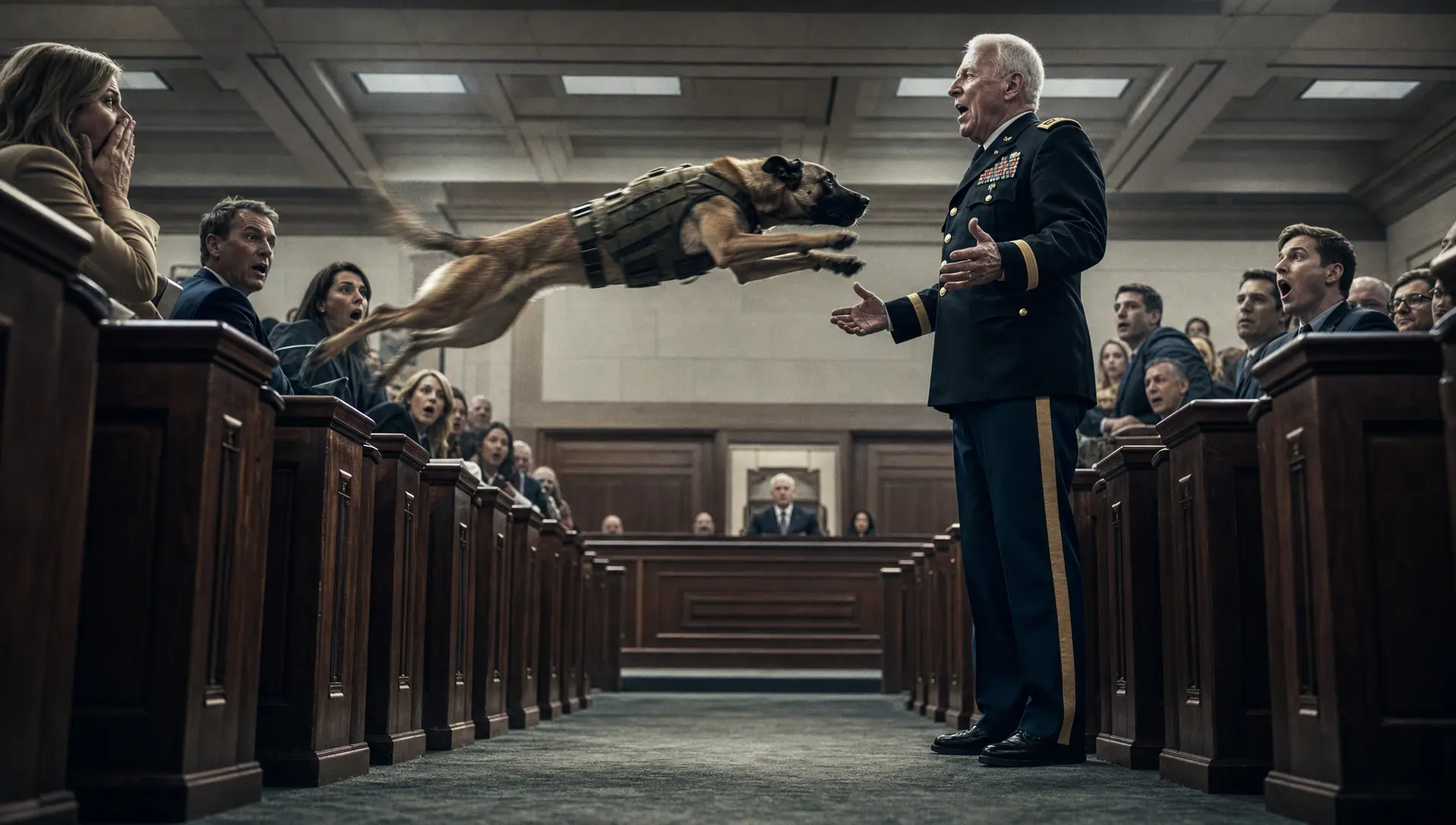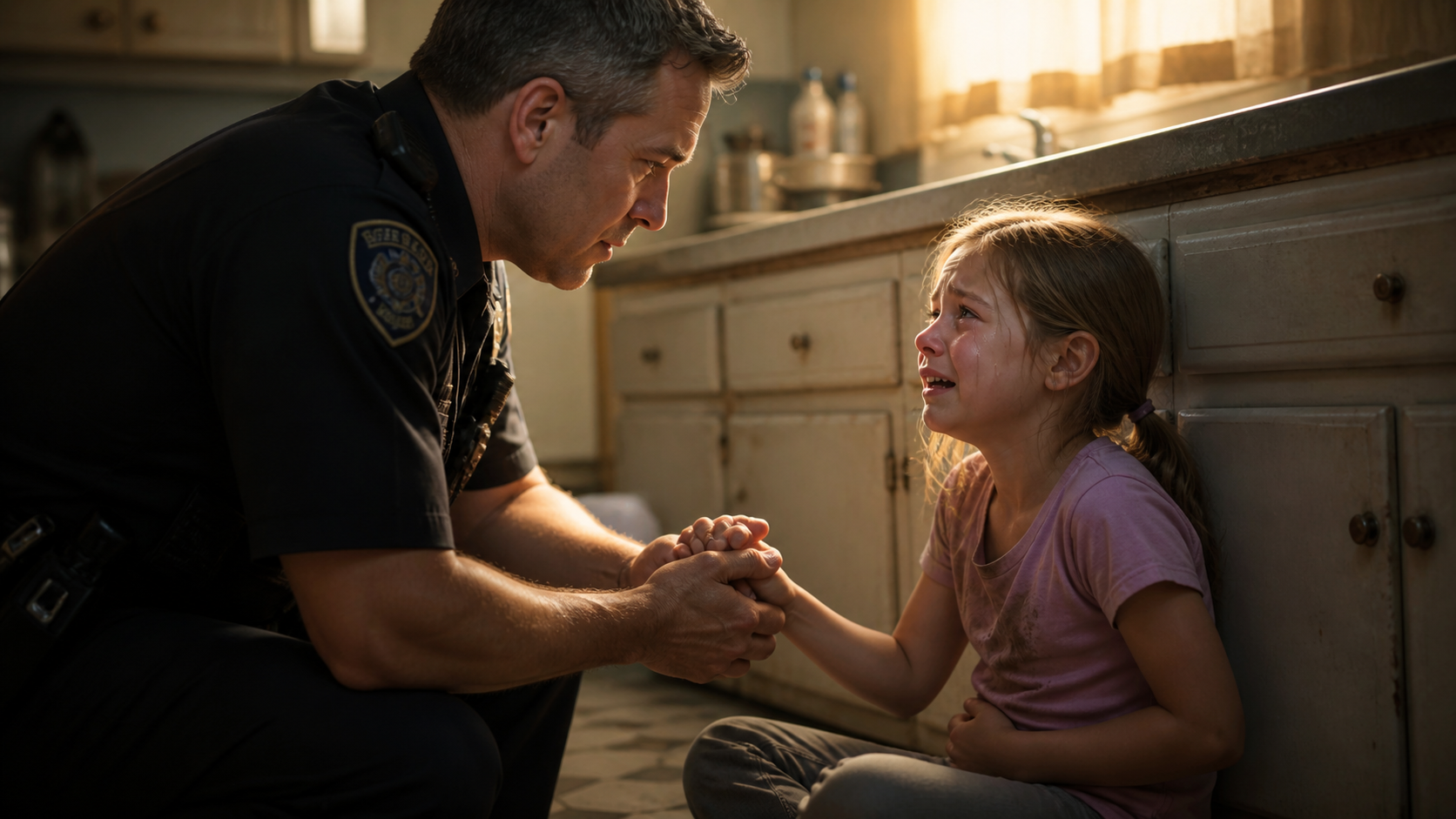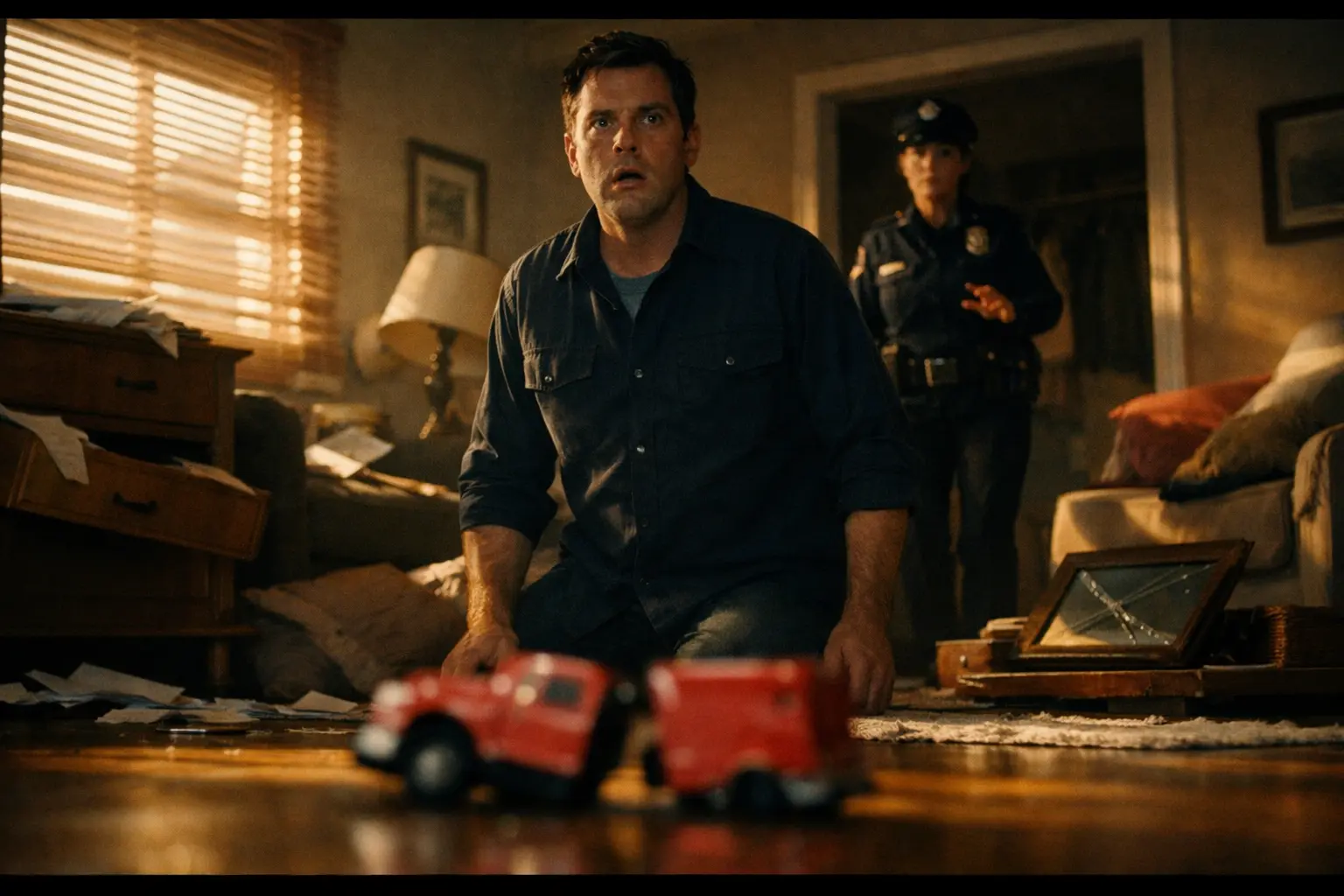
Walter Hicks had not planned to wear the jacket.
It had been hanging in the back of his closet for eleven years, sealed in a dry-cleaning bag his daughter had put there after the last ceremony. He’d told her not to bother. She’d done it anyway.
That morning, at five-thirty, he’d stood in front of the closet for a long time.
His wife, Carol, had died in March. Forty-three years of marriage. She was the one who always pinned the medals straight, always caught the one that listed left, always smoothed the collar with both hands and said the same thing before every ceremony: “They need to see you, Walt. Not the jacket. You.”
He put the jacket on alone.
He took the bus to the Federal Hall of Military Honors. His daughter had offered to drive. He’d said no. He’d been taking the bus to this building since 1974, and he saw no reason to stop.
Kyle Tanner had been on the job for four months.
He was twenty-three, newly certified, still in the phase where following protocol felt like the same thing as doing a good job. His supervisor, a quiet man named Briggs, had pulled him aside on his first week and said: “This is a federal building. You treat every person the same until you have a reason not to.” Tanner had nodded and told himself he understood.
He did not yet understand.
The morning of the ceremony, he’d been given a simple brief: invitation-only event, credential check at the main gate, no exceptions. He’d arrived early, positioned himself at the top of the steps, and watched the sedans pull up.
He felt important. He felt ready.
He was not ready.
The flags snapped in the cold morning air outside the Federal Hall of Military Honors. Black sedans pulled up to the curb. Officers in full dress uniform moved in pairs toward the entrance, ribbons gleaming under the gray sky.
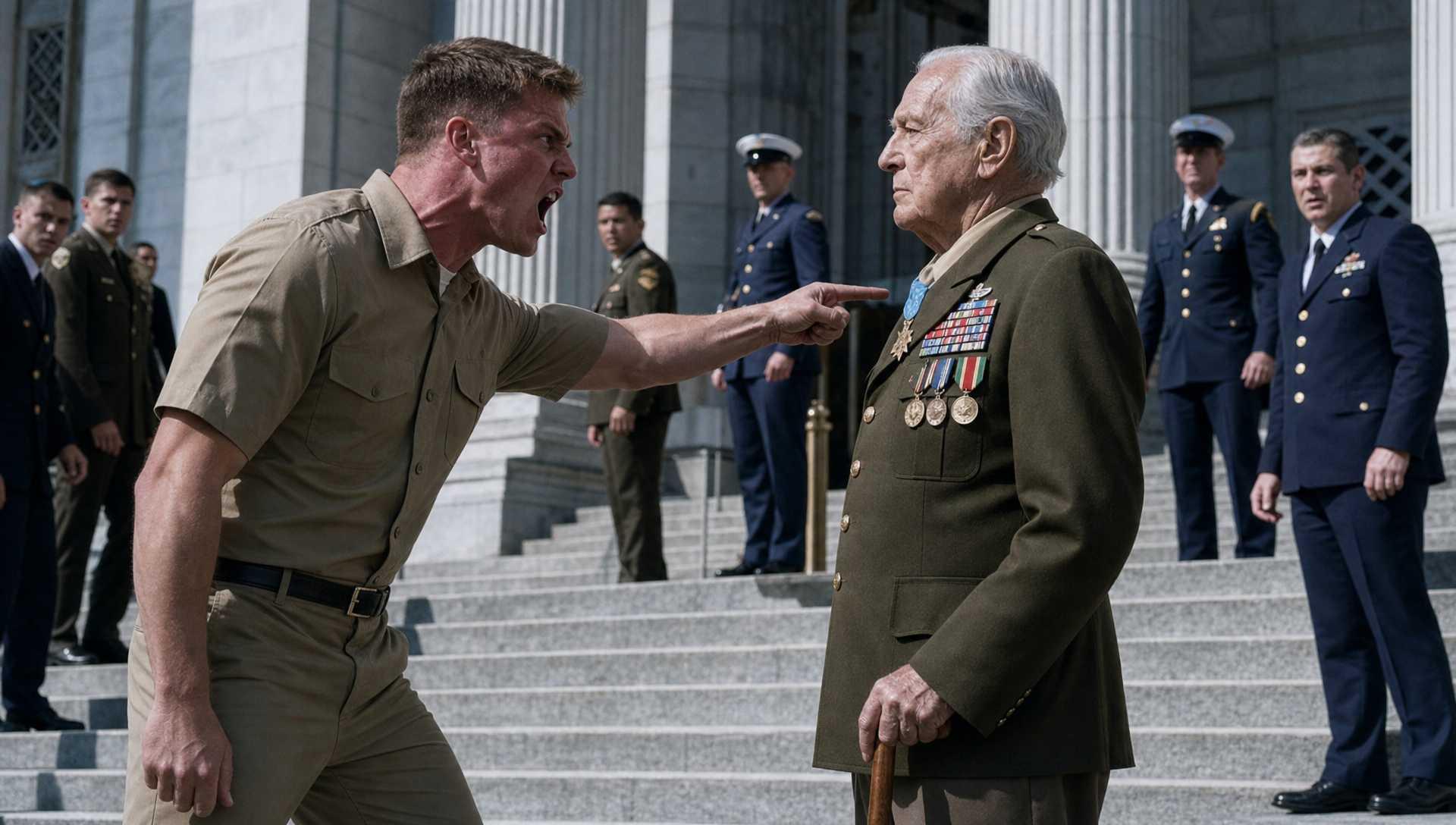
Colonel Walter Hicks, 79, made his way up the stone steps alone.
He wore the same Army jacket he’d owned for forty years. Worn at the elbows. Pressed flat along the collar. The medals on his chest — eleven of them — caught the light with every slow step he took.
He gripped his cane and kept moving.
“Sir.” A voice cut across the plaza. “Stop right there.”
Walter paused. Tanner stepped forward and blocked the doors — chin up, shoulders back, one hand already raised.
“This event is invitation only,” Tanner said.
“I know,” Walter replied. “I’m here for the ceremony.”
Tanner’s eyes dropped to the jacket, then came back up. His expression didn’t shift.
“You need to check in at the registration table. That’s around the side.”
“I’ve been to this building fourteen times,” Walter said. “I’ve never checked in around the side.”
“Policy changed last year.” Tanner took a half-step forward. “I’ll need you to move away from the entrance, sir.”
A few feet behind Walter, two Army captains had slowed their pace. Captain Diana Marsh — three combat tours in Afghanistan, Silver Star, twelve years active — stopped and watched without a word. Beside her, Captain Ron Okafor crossed his arms and did the same.
Walter looked at the doors. The same doors he’d walked through the year they gave him the Medal of Honor. The year he shook the hand of a sitting president. The year he stood at a podium and couldn’t finish his speech because he kept seeing the faces of the men who weren’t there to hear it.
“I belong inside that building,” Walter said.
“Sir.” Tanner’s voice tightened. “This ceremony is for decorated military personnel and their families. I’m going to need to see credentials or—”
“Look at my chest,” Walter said quietly.
Tanner glanced at the medals. Then back at Walter’s face.
“I understand you served,” he said. “But without a badge or event credentials, I can’t—”
“Not at my chest.” Walter tapped the center medal with one finger. “At that one. Right there.”
Tanner looked. A sky-blue ribbon. A gold star. An eagle with spread wings.
Something flickered across his face — not recognition, not yet. Just the first edge of doubt.
“Sir, I—”
“I’m telling you one more time.” Tanner’s voice jumped, loud and sharp, cracking at the edges. He stepped forward, close, finger pointing at the door. “You are NOT allowed in. This is a secured event and you do not have clearance. Step away from the entrance. Now.”
The sound carried. Several guests on the steps turned. Captain Marsh’s jaw tightened. Okafor put a hand on her arm.
Walter did not move.
He took one slow breath. The jacket rose and fell.
He looked at Tanner — not with anger, not with contempt, not with the tired resignation of a man who’d been treated badly before. He looked at him the way a man looks at something he has already decided how to handle.
“You’re wrong,” Walter said.
Tanner opened his mouth.
“That’s the Congressional Medal of Honor,” Walter said. “They gave it to me inside that building. November 1971. I was twenty-six years old.”
He let that sit for a moment.
“Half the men in that room with me that day are buried now.”
Captain Marsh stepped forward.
“Officer.” Her voice was flat and controlled. “Do you know who this man is?”
Tanner swallowed. “I’m—” He stopped. “No.”
“Colonel Walter Hicks. Third Infantry Division. Two Purple Hearts. Distinguished Service Cross.” She paused. “And the Medal of Honor. He’s not a guest today.” Another pause. “He is the keynote speaker. His name is on the program. His photo is on the banner above your head.”
Tanner’s eyes went up. There it was — a banner stretching across the entrance, black and white, a younger version of the man standing in front of him in full uniform, mid-speech, arms wide.
He looked back at Walter.
His face had gone the color of chalk.
“Sir,” he said. The word came out barely above a breath. “I — I didn’t—”
“You didn’t know,” Walter said. “That’s different from being wrong.”
Tanner stood very still.
“You raised your voice at a man you hadn’t identified,” Walter said. “That’s the mistake. Not stopping me. Stopping me was right. Screaming before you knew the facts — that’s where you went wrong.”
“I’m sorry, Colonel.” Tanner’s voice had changed completely. Whatever authority he’d been performing was gone. He just sounded young. “I’m genuinely sorry.”
“What’s your name?”
“Tanner. Officer Kyle Tanner.”
“How long on the job, Tanner?”
“Four months, sir.”
Walter nodded once. “Have you ever served?”
“No, sir. I was going to enlist. Some medical issues at eighteen.” He stopped. “No, sir.”
“Then here’s what I need you to understand.” Walter’s voice stayed level. “Every single person walking through those doors today spent years doing things that should have killed them. A lot of their friends didn’t make it. And not one of them is going to tell you that. They’ll walk in, shake hands, sit down, and be quiet.” He tapped the medal. “That’s what this looks like from the outside. Quiet. Old. Easy to overlook.”
He held Tanner’s gaze.
“Next time — ask before you assume. And never raise your voice at someone you haven’t taken the time to understand.”
Tanner nodded slowly. His shoulders had dropped. His whole face had changed.
“Yes, sir. I understand.”
Tanner pulled the door open himself. Both hands. Spine straight.
Walter paused in the frame.
“Thank you, son.”
“Yes, sir.”
As Captain Marsh passed Tanner, she stopped for just a moment.
“What you did in the ten seconds after you realized your mistake?” she said quietly. “That’s what character looks like. Don’t forget it.”
Tanner didn’t move from the door for a long time.
The ceremony lasted three hours. Colonel Hicks spoke for twenty-two minutes. No notes.
He talked about the men he’d lost. About being asked to do impossible things and saying yes anyway. About the weight that doesn’t go away, and learning to carry it so it doesn’t show.
At the end, he paused.
“Respect doesn’t begin inside a ceremony,” he said. “It begins at the door. Every single door. And it belongs to everyone who earned it — whether they’re wearing a name badge or not.”
The room rose to its feet.
Three days later, Tanner’s supervisor called him into the office.
He’d expected a reprimand. A formal write-up. Maybe worse.
Briggs set a folded piece of paper on the desk.
“Colonel Hicks submitted this yesterday,” he said.
Tanner picked it up. It was a handwritten letter on plain paper, three paragraphs, signed at the bottom in a firm, slightly uneven hand.
The letter said that Officer Kyle Tanner had made an error in judgment. It also said that he had corrected himself quickly, accepted responsibility without deflection, and shown the kind of character that, in the Colonel’s experience, could not be trained — only revealed.
It asked that no disciplinary action be taken.
Tanner read it twice.
“He didn’t have to do that,” he said.
“No,” Briggs said. “He didn’t.”
A week after that, a package arrived at the security office. No return address. Inside: a folded black-and-white photograph wrapped in brown paper. A young soldier, mid-twenties, jungle fatigues, squinting in the sun, surrounded by men whose faces were tight with exhaustion and something that wasn’t quite a smile. On the back, in the same firm handwriting:
My unit. 1968. Three of us are still alive.
Now you know what you’re guarding.
— W.H.
Tanner put it in his inside pocket, right over his chest.
He’s carried it to work every day since.
Original fictional stories. AI-assisted creative content.