“Let me play it,” Chloe said, her voice cutting clean through the laughter of the ballroom. “I can do it better than anyone here.”
The room went silent. Then it erupted into amused, condescending laughter.
Nora’s hands shook. The tray of champagne glasses rattled in her grip.
“Chloe, no,” she whispered, rushing forward, her face burning. “I’m so sorry, Mr. Blackwood. She’s just a child—”
Victor Blackwood raised a heavy, gold-ringed hand. “No, no,” he said, intrigued now. “Let her speak.”
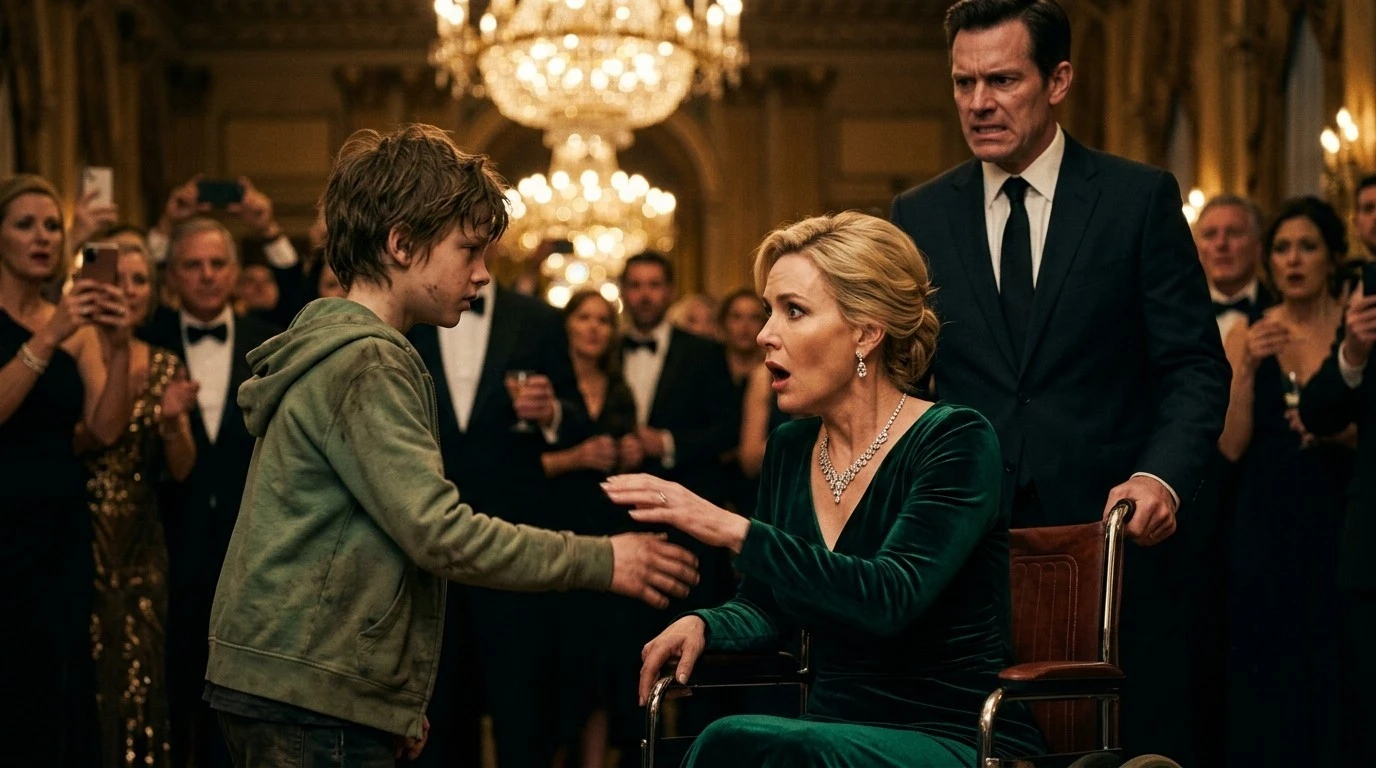
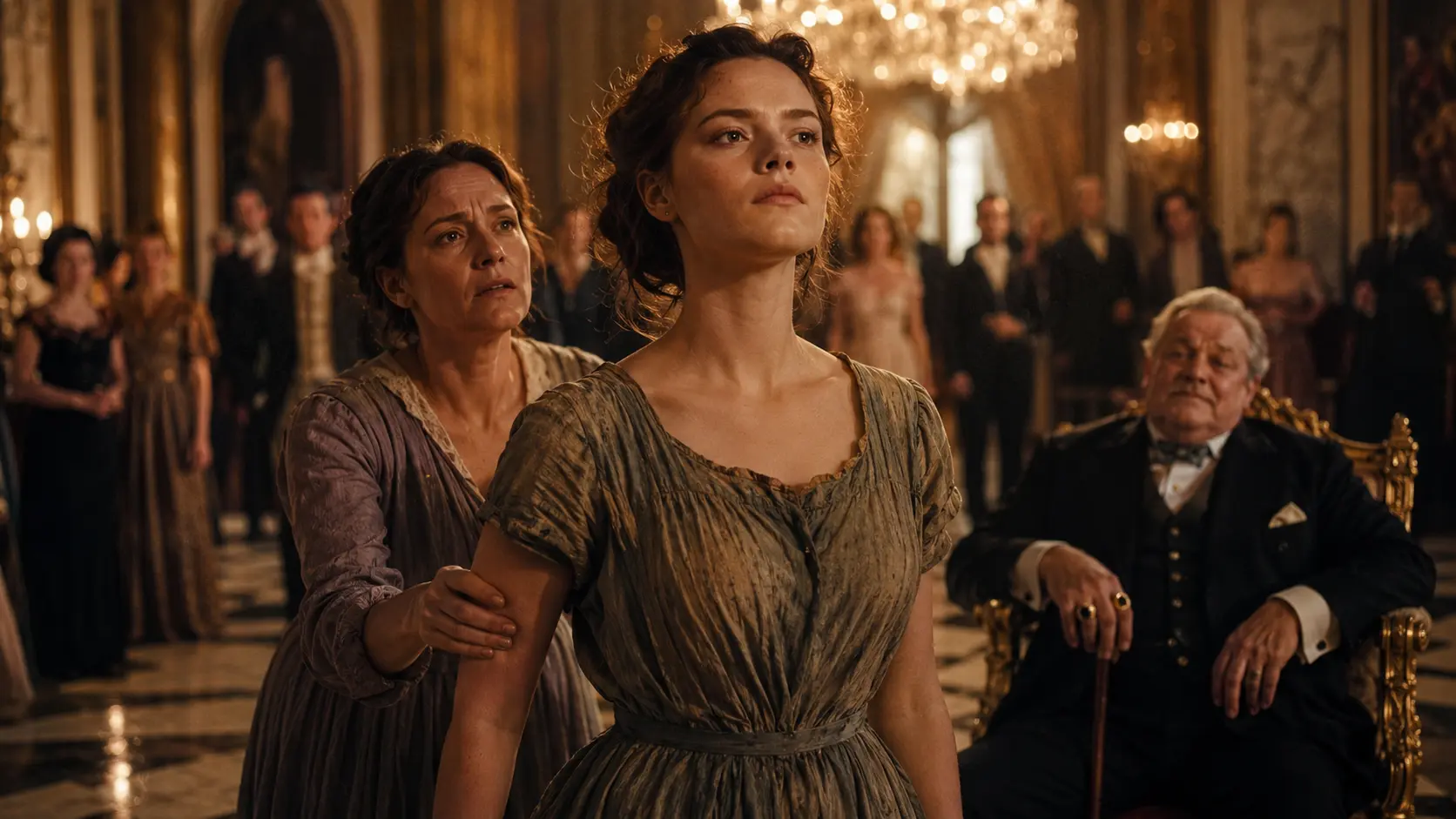
The ballroom of his Manhattan mansion glittered under crystal chandeliers, filled with people who measured their worth in billions. In the center of it stood a nine-year-old girl in a faded cotton dress, completely out of place.
“I can play,” Chloe repeated.
Victor smirked, gesturing to the gleaming Steinway on the stage. “That piano? Do you even know what gets played on that instrument?”
Chloe nodded once.
A guest laughed into his cocktail. “This should be good.”
A woman in a sequined gown leaned toward her husband and murmured, just loud enough, “Whose child is this? Get the staff to handle it.”
Nora felt the weight of every eye in the room. Five years she’d stayed invisible — cleaning quietly, surviving — all to protect her daughter. Now it was unraveling in a single reckless moment.
“Please,” Nora murmured, gripping Chloe’s arm. “Don’t do this.”
Chloe pulled away gently. “Trust me, Mom.”
Victor leaned back, entertained. “Alright. Let’s make this interesting.” He signaled to his assistant, who handed him a sheet of music.
“This,” Victor said, holding it up, “is an original, unpublished composition. Mechanically one of the hardest pieces ever written. If you play it — perfectly — I’ll give you one hundred million dollars.”
Gasps. Laughter. “A child? Impossible.”
Someone near the bar pulled out a phone. “This, I have to film.”
Chloe didn’t react. She walked to the piano.
Each step echoed against the marble. Nora stood frozen, unable to breathe.
Chloe climbed onto the bench. The room held its breath.
Then she began.
The first notes were soft, almost fragile. A few guests smirked. One man whispered, “Cute,” and reached for his cocktail. Then the music surged — her fingers moved with impossible precision, speed, and control. The melody was rich, haunting. Conversations died. Glasses lowered. The man set his drink down without drinking it. No one laughed anymore.
Victor leaned forward, his expression hardening into disbelief. This wasn’t luck. This was mastery.
Halfway through, the piece shifted into a passage Victor recognized — a phrase he’d heard once, years ago, played by a man whose name he’d spent five years trying to erase. His jaw tightened.
The final note rang out, clear and chilling.
Silence.
Then thunderous applause. Chloe didn’t smile. She stood and turned to face Victor.
“You said one hundred million dollars,” she said calmly.
Victor stared at her. “Yes. Yes, I did.”
“I don’t want the money,” Chloe said. “I want you to tell the truth. About my father. And why you’ve been paying my mom to stay silent for five years.”
A murmur rippled through the crowd. Someone repeated the word “father” to the person beside them.
Victor went pale. He stood, hand trembling around his glass. “You’re delusional, child. Nora, get her out of here!”
“No,” Nora said. Her own voice surprised her — steady, louder than she’d spoken in five years.
Chloe pulled a folded legal document from her dress pocket — a document Victor had signed.
“You didn’t just steal my father’s music, Victor,” she said, her voice carrying through the silent ballroom. “You stole his life.”
A guest near the front leaned in to read over Chloe’s shoulder. His eyes widened. “That’s a settlement agreement,” he said. “That’s — that’s his signature.”
“Give that to me,” Victor snapped, stepping forward.
“Touch her,” Nora said, stepping between them, “and every phone in this room is already recording.”
Victor froze. Three phones were raised behind him. A fourth guest was already typing into his.
Nora stepped forward, tears streaming down her face. “He framed Elias for embezzlement to force him out of the company. Elias didn’t disappear because he wanted to. He disappeared because Victor’s security team threatened to kill us if he ever came back.”
The room broke into chaos. Phones came up. A journalist near the bar was already typing. Someone near the doors said, “Is this real? Is this actually happening right now?”
“You’re a fraud,” Chloe said, louder now. “And everyone here is about to know it.”
Victor lunged toward her and tripped over his own feet, sprawling across the stage. Laughter — different now, ugly and unsympathetic — rippled through the crowd that had laughed at Chloe minutes earlier. He scrambled up, shouting, “I’ll destroy you both!”
A man near the door — broad-shouldered, dressed plainly compared to the rest of the room — stepped forward and said, low and even, “Sir. Sit down.”
Victor turned on him. “Who let security in here? Get him out—”
“I’m not your security,” the man said. “Not anymore.”
The doors at the back of the ballroom opened. Police. They hadn’t come for the girl. They’d come for the billionaire.
Two officers crossed the marble floor without hurry, without raised voices, the kind of calm that only comes from already knowing how the story ends. One of them held up a folder. “Victor Blackwood. We have a warrant.”
“This is insane,” Victor said, backing toward the piano. “This is — there’s been some kind of mistake—”
“There’s a signed confession in our hands,” the second officer said. “Filed an hour ago. There’s no mistake.”
As Victor was dragged out in handcuffs still screaming threats, Nora and Chloe stood on the stage, exhausted but free. The ballroom, still glittering above them, suddenly looked smaller than it had an hour ago.
Then the final twist came.
The assistant who’d handed Victor the sheet music approached Nora. He didn’t move like an assistant. He handed her a small black phone.
“The client is ready to speak with you,” he said.
“What client,” Nora said. “I don’t understand—”
“You will,” he said, and stepped back.
Nora took it, hands shaking. “Hello?”
A voice came through — raspy, broken, familiar. Elias.
“I saw it, Nora,” he whispered. “I saw all of it. I’m not dead. I never was.”
Nora gasped, clutching her chest. The room around her seemed to fall away. “Elias? Where are you?”
“I’m in the building.”
A tall, scarred man stepped out from behind the piano. He wasn’t the broken man Nora remembered. Five years in the dark had changed him — turned him into exactly the kind of predator Victor had tried to be.
Gasps moved through the part of the crowd that hadn’t already fled toward the doors. Someone whispered, “Isn’t that the man from the embezzlement case? The one who disappeared?”
He looked at Chloe, his daughter, and his face softened. He reached for her.
Chloe stepped back. “You left us,” she said, voice sharp. “You left Mom to suffer while you played hero in the shadows. You waited, just like he did.”
Elias stopped, his face breaking. “I did it to protect you. Every piece of evidence, every account, every name — I built it for five years so this exact moment would happen.”
“You built it for the moment,” Chloe said. “Not for us.”
“That’s not fair,” he said quietly.
“No,” Chloe said, turning her back on both of them. “You did it for the music.”
She walked off the stage alone.
Nora stood holding the phone with no one on the other end of it anymore, watching her daughter walk away from the only two people who had ever claimed to be protecting her.
Three months later, Nora stood outside a small recital hall in Brooklyn, watching through the glass doors as Chloe rehearsed alone on an upright piano that had cost forty dollars at an estate sale. No chandeliers. No billionaires. Just her daughter and the music.
The settlement money from Victor’s company — forced out in the criminal proceedings, paid directly to the family Victor had silenced for five years — sat untouched in an account Nora had opened only for Chloe’s future. She hadn’t spent a cent of it on herself.
Elias had tried to reach out twice more. The first time, a letter, unopened, returned to sender. The second time, a voicemail Chloe let play out in full silence before deleting it without comment. Nora hadn’t pushed her. Some wounds didn’t heal because someone said the right words. They healed because the person who caused them finally understood there weren’t any right words left to say.
A lawyer named Patricia Okafor — the same woman who had helped them file the original evidence the week after the ballroom — called Nora every Friday for the first two months, just to check in. “You don’t owe him forgiveness,” she told Nora once, over coffee in a courthouse cafeteria. “Not Victor. Not Elias. Not anyone who decided your daughter’s silence was the price of their own comfort.”
Victor’s trial took four months. The embezzlement frame-up, the threats, the years of hush payments disguised as a “household stipend” — it all came out in a courtroom three blocks from the mansion where he’d once measured his worth in billions. His lawyers tried three different defenses. None of them survived cross-examination once the documents Chloe had carried in her dress pocket were entered into evidence. The jury took less than a day.
When the verdict came down, Nora was at work. Not cleaning anymore — Patricia had helped her find a position managing logistics for a small nonprofit that placed displaced musicians in summer programs. It paid less than the settlement could have replaced in a single afternoon. Nora didn’t care. It was hers.
Chloe’s recital was small. Forty folding chairs, half of them empty, a borrowed piano with a sticking middle C. Nora sat in the second row and didn’t bring a single picture of the ballroom, the chandeliers, or the look on Victor Blackwood’s face when the room turned on him.
Chloe played a piece she’d written herself. No one in the audience had heard it before. It had no hidden message, no inheritance buried in its chords, no five years of silence woven into the bridge. It was just a girl playing music because she wanted to.
When she finished, the applause was small but real. Chloe looked for her mother in the crowd, found her, and — for the first time since the ballroom — she smiled.
Outside, the rain had started. Nora pulled her daughter under one umbrella, and they walked to the subway together, just the two of them, owing nothing to anyone.
Victor Blackwood spent his first night in a federal facility reading a newspaper article about a nine-year-old’s recital that hadn’t made the front page, buried on page fourteen beneath a much larger headline about his own conviction. Somewhere in a cell that cost him nothing and had taken everything, he finally understood what one hundred million dollars couldn’t buy back.
The truth had already been told. And no signature on any document would ever undo it.
THE END
Original fictional stories. AI-assisted creative content.