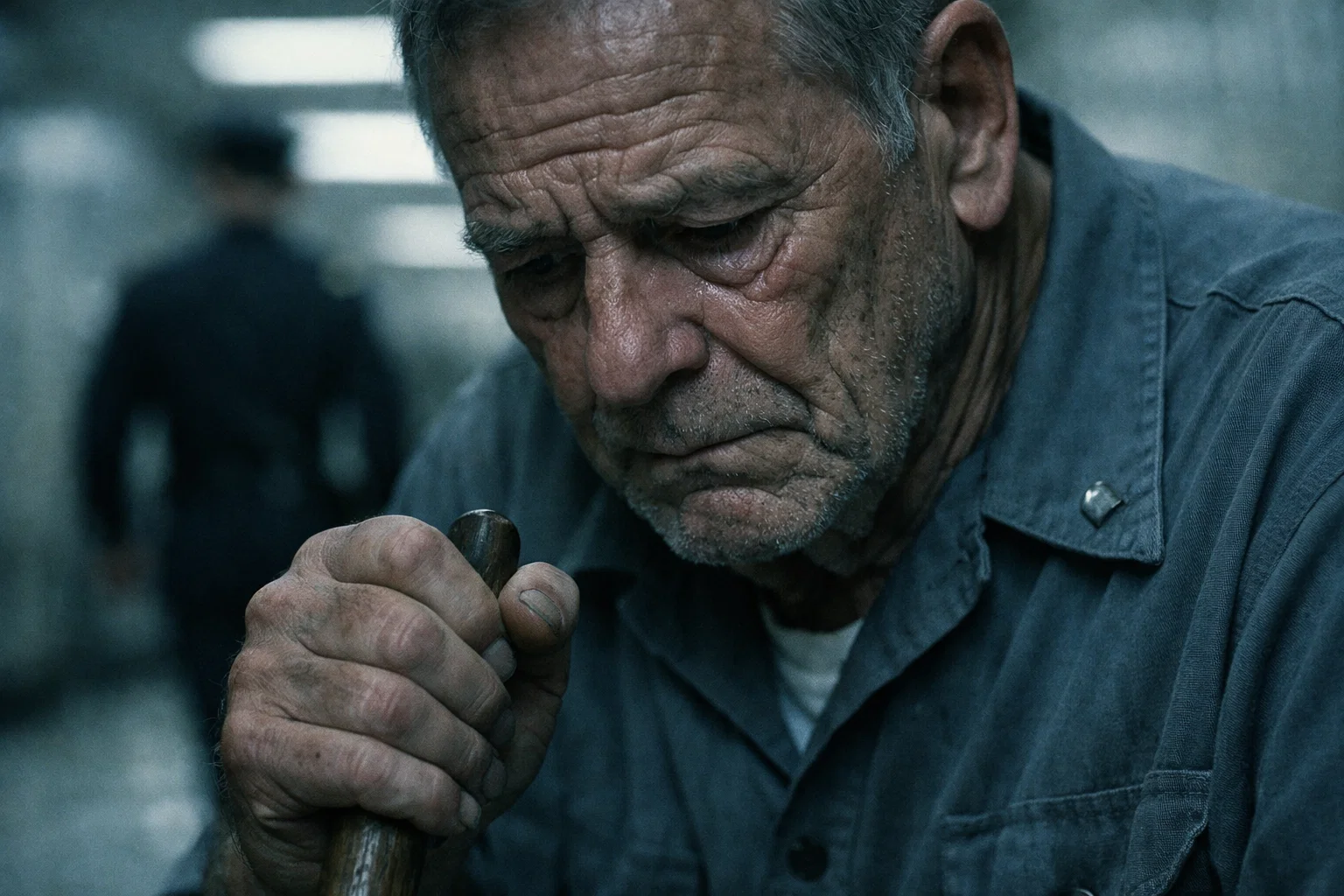
Wayne Jenkins pushed his broom across the marble floor of the Hart Senate Building at 5:47 AM. The same route. The same rhythm. Forty years of invisible labor.
“Morning, pops,” a young lieutenant sneered, brushing past him. “Maybe work faster. Some of us have real jobs.”
Wayne didn’t look up. He just kept sweeping. One. Two. Three. The wooden handle smooth under his calloused palms.
What the lieutenant didn’t see was the faded silver star pinned inside Wayne’s gray work shirt. What he couldn’t know was that the “old janitor” had once held a ridge in the A Shau Valley for seventeen hours straight, saving forty lives while the jungle burned around him.
Nobody in the building knew how he got there.
In 1969, Wayne Jenkins was the youngest Sergeant Major in his brigade. Men followed him without being asked. They called him “Ghost” because he walked out of fire that should have killed him.
He came home in a flag-draped silence. No parade. No questions. Just a duffel bag, a ribbon he never wore, and a sealed envelope from the Army that he never opened.
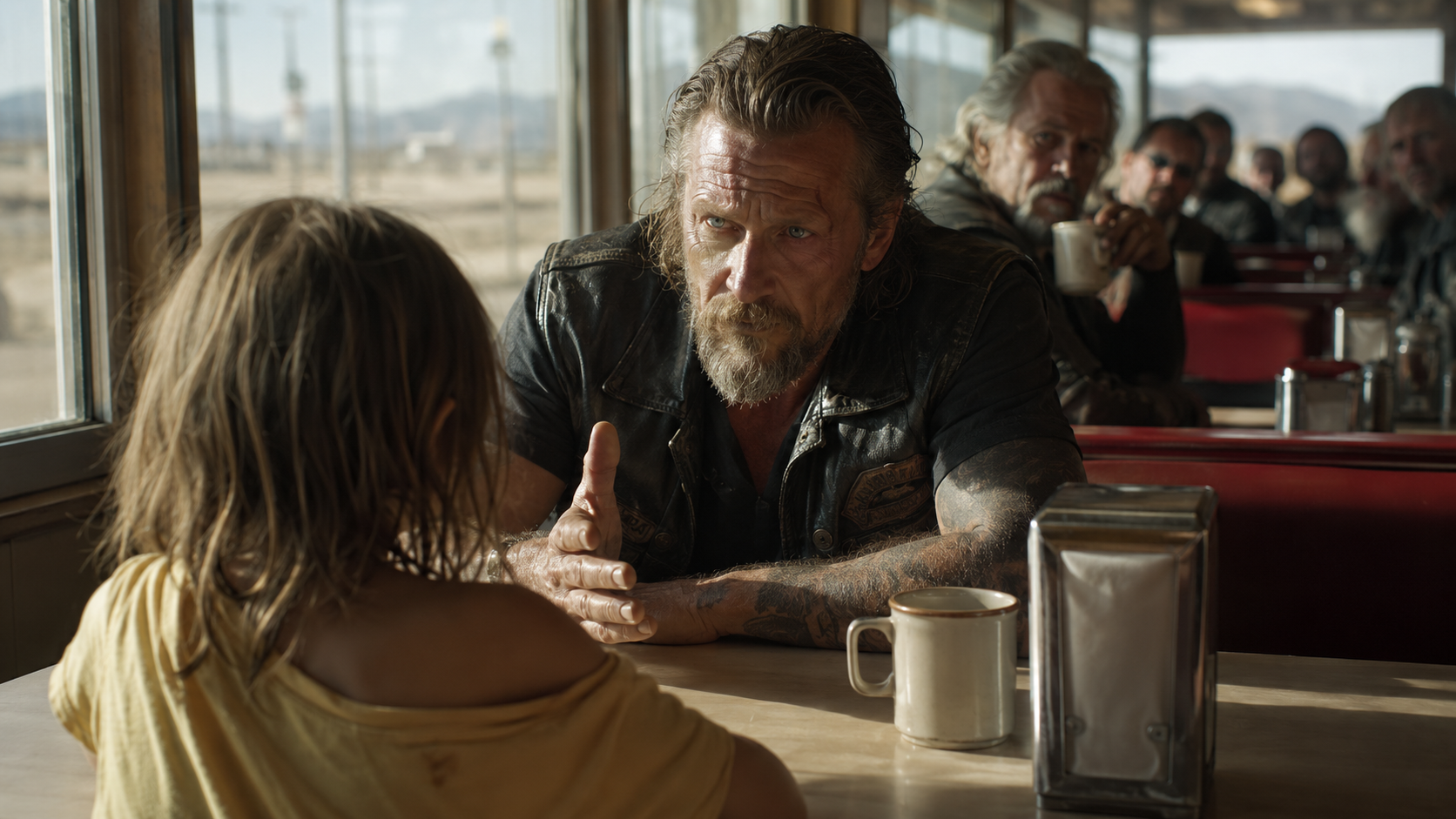
A week later, he stood in the back of a small church in Ohio, watching a nine-year-old girl in a black dress hold her mother’s hand at her brother’s funeral. Her name was Annie Miller.
She looked right at him. Wayne looked at the floor.
“You were there, weren’t you?” her mother whispered outside, gripping his sleeve. “Tell me he didn’t suffer.”
“He didn’t, ma’am,” Wayne said. It was the first lie. It would not be the last.
That night, he called the only man who knew everything. Captain Marcus Thorne, the officer who had signed the cover-up report with shaking hands.
“I can’t be a soldier anymore, Marcus,” Wayne told him. “Not with this. Get me a job nobody wants. Somewhere I can keep an eye on her.”
Thorne found him a night shift in the Hart Building. Mop, bucket, gray uniform. For forty years, it was the only penance Wayne allowed himself.
And every day he watched Annie Miller grow up, run for office, and rise to Congress, never once knowing the man sweeping behind her had carried her brother’s secret all along.
Sarah Chen, a new congressional intern, noticed something different about Wayne. The way he moved—precise, calculated. The way his eyes tracked every exit. The way he stood when senators passed.
“Mr. Jenkins?” she asked one morning. “That pin on your collar—is that military?”
Wayne’s hand moved to cover it. “Just a trinket, Miss. Keeps the shirt from flapping.”
But Sarah was persistent. She started digging. Old personnel files. Redacted reports. A name that appeared in classified documents from 1969, then vanished.
She found it in a dusty archive: Sergeant Major Wayne “Ghost” Jenkins. Distinguished Service Cross nominee. Sole survivor of Hill 937’s worst night.
“Why are you here?” Sarah confronted him in the empty rotunda. “You should have monuments. Parades. Why are you sweeping floors?”
Wayne set down his broom. For the first time in forty years, he looked tired.
“You ever carry a secret so heavy it bends your spine?” His voice was quiet, steady. “May 1969. My platoon was falling apart. Sergeant Miller wanted to mutiny—refuse orders, maybe shoot the lieutenant. I stopped him.”
“You saved them.”
“I killed him.” Wayne’s eyes were distant. “One bullet. Told command it was enemy fire. Forty men went home to their families because I lied. Miller’s sister—she’s Congresswoman Miller now—spent thirty years thinking her brother died a hero.”
Sarah felt the weight of it. “So you disappeared.”
“I became a janitor. Penance. Every floor I clean, every stain I scrub—it’s a name I protected. A family I kept whole.”
The next morning, Congresswoman Annie Miller stood in that same rotunda. Colonel Thorne had finally told her the truth—not all of it, but enough.
“Sergeant Major Jenkins,” she said formally. “The Army wants to give you the Medal of Honor. Forty years late, but—”
“No, ma’am.” Wayne picked up his broom. “Respectfully, no.”
“Why not?”
“Because heroes get statues. Statues get examined. Questions get asked.” He met her eyes. “Your brother’s grave stays honored. That’s worth more than any medal.”
Annie Miller’s hands trembled. She understood. The myth was more valuable than the truth.
“What can I do for you, then?”
Wayne smiled—barely. “There’s a coffee stain near the eastern entrance. And the rotunda could use a polish.”
Two weeks later, Lieutenant Peterson—the same one who’d called him “pops”—stopped Wayne in the hallway. The young officer had learned the truth. Had spent sleepless nights understanding what real service looked like.
Peterson’s heels clicked together. His hand rose in a slow, deliberate salute.
Wayne didn’t return it. He wasn’t a soldier anymore. But he gave a slight nod—one protector acknowledging another.
Then he pushed his broom forward. One. Two. Three.
The marble gleamed behind him. Forty years of secrets polished into its surface. Forty years of choosing the mop over the medal, the shadow over the spotlight.
Because some heroes don’t need monuments. They just need a broom and the strength to keep sweeping.
Wayne Jenkins reached his storage closet at 7:15 AM. Right on schedule. He hung up his work shirt, the silver star still pinned inside, hidden from view.
Tomorrow he’d do it again. And the day after. Until the job was done.
The job was never done.
And that was exactly how he wanted it.
Original fictional stories. AI-assisted creative content.