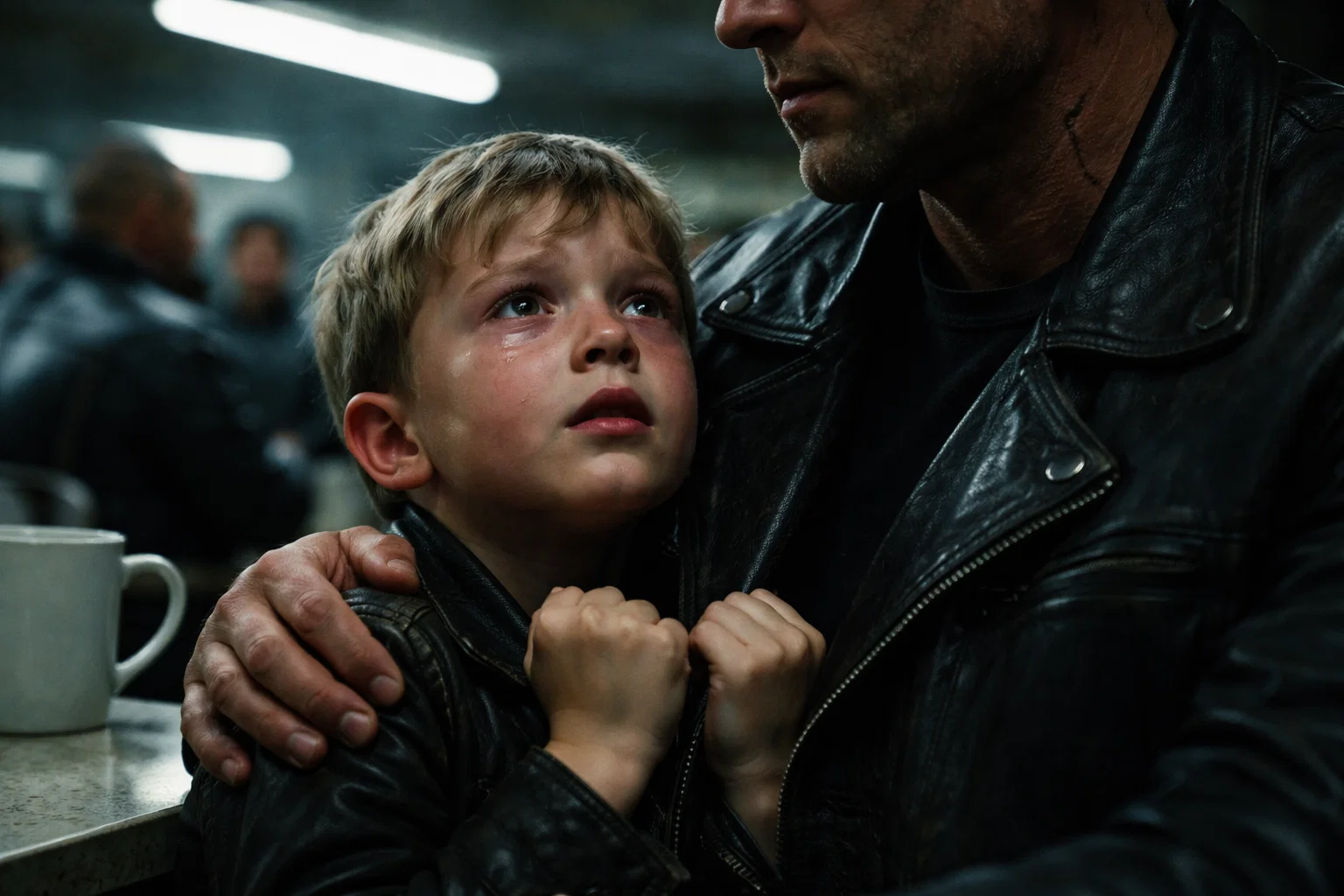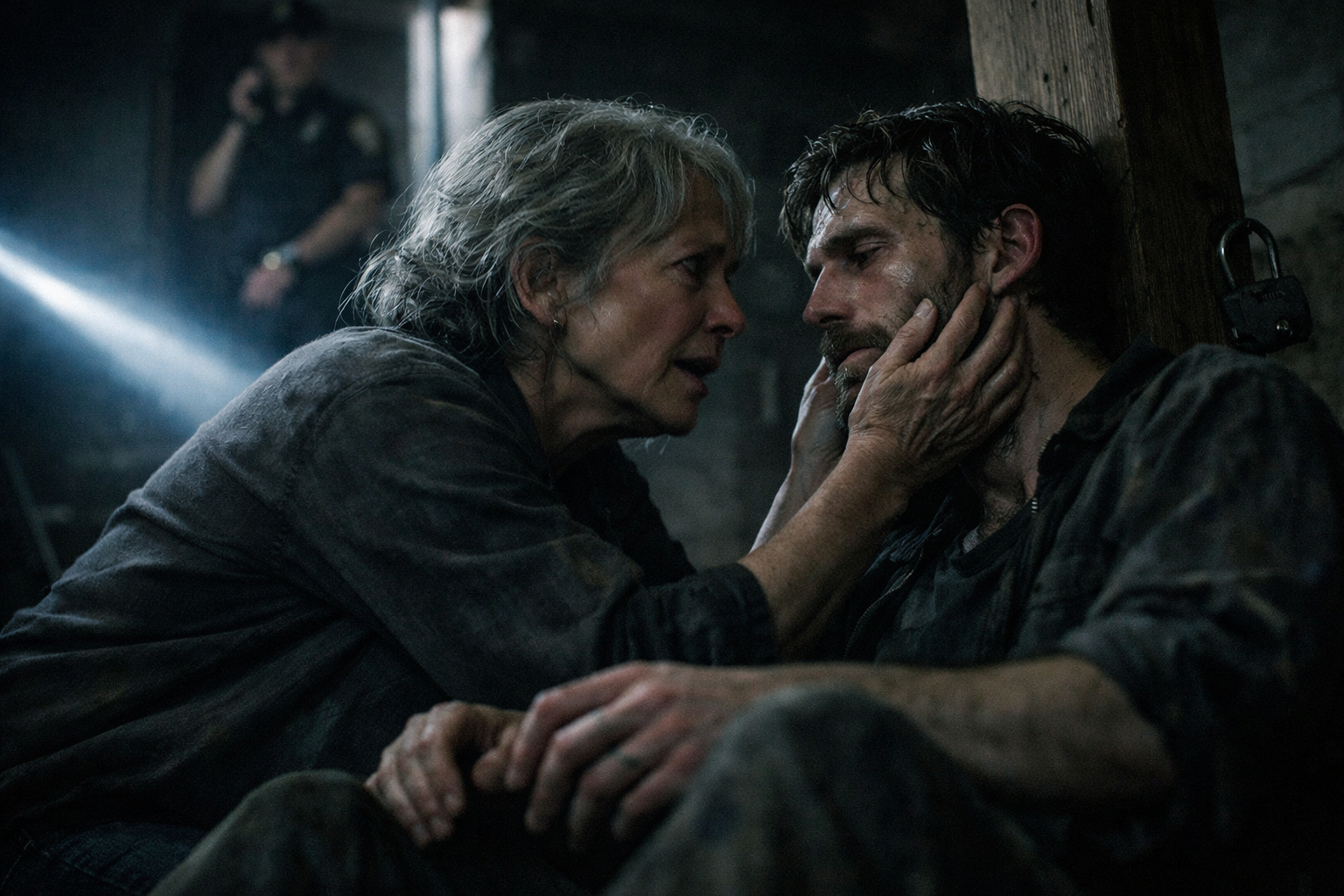

Grace Emerson was seventeen when everything changed. Not the day of the bridge—before that. Before the accident. Before the chair.
She was the kind of girl who moved through the world without apology. Straight-A student, captain of the debate team, the girl who asked questions nobody else dared to ask. She had her father’s eyes—sharp, observant, unafraid. Her mother said she had her grandmother’s backbone.
Her father, Daniel Emerson, was a city councilman. Honest. Principled. The kind of man who couldn’t be bought. He’d served in military intelligence before he entered politics, and that world never really left him. He had a way of seeing patterns where other people saw coincidences. Systems where others saw random events.
For years, Daniel had watched the Blackwood Trust with quiet suspicion. It was supposed to be Blackwood Falls’ pride—a fund established decades ago to help low-income families with education, housing, and medical expenses. The annual reports showed steady distributions. Everything appeared above board.
But the numbers didn’t add up.
The Sterling family didn’t like honest men. They especially didn’t like men who asked questions about where millions of dollars were actually going. Arthur Sterling had been running the trust for fifteen years. His family had built their wealth on it—carefully, methodically, with layers of shell corporations and falsified ledgers that would have fooled most people.
But they hadn’t fooled Daniel Emerson.
He started digging in his spare time. Late nights in his home office, cross-referencing records, building spreadsheets, tracing money through accounts that shouldn’t exist. Grace would find him there sometimes, exhausted but determined, muttering about inconsistencies and discrepancies. She’d bring him coffee and sit quietly while he worked.
“Dad, is this legal?” she asked once, watching him scroll through documents he’d obtained through Freedom of Information requests.
“Asking questions is always legal,” he said. “Finding answers is where it gets complicated.”
Daniel was preparing to expose the theft at the next council meeting. He had documents. He had proof. He was going to walk into that room and destroy the Sterling family’s empire with nothing but evidence and his own moral certainty.
He never made it to the meeting.
They said his car simply veered off the bridge one rainy night. An accident. A tragedy. The investigation concluded he’d been driving too fast, lost control, plunged into the river below. No witnesses. No evidence of foul play.
The Sterlings sent flowers to the funeral. Expensive flowers. They donated a significant sum to the scholarship fund in his name. The family’s grief seemed almost performative in its perfection—concerned but not too devastated, supportive but not suspicious.
Grace’s mother, Eleanor, fell apart. Not the dramatic kind of falling apart—the quiet kind. The kind where you wake up one morning and realize you’re not sure why you’re alive anymore. She stopped working. She stopped leaving the house. She stopped asking questions.
And after six months of her mother’s silence, Grace stopped asking questions too.
For three years, she lived in a different kind of silence—the kind that comes from a wheelchair, the kind that makes the world think you’re broken. She wore the chair like a sentence. She attended school, went through the motions, performed normalcy for a world that expected her to be grateful for her survival.
But something inside her had crystallized. Rage. Pure, crystalline rage.
Every time she looked at a Sterling—Bryce driving his Porsche through town like he owned the streets, Arthur Sterling at charity galas with his wife’s hand on his arm, Sarah Sterling at the country club in her designer clothes—the rage grew hotter. Sharper. More focused.
She knew something nobody else knew. She could feel it, the way some people can feel a storm coming. Her father’s death wasn’t an accident. The accident that put her in this chair wasn’t random. They were connected. They had to be.
Then Silas appeared.
Silas had been Daniel’s best friend since their days in military intelligence. They’d served together, trained together, watched each other’s backs through operations Grace didn’t fully understand. After Daniel’s death, Silas disappeared—vanished completely. No contact with the family. No explanation. For three years, nothing.
But when Grace was sixteen, confined to that chair, he simply showed up at her school one afternoon.
He looked older. Harder. Like someone who’d spent three years in a place darker than most people could imagine.
“Hello, Grace,” he said, sitting across from her in the quiet room where she spent most of her time. “I have something to tell you about your father.”
“Your father was my brother,” Silas said quietly, his voice steady but something dangerous moving beneath it. “Not by blood. By choice. By trust. By everything that matters. They killed him because he wouldn’t stay quiet. And I spent three years confirming it. Now I’m going to teach you how to make them pay.”
Silas wasn’t a gentle man. He never had been. But he was precise. Surgical. Over the following months, he taught Grace how to move through digital systems the way he’d moved through battlefields—silent, invisible, lethal. He taught her coding. He taught her network infrastructure. He taught her how to think like someone who was trying to hide something, so she could find it.
More importantly, he taught her that a wheelchair wasn’t a limitation. It was a weapon.
“People see what they expect to see,” he told her. “A girl in a wheelchair? They see tragedy. Helplessness. They look past you. They never imagine you’re capable of anything. That’s your advantage. That’s what makes you dangerous.”
Together, they built a case. Not a legal one—not yet. First, they gathered evidence. The corruption was deeper than Grace had imagined. The Blackwood Trust wasn’t just looted; it was a masterpiece of systematic theft. Arthur Sterling had created an entire infrastructure of bribery and blackmail that extended into every corner of the town. The police chief was on his payroll. Half the town council received regular donations from shell corporations. Judges recused themselves from cases involving Sterling interests.
It was a complete capture of the system.
The video they found was almost accidental. Buried in a private cloud account accessed through Arthur Sterling’s attorney’s compromised email, timestamped to the night before Grace’s accident. Three years of looking, and there it was—Bryce Sterling, drunk and laughing, boasting to his friends about what he was planning to do.
“I’m going to send that councilman’s daughter to a place where she’ll never speak again,” he said, his words slurred but deliberate. “She sits in class asking questions like she’s so smart. Like her daddy’s going to save her. Well, daddy’s going to have his own problems.”
The timestamp proved it wasn’t an accident. It was premeditated. Planned. Malicious. A crime, not a tragedy.
Grace kept the video on a secure drive. She didn’t watch it for weeks. When she finally did, in the privacy of her room with Silas sitting nearby, she cried—not from the realization of what Bryce had done, but from the knowledge that she now had the power to destroy him. To destroy all of them.
But she wasn’t ready yet. Not until the day everything crystallized.
She was wheeling down the sidewalk near her school on an ordinary Thursday afternoon. The sun was bright. The street was mostly empty. She wasn’t thinking about anything in particular—just rolling, existing, trying to get home.
The boys had been standing on the corner near the coffee shop. She’d seen them before—locals, nothing special, the kind of teenagers who found entertainment in cruelty because they’d never been taught that it meant anything. When they saw her coming, they started laughing.
Not at anything she did. Just at what she was.
One of them pointed. The other mimicked her wheelchair movements in an exaggerated, mocking way, his body contorting into an grotesque parody of disability. Their laughter was sharp and vicious, designed to wound. Designed to remind her that she was something to be mocked. Something less than.
For a moment—just a moment—Grace felt what she’d felt every day for three years: small. Erased. Broken.
And then everything changed.
A black sedan pulled up smoothly to the curb. Not aggressive. Not threatening. Just present. The door opened with the kind of deliberate slowness that suggested intention.
Silas stepped out.
He moved like someone who’d learned how to occupy space in a way that made other people want to disappear. Not through threat—through presence. Through absolute certainty. His suit was tailored. His expression was ice. His eyes were the color of a winter sky.
He walked directly to the two boys. Not fast. Not slow. Purposeful.
“I believe you were having an enjoyable time,” he said, his voice quiet but carrying an edge that made the boys’ laughter die. “Laughing at someone for how their body works. Tell me—who taught you that was acceptable?”
The boys tried to laugh it off, tried to play it cool, but something in Silas’s presence made it impossible. He stepped closer. Not threatening. Just present. And they understood, in that moment, that they had made a grave mistake. A potentially catastrophic mistake.
One word from this man, and their entire world would collapse. They didn’t know who he was, but they recognized the type—someone who’d spent a lifetime in places that had burned away everything soft.
Grace watched from her wheelchair as the color drained from their faces. Watched as Silas—not angry, just certain—made clear that mockery had consequences. Not violence. Consequences. There was a difference, and they felt it.
When he walked back to the car, he looked at Grace and nodded.
She understood. It was time.
She filed the complaint the next morning. She walked into the county courthouse with a folder and a wheelchair, and she handed over everything. The video. The ledgers. The confessions in Arthur Sterling’s own handwriting. The financial records. The proof.
The police had no choice. The evidence was overwhelming.
Within forty-eight hours, Bryce Sterling was arrested. Then Arthur. Then Sarah, his wife. The media descended on Blackwood Falls like vultures, sensing blood in the water.
The Sterlings’ lawyers launched a counteroffensive immediately. They attacked Grace’s credibility. They suggested she’d hacked systems illegally. They called her a “vindictive disabled girl” trying to destroy the family that had “helped” her. They leaked stories about her “mental instability” to sympathetic journalists.
But then Elena Vasquez entered the case. The prosecutor was sharp, relentless, and tired of small-town corruption. She brought in forensic accountants who traced every stolen dollar. She had the video authenticated by three independent labs. She dismantled every defense the Sterling legal team constructed, piece by piece, with the precision of a surgeon.
The trial lasted six weeks.
Bryce Sterling sat in that orange jumpsuit, the mask of entitlement finally broken. When Grace gave her victim impact statement, she didn’t cry. She didn’t beg for sympathy.
“You thought I was finished the moment I couldn’t walk,” she said, her voice steady. “You thought a girl in a wheelchair was easy prey. You laughed at me because you thought I was powerless. But the only thing I was powerless to do was forget. And forgetting would have been the real tragedy.”
The jury deliberated for three weeks. Arthur Sterling: life without parole. Bryce Sterling: ten years minimum. The Blackwood Trust was dissolved. Its assets—millions of dollars—were liquidated and returned to the families they’d defrauded.
Justice. Real. Tangible. Irrevocable.
Six months later, Grace sits in the coffee shop on Main Street—the same street where those boys once laughed at her. She’s back in school. She’s running for student council president. She’s planning to study law.
Her wheelchair—the Aegis, high-tech and sleek—has blue lights now. Everyone in Blackwood Falls knows what they mean: the girl in the chair can destroy you.
She parks in the old handicapped spot where Bryce Sterling used to leave his Porsche.
Not because she has to.
But because she can.
And every time she rolls out in the morning sun, she thinks of her father on that bridge. She thinks of the boys who laughed. She thinks of the moment Silas stepped out of that car and changed everything.
She thinks about the moment she understood that being broken wasn’t the same as being powerless.
The moment they took her legs, they thought they’d won.
They didn’t realize they’d just created the person who would end them.
Original fictional stories. AI-assisted creative content.