Harper Lane sat by the window at Redwood Diner, her wheelchair positioned carefully beside the table. The pancakes in front of her had gone cold. She wasn’t hungry—not when she could feel eyes on her.
The booth next to hers erupted in laughter. Four teenage boys, loud and careless. At first, she ignored them.
Then one of them nudged her wheelchair with his foot.
“Oops,” he said, grinning at his friends.
Harper’s hands tightened on the armrests. She kept her eyes forward, willing herself to disappear.
Another boy leaned over. “Hey, can you even reach the table from down there?”
The group exploded in laughter.
Harper felt her face burn. She focused on breathing, on staying calm, on not giving them what they wanted.
Then one of them swiped at her plate.
It crashed to the floor, pancakes scattering across the tile. Syrup pooled beneath her wheelchair.
The diner went silent.
Forks stopped midair. Conversations died. A waitress froze in the aisle, coffee pot shaking in her hand.
No one moved. No one spoke.
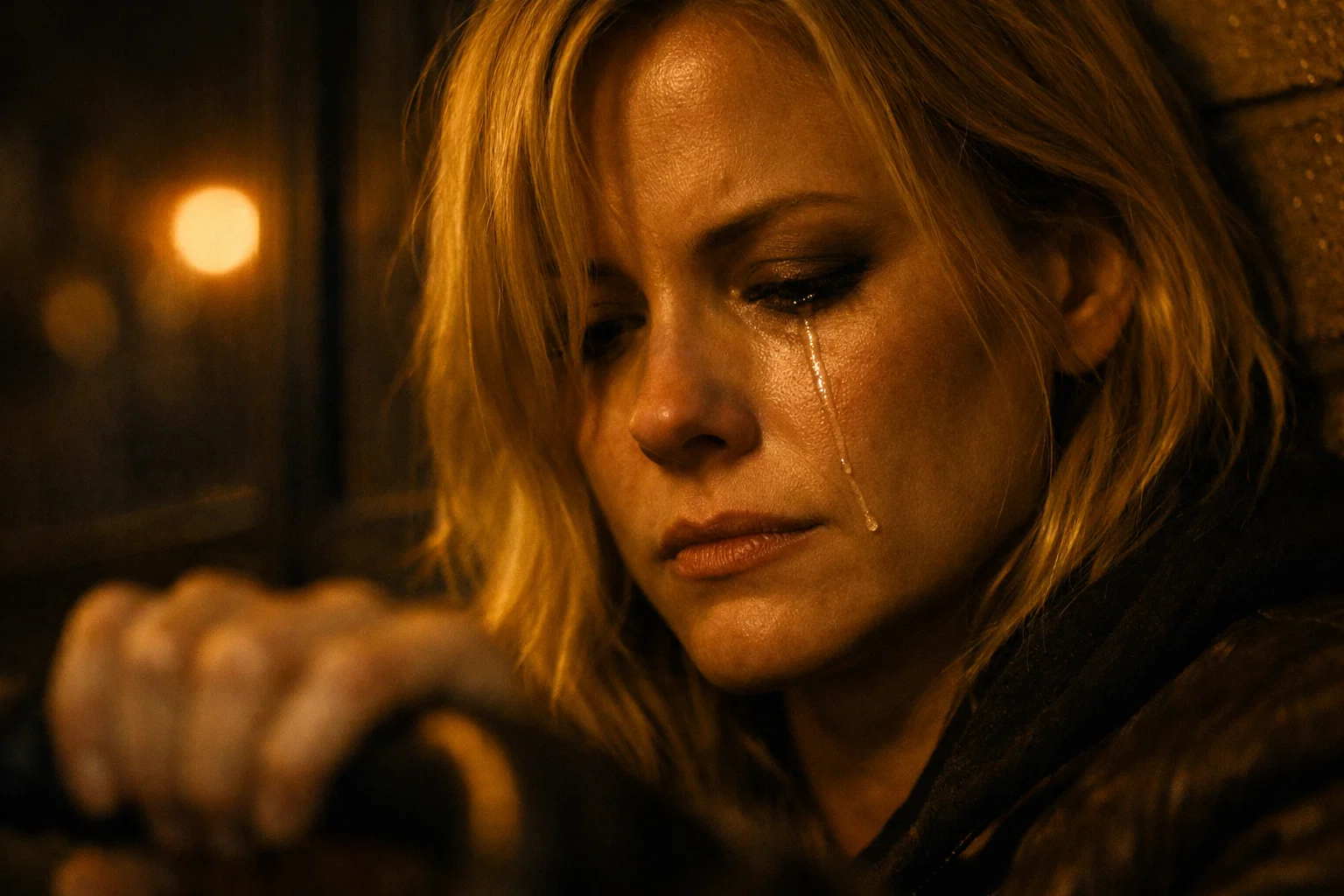
Harper leaned forward, hands trembling as she tried to gather the broken plate. Tears blurred her vision—not just from embarrassment, but from the familiar ache of being utterly alone.
The boys kept laughing.
An older man finally stood. He knelt beside her and helped pick up the pieces.
“I’m sorry,” he whispered. “You didn’t deserve that.”
She nodded, unable to speak.
But the boys just smirked and returned to their meals, still whispering, still enjoying their cruelty.
Harper stayed in her seat. She refused to let them chase her out.
Fifty minutes passed in heavy silence.
Then came the rumble.
Low at first, then louder. A deep, mechanical growl that vibrated through the windows.
Heads turned. Conversations paused.
The rumble grew closer.
Through the window, Harper saw them—motorcycles rolling into the parking lot, one after another. Black leather. Chrome gleaming in the sun. Controlled, deliberate movements.
The diner held its breath.
The door opened.
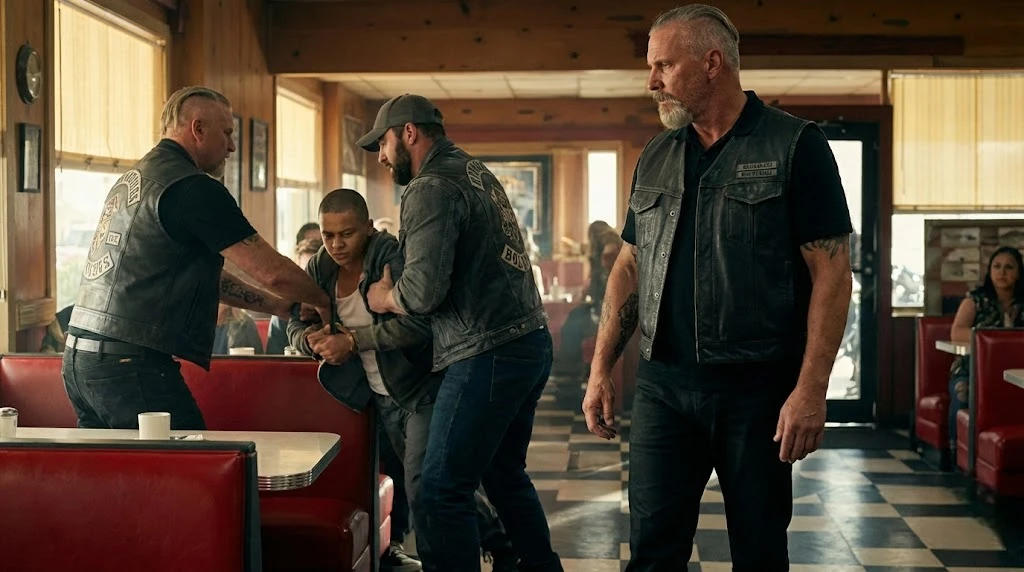
Four men walked in. They didn’t rush. They didn’t scan the room. They moved with quiet purpose, like they knew exactly where they were going.
The leader stood tall, broad-shouldered, head shaved smooth. Gray touched his beard. His eyes were calm but aware.
Behind him, three others—lean, muscular, weathered. Different builds, different ages. But the same steady presence.
They walked straight toward Harper’s table.
The leader stopped. He lowered himself to one knee, bringing himself to her eye level.
“Are you alright?” he asked quietly.
Harper swallowed hard. She nodded, though it was a lie.
“You don’t look alright,” he said gently. “And that’s okay.”
Something in her chest broke open.
The man stood and turned toward the boys.
His voice remained calm. “You had your fun. Now you’re done.”
One of the boys tried to laugh. “We were just—”
“Stand up,” the man said. Not loud. Not angry. Just certain.
The boy’s laugh died in his throat.
“I said stand up. And leave.”
One of the other boys pushed back from the booth. “You can’t—”
“We can,” said the lean man behind the leader. “And we are.”
The boys looked at each other. Their faces had gone pale.
One by one, they stood. No one joked now. No one met anyone’s eyes.
They filed out under the watchful gaze of the three men at the entrance.
The door closed behind them.
The leader turned back to Harper.
He gestured to the waitress, who approached hesitantly.
“Bring her whatever she wants,” he said, placing bills on the table. “Fresh plate. Take your time.”
The waitress nodded quickly and hurried toward the kitchen.
The man looked at Harper again. “No one gets to decide your worth. Not here. Not anywhere.”
Then he did something that shocked the entire room.
He removed his leather vest and carefully placed it around her shoulders.
“You’re not alone,” he said. “You never were.”
Harper’s tears returned—but this time they felt different. Lighter.
“Thank you,” she whispered.
He nodded once. “You don’t thank someone for doing what’s right.”
The diner slowly came back to life.
Someone wiped their eyes. The older man who’d helped earlier squeezed Harper’s shoulder. The waitress brought fresh pancakes and didn’t charge for them.
A quiet ripple of applause moved through the room—not loud, not celebratory, but genuine.
The bikers didn’t stay. They nodded to Harper and left as quietly as they’d come.
But the vest remained on her shoulders.
Harper ate her pancakes. They tasted better than anything she’d had in months.
When she left the diner an hour later, the sun felt warmer. The world felt lighter.
Not because cruelty had disappeared—but because courage had shown up when it mattered.
She wheeled herself to the parking lot and stopped. The four bikers were still there, standing by their motorcycles, talking quietly.
The leader saw her and walked over.
“Heading out?” he asked.
“Yeah,” Harper said. “I just… I wanted to say thank you again.”
“Already told you—you don’t need to thank us.”
“I know. But I want to.”
He smiled slightly. “Fair enough.”
Harper hesitated. “Why did you do that? You didn’t know me.”
The man was quiet for a moment. “My daughter,” he said finally. “She used to sit in a chair like yours. Born with spina bifida.”
Harper’s breath caught. “Used to?”
“Car accident. Three years ago.” His voice remained steady, but something in his eyes shifted. “She was seventeen.”
“I’m so sorry.”
He nodded slowly. “She used to tell me about days like this. Kids who thought it was funny. Adults who looked away.” He met Harper’s eyes. “I couldn’t help her every time. But I can help someone else’s daughter.”
Harper’s throat tightened.
“Her name was Emma,” he continued. “And she would’ve liked you.”
“I wish I could’ve met her.”
“Me too.” He glanced back at his friends. “We ride on Saturdays. Stop at different places. And when we see something that ain’t right, we make it right.”
“That’s… that’s really beautiful.”
The man shrugged. “It’s what Emma would’ve done. She never let anyone push her around. And she never let anyone push others around either.”
Harper smiled through her tears. “She sounds incredible.”
“She was.”
One of the other bikers called out, “We rolling, Marcus?”
Marcus nodded, then looked back at Harper. “You take care of yourself.”
“I will.”
“And if anyone gives you trouble again—you call.” He handed her a card with a phone number. “We’re always around.”
Harper took the card carefully. “I don’t know what to say.”
“Don’t say anything. Just live your life. That’s what matters.”
He walked back to his motorcycle and swung his leg over. The engines roared to life, one by one.
Harper watched them ride away, the leather vest still warm around her shoulders.
She looked down at the card in her hand. On the back, in small handwriting, were the words: “For Emma. For everyone.”
Three months later, Harper returned to Redwood Diner.
She wore the vest. She always wore it now.
The waitress greeted her with a hug. “Your usual table?”
“Please.”
As she settled in, she noticed something new on the wall—a framed photo. Four bikers standing in front of the diner, arms crossed, looking directly at the camera.
Beneath it, a small plaque: “They stood up when it mattered.”
Harper stared at it for a long moment.
Then she ordered pancakes.
And this time, she was hungry.
The teenage boys never came back to the diner. Word had spread quickly through town about what happened. Some people said it was about time someone stood up. Others said the bikers had no right to intervene.
But Harper didn’t care what people said.
She knew what happened that day. She knew what it felt like to be seen, to be defended, to matter.
And that was enough.
Six months after that day, Harper started volunteering at a local community center. She led support groups for young people with disabilities. She told them about the vest, about Marcus, about Emma.
She told them that strength comes in many forms.
And that sometimes, the most unexpected people are the ones who change everything.
On her one-year anniversary of that day at the diner, Harper received a package.
Inside was a photo—Marcus and his crew, standing in front of their bikes. On the back, a message:
“Keep fighting. Keep shining. Emma would be proud. So are we. – Marcus”
Harper hung the photo on her bedroom wall.
She looked at it every morning before leaving the house.
And every time, she remembered.
Not the cruelty. Not the laughter. Not the fear.
She remembered the moment someone chose to stand beside her.
The moment everything changed.
The moment she learned that silence might hurt—but action heals.
And that lesson stayed with her forever.
Original fictional stories. AI-assisted creative content.