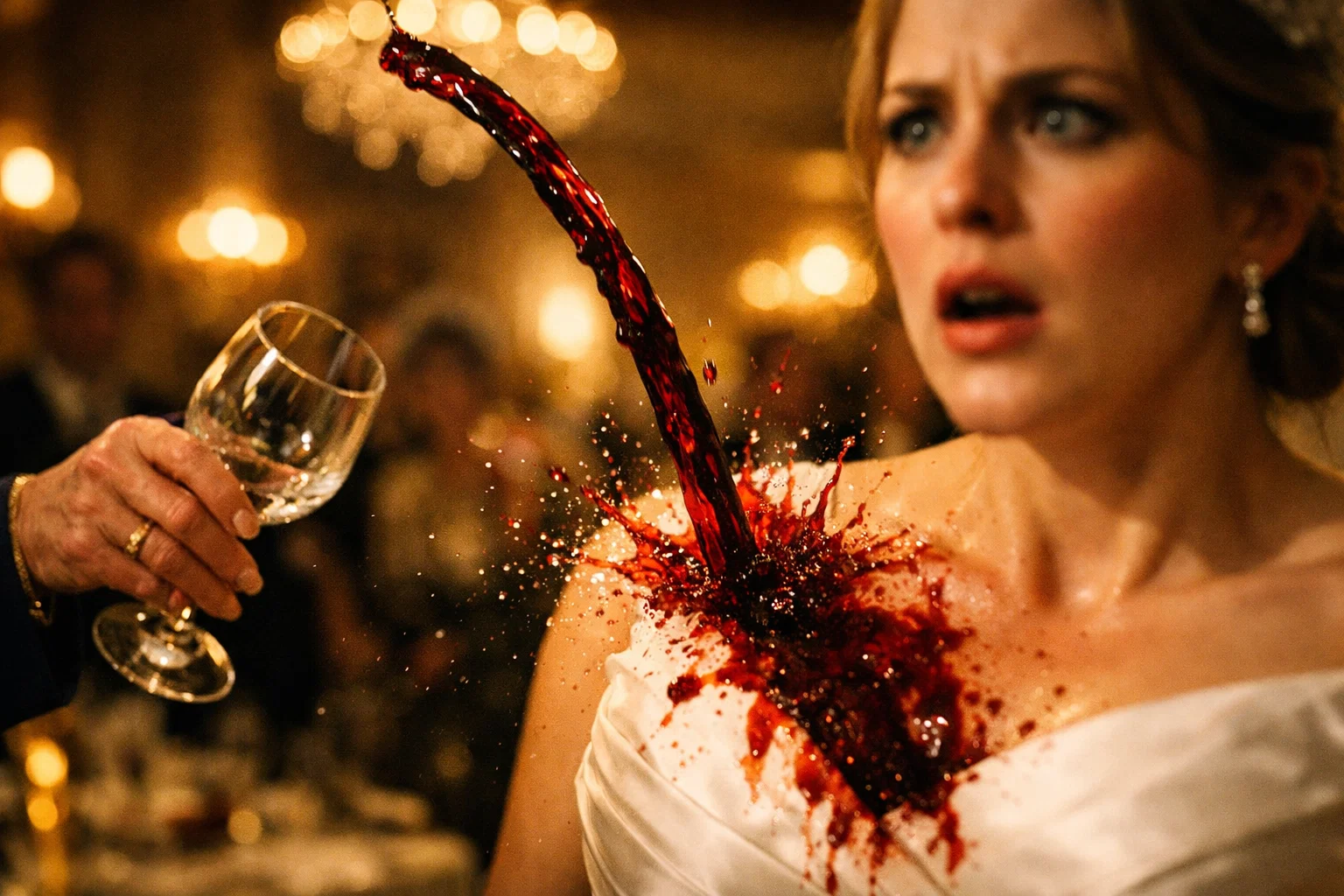
The wine fell in a slow arc.
Deliberate. Calculated. Cruel.
Camilla Ashford’s hand didn’t shake as she emptied the glass down the front of my dress.
“There,” she said. “Now people can stop pretending that rag belongs here.”
The ballroom went silent.
Two hundred guests. Crystal chandeliers. A string quartet frozen mid-note.
I stood there, wine dripping onto marble, breathing so hard I thought I’d collapse.
“Did she really just—”
“Look at the dress though.”
“Homemade, apparently.”
Camilla stepped closer, her voice dropping to a whisper meant for cruelty.
“I told you,” she said. “A girl from your background doesn’t marry into this family looking like charity work.”
My hands trembled.
Not from fear.
From rage I’d been swallowing for six months.
Six months of “suggestions” about my clothes, my manners, my family.
Six months of Edward—my fiancé—saying “She doesn’t mean it that way.”
Yes, she did.
She always did.
“The dress is handmade,” I said quietly.
Camilla laughed. “Exactly my point.”
“By Samuel Beaumont.”
Her smile flickered.
Just for a second.
“Who?”
“My grandfather.”
The flicker became a crack.
“Your grandfather is a tailor?”
“A couturier,” I corrected. “He designed for European royalty for forty years before he retired.”
Someone in the crowd gasped.
“Wait—Samuel Beaumont? THE Samuel Beaumont?”
A woman near the orchestra stepped forward, staring at my dress.
“This is his work?” Her voice shook. “I’ve been on his waitlist for three years.”
Camilla’s face went white.
“That’s impossible. You said your family was—”
“Modest?” I finished. “Yes. Grandfather gave up titles when he left France. He preferred to be known for his work.”
Edward touched my arm. “You never told me.”
Because you never asked.
Because your mother decided who I was the moment she saw my address.
I turned back to Camilla.
“This dress took him four months. Every stitch by hand. He came out of retirement to make it for me.”
My voice didn’t shake anymore.
“And you poured wine on it like I was a servant who’d spilled yours.”
Camilla’s mouth opened.
Nothing came out.
Then my phone rang.
The ringtone I’d set specifically for him.
I answered.
“Grandfather.”
His voice filled the speaker, warm and unmistakable.
“Ma chérie, how is the party?”
I looked at Camilla.
At Edward.
At two hundred people pretending they hadn’t just watched me be humiliated.
“Complicated,” I said.
“Then I have good timing. The lawyers just confirmed the paperwork. It’s official.”
My chest tightened.
“What paperwork?”
“The inheritance, darling. Your grandmother’s estate. The title transfers to you at midnight tonight.”
The room tilted.
“Title?”
“Countess,” he said gently. “Your grandmother was Countess of Montrose. You’re her only living heir. I wanted to tell you in person, but the timing—well. Happy engagement, my love. You’re nobility now.”
The phone nearly slipped from my hand.
Countess.
Nobility.
Inheritance.
I looked up.
Camilla was staring at me like I’d grown a second head.
Edward looked sick.
His mother had spent six months tearing me down for being beneath them.
And at midnight, I’d outrank her entire bloodline.
“Grandfather,” I said slowly. “Can you come here?”
“I’m twenty minutes away. Your cousin Julien is driving.”
“Good. Bring the documentation.”
I hung up.
The silence was deafening.
Camilla found her voice first.
“That was—this is—you can’t—”
“Can’t what?” I asked.
Her sister-in-law pushed forward, smiling desperately.
“This is wonderful news! We’re going to be family, and now—”
“Now you care about my background?”
The smile died.
I looked at Edward.
“Did you know?”
“About the title? No. I swear.”
“But you knew she treated me like trash.”
He flinched.
“She’s my mother. I thought—I hoped she’d come around.”
“She poured wine on a dress your grandfather-in-law made by hand.”
“I know. I’ll talk to her.”
“You’ve been talking to her for six months. She got worse.”
A waiter approached nervously, offering a towel.
I took it.
Pressed it against the stain.
My hands weren’t shaking anymore.
Camilla stepped forward, voice tight.
“This is all a misunderstanding. We can fix this. I’ll pay for the dress to be cleaned. I’ll—”
“You’ll what?” I said. “Apologize?”
“Yes. I’m sorry. I was—it was a mistake. The wine, I meant to—”
“You meant to humiliate me in front of two hundred people because you thought I was nobody.”
Her face crumpled.
“Please. Let’s start over. We’re family now. Once you marry Edward—”
“I’m not marrying Edward.”
The words came out clean.
Final.
Edward’s face went gray.
“What?”
“I’m not marrying into a family that needed a title to recognize my worth.”
“You can’t mean that. We love you.”
“You love the Countess. You didn’t love the girl in the handmade dress.”
Camilla made a choked sound.
“That’s not fair. I didn’t know—”
“Exactly.”
My grandfather arrived seventeen minutes later.
Tall. Silver-haired. Impeccably dressed.
He walked through the ballroom like he owned it.
Behind him, a younger man in a tailored suit carried a leather portfolio.
Grandfather stopped in front of me.
Looked at the wine stain.
Looked at Camilla.
“You did this?”
His voice was soft.
Deadly soft.
Camilla opened her mouth.
“I didn’t know who she was. I thought—”
“You thought cruelty was acceptable if the victim was powerless.”
He turned to the younger man.
“Julien. Show them.”
Julien opened the portfolio.
Pulled out documents with official seals.
Inheritance papers.
Lineage verification.
A letter from the French consulate confirming the title transfer.
He read aloud, his voice carrying across the silent room.
“As of midnight tonight, the title Countess of Montrose, including associated estates, holdings, and ancestral rights, transfers to the sole living heir of the late Countess Marguerite Beaumont.”
He looked up.
“That’s you.”
Camilla swayed.
Someone caught her arm.
Edward stared at the papers like they were written in a foreign language.
“This is real?”
Grandfather didn’t look at him.
“My granddaughter is a Countess. That dress you just watched your mother destroy is a family heirloom worth more than this venue.”
A woman near the back whispered, “Oh my God.”
Camilla found her voice, shrill and desperate.
“This doesn’t change anything. We’re still family. We can—”
“We are not family,” Grandfather said.
He turned to me.
“Would you like to stay?”
I looked around the room.
At people who’d laughed when the wine fell.
At Edward, who’d stood there silent while his mother humiliated me.
At Camilla, whose face had gone from cruel to panicked the moment my value changed.
“No,” I said. “I’d like to go home.”
Grandfather offered his arm.
But before I took it, Julien handed an envelope to the venue manager.
“Legal notice,” he said calmly. “Preservation of all security footage. Intent to file civil action for destruction of inherited property and public defamation.”
Edward stepped forward.
“Wait. Please. Can we talk about this?”
“About what?” I asked.
“Us. Our future. I love you.”
“You loved the version of me your mother approved of.”
“That’s not true.”
“Then why didn’t you stop her?”
Silence.
He had no answer.
Because the answer was that stopping her would have cost him comfort.
And comfort mattered more than my dignity.
I slipped the engagement ring off my finger.
My hand was steady.
I placed it on a waiter’s tray.
“I will not marry a man who needed my pedigree to defend me.”
Edward’s face collapsed.
“Please. Don’t do this.”
“I already did.”
Camilla made a broken sound in her throat.
Not grief.
Panic.
She’d lost the marriage arrangement.
Lost the social connection.
Lost the fantasy that cruelty without consequence was her birthright.
Three of her relatives rushed forward, apologizing over each other.
An aunt. A cousin. Even her sister-in-law.
All trying to salvage access to me.
To my title.
To whatever social capital I represented now.
It would have been funny if it wasn’t disgusting.
Then Camilla did something I didn’t expect.
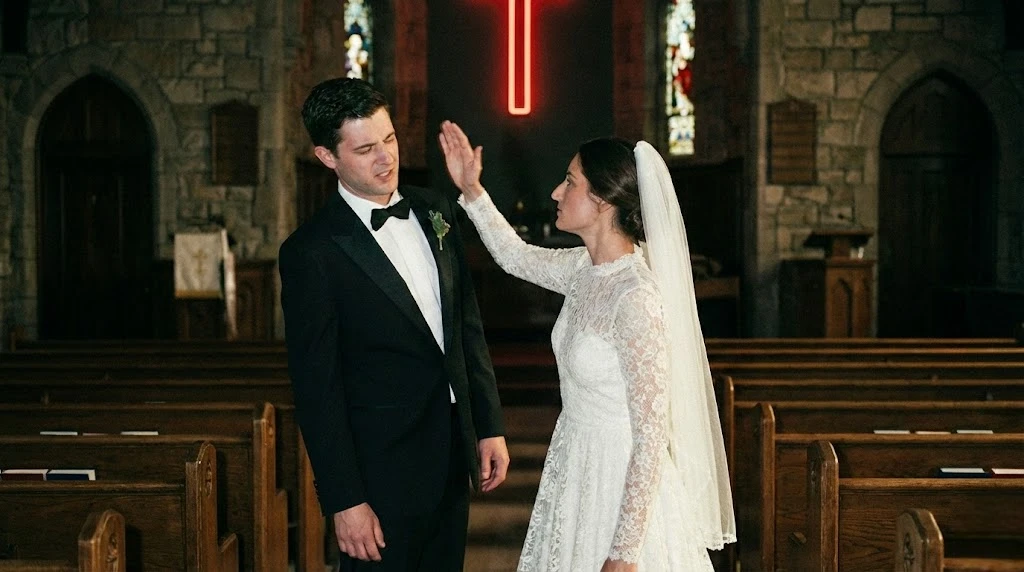
She slapped herself.
Hard.
Twice.
“I was wrong,” she gasped. “I humiliate myself. You see? I admit it.”
Her sister followed.
Then another relative.
A grotesque little performance of self-inflicted shame.
Not because they’d found conscience.
Because they smelled consequence.
No one stopped them.
No one helped them.
Because everyone in that room knew what it was.
Panic.
Not repentance.
My grandfather watched with cold contempt.
Then he offered his arm again.
This time, I took it.
We walked out of that ballroom together.
Past two hundred silent guests.
Past crystal chandeliers and string quartets.
Past a family that had decided I was worthless until I wasn’t.
I never looked back.
Within a week, the footage spread through social circles.
Then beyond them.
The fallout was surgical.
Two charity boards quietly removed the Ashfords.
A luxury brand paused a partnership with Camilla’s foundation.
The social committee that hosted the ball issued a public statement condemning “class-based humiliation and abusive conduct.”
Three families withdrew business alliances.
Not because they suddenly loved justice.
Because they feared contamination.
Edward sent flowers.
I returned them unopened.
Camilla sent a handwritten apology.
It contained the phrase: “I hope we may still repair what was lost.”
She still didn’t understand.
What was lost wasn’t a marriage.
It was her fantasy that other people existed for her ranking system.
I went back to England with Grandfather.
He spent the next month restoring the dress himself.
Every stain removed.
Every thread repaired.
When it was finished, he called me to see it.
The wine was gone.
Completely.
“There,” he said softly. “Now it remembers only you.”
I cried then.
Not because of the Ashfords.
Because I finally understood something.
Dignity doesn’t come from being recognized by cruel people.
It comes from refusing to let them define the cost of your peace.
I took the title.
Restored my grandmother’s estate.
Funded a scholarship for young artisans dismissed as “small” because they lacked connections.
And I kept the gown.
Not as a symbol of revenge.
As a symbol of survival.
Grandfather passed the following winter.
Before he did, he told me something I’ll never forget.
“Class is how people behave when they believe no one important is watching.”
He was right.
That ballroom taught me exactly who was watching, who was silent, who was cruel, and who was worth walking away with.
I left the Ashfords.
I left the ring.
I left the ballroom on my grandfather’s arm with my head high and my back straight while the people who’d mocked me stood in the ruins of their own performance.
And I never looked back.
Original fictional stories. AI-assisted creative content.