The water hit me first.
Ice-cold, heavy, thrown with the kind of contempt that only comes from someone who has never once been told no in their entire life.
I didn’t move. Sarge didn’t either.
He was a Belgian Malinois, scarred from shoulder to sternum, and he’d been through things that would break most men. A bucket of cold water on a warm Tuesday morning wasn’t going to rattle him. It wasn’t going to rattle me either.
“I told you to move,” Eleanor Sterling said. Her voice carried the particular cruelty of someone performing for an audience. “You filthy beggar. You and your pack of mongrels are ruining the aesthetic of this entire block.”
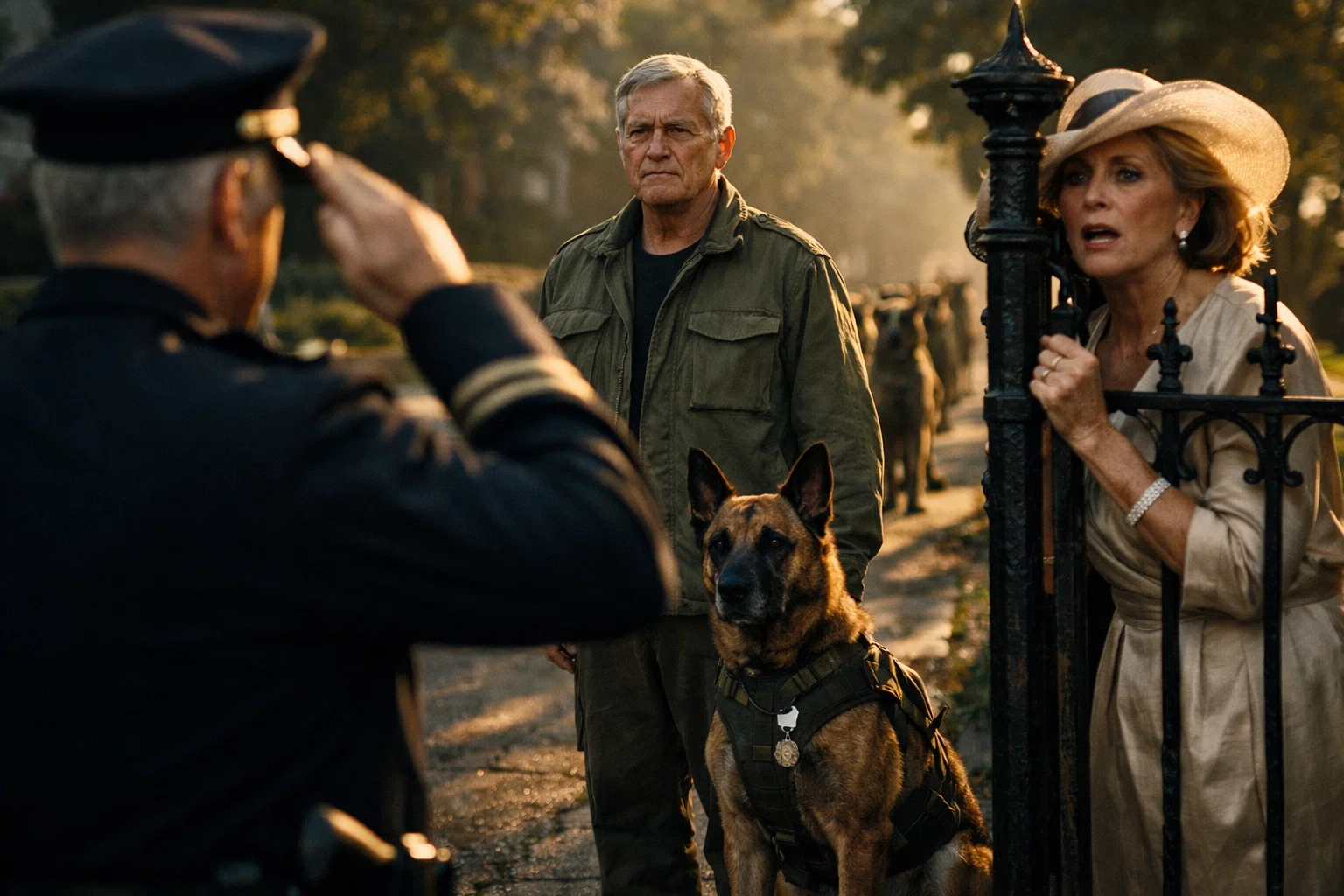
She stood on the other side of the ornate iron fence that bordered the Sterling Heights Country Club, silk dress pressed, hair lacquered, a glass of something bubbly and expensive dangling from perfectly manicured fingers. Behind her, six women in various states of resort wear stood filming on their phones, laughing the way people laugh when they believe there are no consequences.
“This is a neighborhood for people of status,” Eleanor continued, stepping closer to the fence. “Not a dumping ground for street trash and rabid animals.”
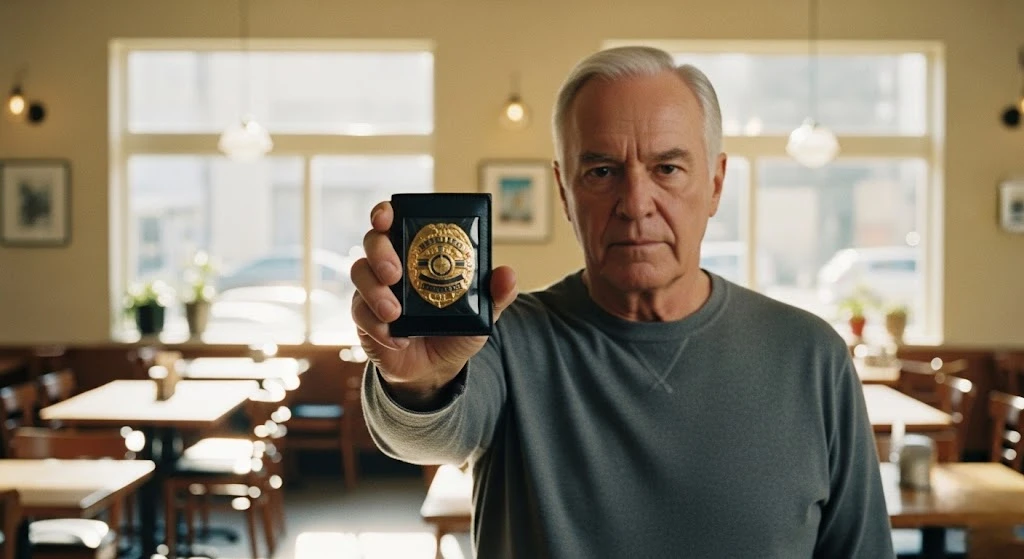
I looked at her. I didn’t say anything right away. Twenty years in uniform teaches you the value of silence—how much weight it can carry, how much it can communicate before a single word is spoken.
“It’s a public path, Eleanor,” I finally said. Quiet. Even. “And these aren’t mongrels.”
“Oh, listen to him!” One of her friends—a woman with a sunhat the size of a satellite dish—cackled and swirled her mimosa. “The hobo has opinions! Maybe he thinks his little army is going to protect him!”
Eleanor’s eyes swept over me with visible disgust. The worn boots. The old green jacket—faded, fraying at the collar, twenty years of history stitched into the lining. She smiled the way people smile when they think they’ve already won.
“You’re nothing, Elias,” she said. “A zero. A man who cleans up after animals because no human being can stand to be in the same room as him.” She leaned on the fence post, tilting her head. “Move along before I have you charged with vagrancy and have every last one of these mutts sent to the pound.”
I looked at Sarge. He was watching her, ears pinned back, every muscle in his body coiled and waiting. He’d taken a bullet for a U.S. Senator without hesitating. He’d cleared buildings in Kandahar. He didn’t need a command to be ready. He just needed one to stand down.
I rested my hand on his head.
“You should be very careful who you splash,” I said. My voice dropped—not in anger, but in the register I hadn’t used since I’d handed in my stars. The kind of voice that once moved entire divisions. “The water’s cold. But the truth is much harder to swallow.”
Eleanor opened her mouth.
Then the sirens started.
Three black SUVs came in fast, tires biting asphalt, dust rolling up from the gravel shoulder. Eleanor turned with the delighted, proprietary expression of someone who had already written the ending to this story. She straightened her hat and arranged her face into something that looked like victimhood.
“Chief Miller! Thank goodness!” She waved from behind the fence, voice rising to carry across the lawn. “I want this man arrested immediately. He’s been loitering on this path for weeks with these animals. He’s a vagrant and a public nuisance and I want those dogs impounded before they bite someone.”
Chief Miller stepped out of the lead vehicle.
He was a broad man, silver-haired, built like someone who had spent a serious portion of his life carrying heavy things over difficult terrain. His eyes moved across the scene in the practiced, assessing way of someone who had been trained to read situations fast.
His eyes found me.
And something happened to his face.
He didn’t pull out cuffs. He didn’t reach for his radio. He didn’t acknowledge Eleanor Sterling or her friends or their phones or the cocktails or the silk or the outrage.
He walked across the grass, past the fence, past Eleanor—who physically stepped back in surprise—and came to a stop three feet in front of me.
He brought his heels together.
The salute was perfect. Textbook. Executed with the kind of muscle memory that only comes from genuine military service.
“General Thorne, sir,” Miller said, his voice carrying across the suddenly very quiet lawn. “I apologize for the delay. We didn’t have immediate confirmation you were transitioning the unit through this sector today.”
The silence that followed was the kind that has physical weight.
Eleanor’s mouth opened. Nothing came out.
Her friends’ phones were still recording. They just weren’t laughing anymore.
“At ease, Miller,” I said.
I reached into my jacket pocket and pulled out the whistle. Small, tarnished silver, the finish worn down from decades of use. I raised it to my lips and blew one short, clean note.
Behind me, five hundred dogs stood up.
Not chaotically. Not in a scramble of noise and motion. They rose as a single unit, perfectly aligned, their tactical harnesses catching the morning light in synchronized flashes of olive and silver. Not one barked. Not one broke formation.
They stood like what they were.
Soldiers.
Eleanor made a sound somewhere between a gasp and a word that didn’t quite form. She gripped the fence post. One of her friends actually dropped her mimosa. The glass shattered on the flagstone and nobody looked at it.
“General?” Eleanor’s voice had shed every layer of its earlier confidence. What was left was thin and unsteady. “There—there must be some mistake. He’s been living out of that old warehouse on the edge of town. I’ve seen him. He’s—”
“He is a five-star General,” Miller said, turning to face her with an expression that contained absolutely no warmth. “Elias Thorne. Congressional Medal of Honor. Three combat tours. Architect of the most decorated K9 program in the history of the United States military.” He paused. “Sir, do you want me to brief her? Or should I just read her the charges?”
“Brief her,” I said. “She should understand what she did.”
Miller turned back to Eleanor fully. When he spoke, his voice was controlled but each word landed like a stone.
“These aren’t strays, Mrs. Sterling. This is the Ghost Pack—a working K9 unit with an active federal designation. These animals hold more commendations between them than your entire zip code has produced in its history.” He walked to Sarge and pointed to the small silver medal clipped to his harness. “This dog took a bullet during a Senate security detail. He was operated on in the field and returned to active duty within six weeks. He has been decorated three times.” Miller moved down the line and stopped next to a Golden Retriever sitting with quiet, enormous dignity. “That dog’s name is Bella. She located an IED in a Kabul schoolyard. Three hundred and twelve children went home that day because of her.” He turned back. “You called them eyesores.”
Eleanor’s lips were moving, but no sound was coming out.
“I also want you to understand,” Miller continued, “that what you did this morning—throwing water on a federal officer and his working military animals on a public right-of-way—is not a minor social faux pas. It is a federal offense. Assaulting a superior officer. Interfering with a working military unit. Your friends filmed it. Every frame of that footage is evidence.”
“I didn’t know—”
“That’s the thing about dignity,” I said, cutting her off gently. “It doesn’t require your recognition to exist.”
Two of Eleanor’s friends had already slipped away into the clubhouse. The remaining four were standing in a loose cluster, phones lowered, the performance over. One was crying quietly, though whether from guilt or fear was hard to tell.
Eleanor herself had gone very still. The social armor she wore—the hat, the dress, the practiced contempt—all of it suddenly looked like a costume. Like something she had put on that morning that no longer fit.
“Chief Miller,” she said, trying once more to find solid ground. “This has clearly been a misunderstanding. I would never intentionally—”
“The footage is clear,” Miller said. “We have five witnesses from the public path, Mrs. Sterling. I’m going to need you to come with us.”
“Come with you?” Her voice cracked. “You’re arresting me? Do you know who I am? Do you know what my family has given to this city? My husband is on the board of—”
“I know exactly who you are,” Miller said. “I also know that it doesn’t matter.”
He signaled to two officers who had been standing back near the SUVs. They moved forward. Professional, unhurried, entirely unfazed by the name or the address or the silk.
One of Eleanor’s remaining friends stepped forward and grabbed her arm. “Eleanor—just—just stop talking.”
But Eleanor couldn’t. That was always the thing about people who had operated so long without friction. When the resistance finally came, they didn’t know how to meet it. They only knew how to escalate.
“This is outrageous,” she said, louder now, as if volume would help. “He was loitering. He had five hundred dogs. On a public path. Who does that? Who just walks around with five hundred trained military dogs?”
“Someone who earned the right,” Miller said flatly.
I watched them walk Eleanor Sterling toward the second SUV. She went with the stiff, mechanical movements of someone in genuine shock, as if her body hadn’t yet caught up with the fact that the world she’d been performing for had flipped.
Her friends were quiet now. One of them—a tall woman in white linen who had laughed the loudest earlier—walked up to the fence and looked at Sarge for a long time.
“Is it true?” she asked. Her voice was different now. Human. “About the bullet?”
“Kandahar. 2019,” I said.
She nodded slowly. Then she turned and walked back to the clubhouse without another word.
Miller came back and stood beside me. We watched the SUV pull away.
“You’re going to have a long day, General,” he said.
“I’ve had longer.”
“The footage is already spreading. Her friends posted it before they figured out what was happening.” He glanced at me. “You’re going to be very visible for a while.”
“That’s all right,” I said. “Visibility has its uses.”
He nodded. He looked at Sarge, then at the long, silent line of dogs stretching back down the public path. He shook his head slowly, something between disbelief and pride.
“You still got all five hundred?”
“Four hundred and ninety-seven. Lost three last year. Age.” I paused. “Good deaths. In their sleep. Fed.”
Miller was quiet for a moment.
“And what are you doing with them? The program?”
“Working on a transition. The VA is looking at using some of them for veteran PTSD therapy. Private sector has interest in three of the bomb units.” I scratched Sarge behind the ear. “Bella is retiring to a family in Vermont. She’s earned it.”
“And you?”
I looked down the path. The morning light was coming in flat and gold across the grass, and the five hundred dogs stood without impatience, without complaint, ready to move when I was.
“Same as always, Miller,” I said. “Moving forward.”
The footage ran everywhere by noon.
The original clip—the bucket of water, Eleanor’s speech about “status” and “street trash,” the arrival of the SUVs—was viewed eleven million times in four hours. By evening, it had climbed past forty.
The follow-up clips, posted by people who had been on the path and in nearby buildings, filled in the rest. Chief Miller’s salute. The moment the five hundred dogs rose as one. Bella sitting in perfect dignity while Miller told her story.
The comments were a particular kind of internet justice, raw and overwhelming, the collective reaction of millions of people watching a woman mistake visibility for power and be corrected in real time.
By midnight, Eleanor Sterling’s charity board had requested her resignation, citing the ongoing federal matter and the volume of donor calls. By the following morning, two of her business partners had released statements distancing themselves from her. The Sterling Heights Country Club issued a formal statement expressing “deep regret” and announced a review of their neighbor relations policies, which read, in the particular language of institutions trying to survive a PR moment, as an acknowledgment that they had made errors.
Eleanor’s attorney released a statement. It was carefully worded. It used the phrase “deeply unfortunate misunderstanding” four times.
The internet noticed.
I didn’t follow the coverage closely. I had four hundred and ninety-seven dogs to feed.
But Miller called three days later.
“She pled out,” he said. “Federal misdemeanor. Significant fine. Community service.” A pause. “Her lawyer negotiated hard, but the footage left no room.”
“Good,” I said.
“The community service is with an animal shelter. Judge’s choice.” He sounded like he was trying not to smile. “She reports Monday.”
There was a long silence on the line.
“General,” Miller said, “I know you didn’t want the attention.”
“No.”
“But I hope you understand—what happened out there mattered. Not just for you. For every person who saw it.”
I thought about that. About what it means when the world watches someone assume they’re untouchable and find out otherwise. About dignity—how it doesn’t require recognition to exist, but how it helps when it’s finally seen.
“Tell the judge good call on the shelter,” I said.
Miller laughed. “Yes, sir.”
Three weeks later, a package arrived at the warehouse.
No return address. Just a card inside, written in handwriting I didn’t recognize.
I was one of the women filming. I didn’t stop her. I laughed. I’ve thought about that every day since. I don’t expect anything. I just wanted you to know that Bella’s story made me look at my own dogs differently. I’m sorry.
I read it twice. Set it on the table.
Sarge looked up at me.
“Good dog,” I told him.
He put his head back down on his paws and closed his eyes.
Outside, across the warehouse floor, four hundred and ninety-seven dogs settled into the particular quiet of animals who have been many places and are, for now, exactly where they are supposed to be.
I sat down in the old wooden chair by the window.
The morning light came in gold across the floor.
And for the first time in a long time, it felt like enough.
Original fictional stories. AI-assisted creative content.