Arthur Coleman couldn’t sleep again. At 3 a.m., the silence in his mansion was deafening.
He descended the marble staircase, his mind racing through shipping routes and fuel costs. Then he heard it—the quiet scrape of a sponge on glass.
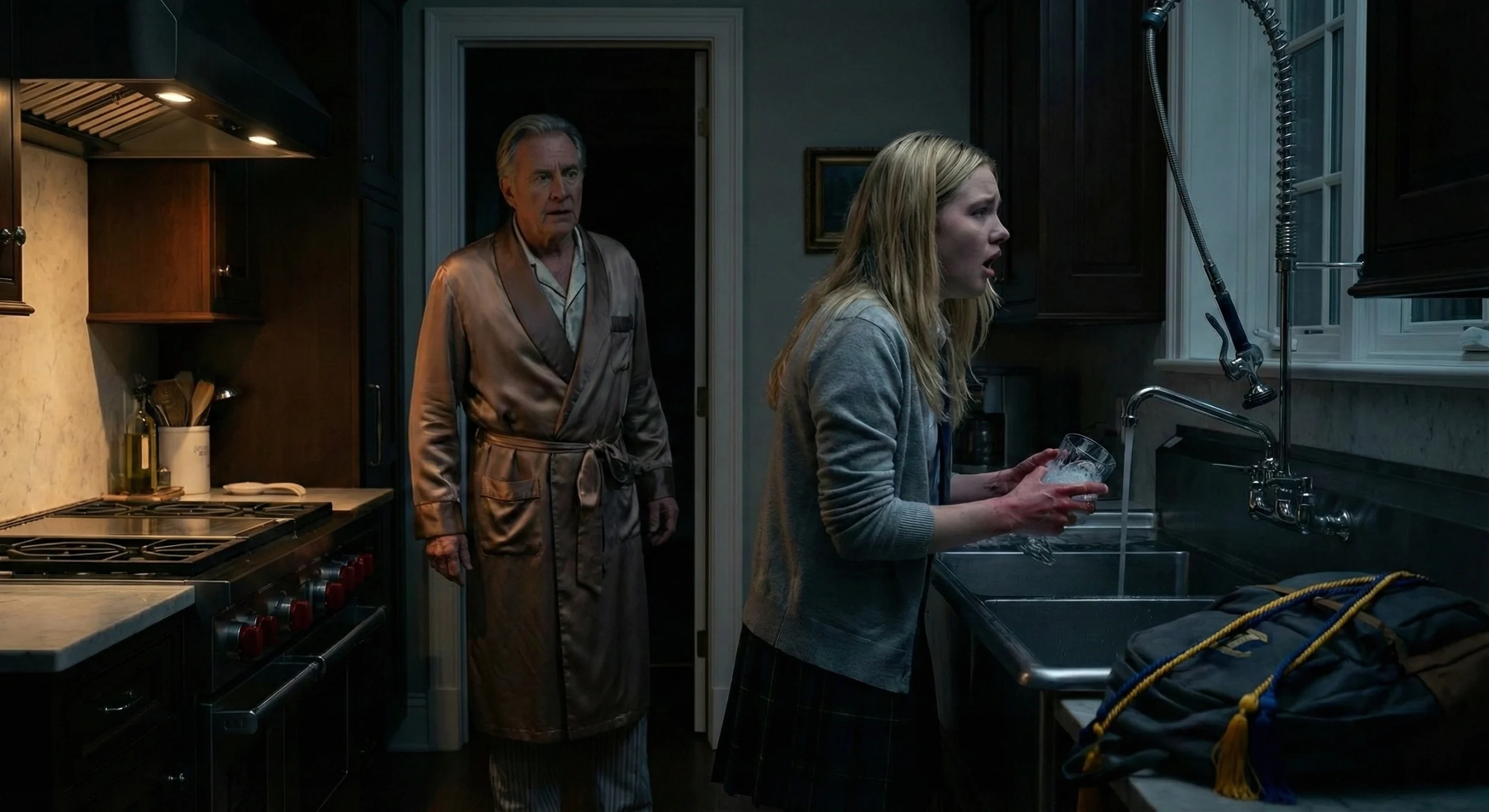
In the kitchen, hunched over the industrial sink, was a girl. Seventeen, maybe eighteen. She was scrubbing crystal with desperate intensity.
“Who are you?” His voice cut through the silence.
She spun around, gasping. The wine glass nearly slipped from her soapy hands. “Mr. Coleman! I’m Clare. Helen’s daughter.”
Helen. His housekeeper. Reliable, professional, never missed a day in five years.
“What are you doing here at three in the morning?”
“Mom’s sick. Just a cold. She was worried about the dishes from your party, so I—”
“She sent you? At this hour?”
“No!” Clare’s voice sharpened. “She doesn’t know I’m here. I have a key. I help on weekends. I just wanted to get it done before she woke up.”
Arthur’s eyes moved to her backpack by the door. A blue and gold honor cord dangled from the zipper. Validictorian.
His gaze returned to her raw, red hands. To the mountain of plates. To the shadows under her eyes.
“Leave the dishes. Go home.”
“But my mom will get in trouble if—”
“I’ll handle your mother. Go home, Clare.”
She grabbed her bag and fled into the darkness.
Arthur stood alone in the massive kitchen. A validictorian. Washing dishes at 3 a.m.
Something was very wrong.
At 7 a.m., he called his head of staff. “George, I need information. Our housekeeper, Helen Miller. And her daughter Clare.”
By 4 p.m., George returned with a folder. His face was grim.
“Clare Miller. Validictorian of Northwood High. Full scholarship to Georgetown. U.S. Presidential Scholar—one of the top 160 students in the nation.”
Arthur stared at the photo. Clare, beaming, holding a certificate.
“And?”
“Twenty-five days ago, she stopped attending school. She’s been marked for truancy. The scholarship deadline—she missed it. It’s gone.”
Arthur’s chest tightened. “Why?”
“Helen Miller. Severe lupus. The new treatment isn’t covered. Nine hundred dollars a month out of pocket. She lost her second job. Your job is all they have.”
“Nine hundred dollars.” To Arthur, pocket change. To them, everything.
“Clare’s been covering her mother’s shifts here. Unpaid. Just to keep you from firing Helen.”
“Where is Clare now?”
“Night shift. Evening Star Diner downtown.”
The diner smelled of old grease and burnt coffee. Arthur sat in a corner booth, watching.
Clare moved through the tables like a ghost. Tray balanced, face blank, seventeen going on forty.
He watched her wince lifting a heavy bus tub. Watched the manager bark orders at her.
“Clare.”
She froze. The tray trembled in her hands.
She turned. Saw him. Saw her greasy uniform. The blood drained from her face.
The tray slipped. Plates exploded across the floor.
“Miller!” The manager roared. “That’s coming out of your pay! A week’s wages for breakage!”
Clare dropped to her knees, picking up broken glass with bare hands.
“That’s enough.” Arthur’s voice was cold steel.
He stood, walked over, placed himself between the manager and the girl.
“And who are you?” The manager blustered.
Arthur pulled out three hundred-dollar bills. Dropped them on the counter. “For the plates. And her shift is over.”
He crouched down to Clare’s level. She was crying silently, still trying to clean.
“Get up. You’re leaving.”
“I can’t. My shift—”
“Your shift is over.” He offered his hand.
She stared at it. Then slowly placed her small, greasy hand in his.
He pulled her to her feet and led her out into the cold night.
In the car, he cleaned the cut on her palm with antiseptic. Bandaged it carefully.
“Georgetown,” he said quietly. “That was the plan?”
“I want to work in the State Department. Serve my country.”
“Hard to do if you’re not in school.”
“You don’t understand!” She was crying now. “I came home with the acceptance letter. I was so happy. And Mom was on the floor. Couldn’t get up. Couldn’t stop crying from the pain.”
Her voice broke. “The doctor said lupus. Said the insurance won’t cover the new medicine. Nine hundred a month just for pills. She lost her other job. Your job is all we have.”
“I saw her trying to scrub floors with hands so swollen she couldn’t hold the brush. She was going to get fired. We were going to lose everything.”
“So I threw the letter away. I blocked the school’s number on her phone. I took the night shift.”
She wiped her face. “I hate it. But I love my mom. What’s a scholarship if I lose her?”
Arthur drove in silence. Processing.
They pulled up to a gray apartment building. He’d been there that afternoon.
“You’re very much like your mother. You’re both terrible liars.”
She almost smiled.
“Come on. We’re going to see her.”
Helen was waiting on the couch, wrapped in a thin blanket. When she saw Clare in the dirty uniform, she gasped.
Then she saw Arthur.
“Mr. Coleman, I—I don’t know what to say.”
“She’s been working nights at a diner to pay for your medicine. The medicine you didn’t tell me about.”
Helen’s face crumpled. “Please don’t punish her. It’s my fault. I’ll work for free. Just don’t—”
“Hurt her?” Arthur’s voice softened. “I’m not here to hurt her. I’m here to stop you from hurting her.”
He sat down in the worn armchair.
“Tomorrow at nine a.m., a car will take you to the Cleveland Clinic. Dr. Ayers is expecting you. He’s the best lupus specialist in the country. All costs are covered.”
Helen stared at him, mouth open.
“Clare, my assistant will meet you at your school at eight thirty. You’ll take your finals. You’ll graduate. The truancy record will be corrected. And you will accept your Georgetown scholarship.”
“But why?” Helen whispered. “This is charity. We can’t—”
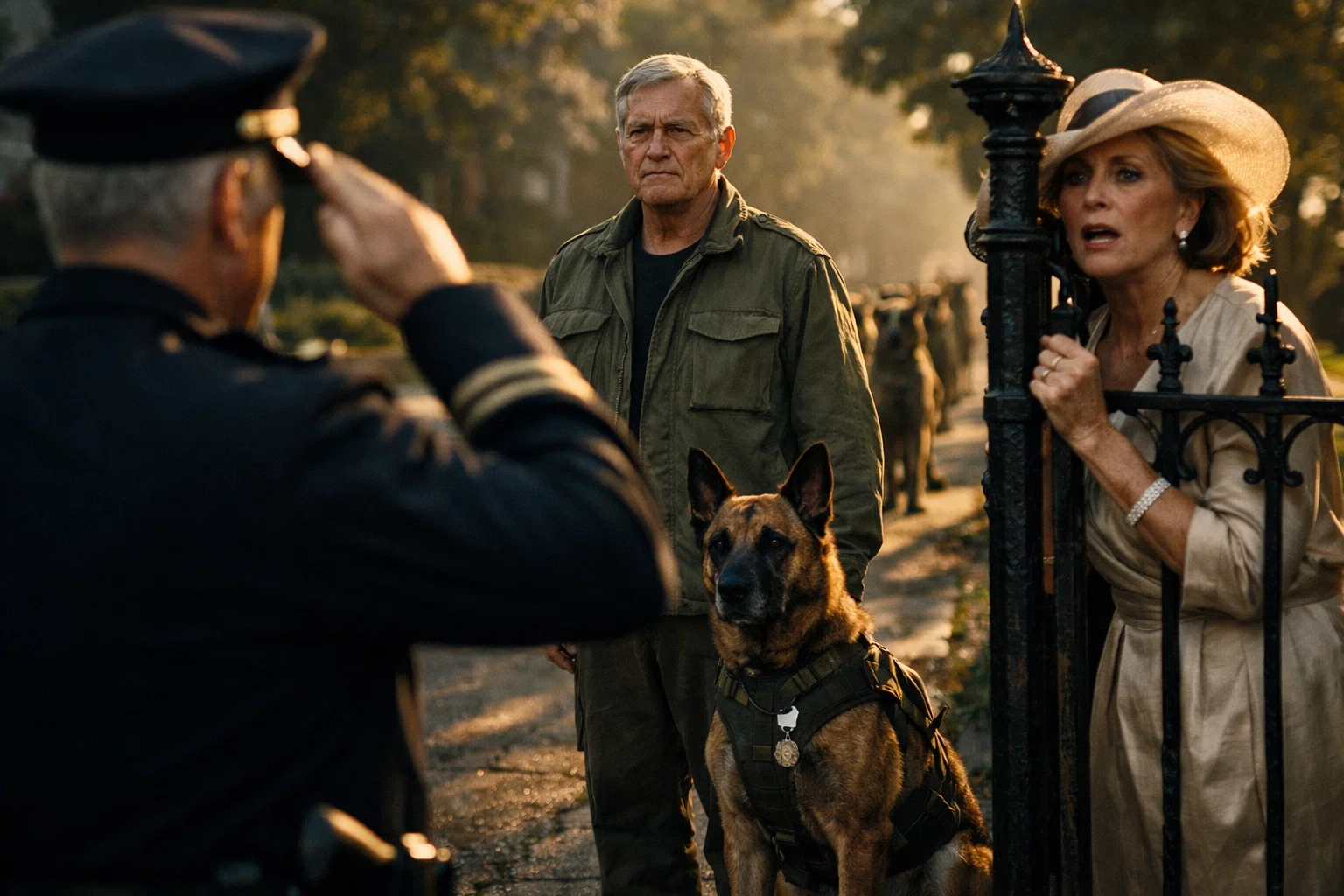
“It’s not charity.” Arthur leaned forward. “I saw a photograph by your door this afternoon. A soldier. Army uniform.”
“My father,” Helen said quietly. “Captain Robert Miller.”
Arthur nodded slowly. “I had a brother. Tommy. 101st Airborne. Baker Company.”
Helen’s eyes widened. “That was my father’s company.”
“Tommy didn’t come home. He was twenty years old. It destroyed my mother.”
Arthur’s voice thickened. “Then a letter came. From your father. He wrote about Tommy. Said he was brave. Said he saved two men. Said he held his hand at the end.”
He pulled out his wallet. From a hidden fold, he took a worn photograph. Young men in fatigues, smiling in a jungle.
“Your father wrote my mother three letters. About a boy she’d lost. Those letters were the only thing that kept her alive.”
He handed the photo to Helen. She traced her father’s young face with a shaking finger.
“Your father left no one behind,” Arthur said. “Not his men. Not their memory. I’ve carried that debt for fifty years.”
He stood. “This isn’t charity. This is family. Your grandfather saved mine. Now let me help his.”
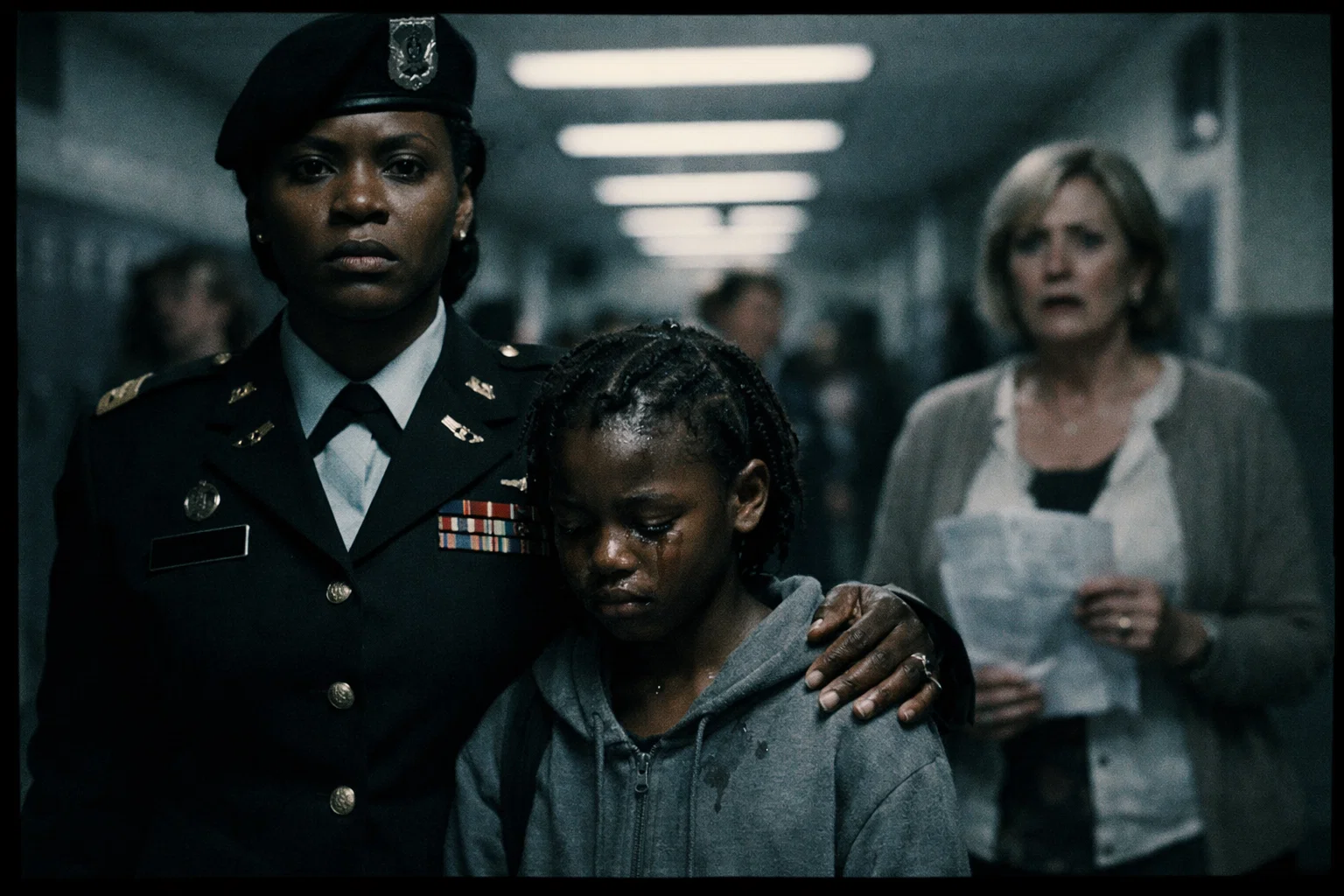
Two weeks later, Clare sat on the graduation stage in her blue cap and gown. The honor cord gleamed around her neck.
In the third row, her mother sat in a wheelchair—but she was smiling. The swelling was down. Her eyes were bright.
Next to her sat Arthur Coleman. When Clare’s eyes found his, he nodded. A gesture of respect.
When they called her name—”Validictorian, Clare Miller”—the applause was thunderous.
She walked to the podium. Put down her prepared speech.
“I wrote a speech about the future. But I want to talk about kindness instead.”
Her voice was clear. “History isn’t just made by presidents and billionaires. It’s made by small choices. By a soldier who writes letters to a grieving mother. By a mother who sacrifices everything for her daughter. By people who see someone falling and stop to offer a hand.”
She looked at her mother. At Arthur.
“My future was bought for me fifty years ago by my grandfather. It was protected by my mother. And it was returned to me by a man who understands that no one should be left behind.”
“Congratulations to my class. But don’t just be successful. Be kind. That’s how you change the world.”
The field erupted. Her classmates stood. Parents stood. Mrs. Dwight was crying.
Helen sobbed into her hands. Arthur patted her shoulder, his own eyes bright.
A month later, Helen sat in Arthur’s library.
“I can’t be a charity case. I need to work.”
Arthur smiled. “My mother left a fund. The Baker Company Fund. For children and grandchildren of veterans. It went dormant after she died.”
He gestured to file boxes on his desk. “I’ve restarted it. Endowed it properly. But it needs a director. Someone who understands sacrifice. Who knows what it’s like to need help and be too proud to ask.”
Helen looked at the boxes. “You want me to—”
“I can’t think of anyone more qualified.”
She met his eyes. “Yes. I’d be honored.”
Late August. Clare was leaving for Georgetown.
Arthur handed her a box. Inside: a new laptop.
Then he handed her a frame. The photograph. Her grandfather and his brother.
“This was Tommy’s. In his wallet when they sent his things home. I think he’d want you to have it. To remember what you’re made of.”
Clare hugged him tight. “Thank you. For seeing me.”
“Go on. Don’t be late. Washington doesn’t wait.”
Arthur watched the taxi drive away. Helen stood beside him, healthy and strong.
Two people from different worlds, watching the future they’d built together disappear down the street.
Arthur looked up at the bright blue sky. For fifty years, he’d tried to pay a debt to the past. He’d never realized the debt was meant to be paid forward.
That night, for the first time in years, Arthur Coleman slept.
VIDEO PROMPT:
A dimly lit American kitchen at 3 a.m., lit only by the soft glow of a stove light. All characters are American, realistic and natural in appearance. A teenage girl with blonde hair stands at an industrial sink, her hands raw and red, scrubbing a crystal wine glass with desperate intensity. Her back is to the camera, shoulders hunched with exhaustion.
Suddenly, a voice cuts through the silence: “What are you doing here at this hour?”
The girl spins around, gasping. The glass nearly slips from her soapy hands. Close-up on her face—wide eyes, terror mixed with shame. She’s seventeen but looks older, dark circles under her eyes like bruises.
Behind her, silhouetted in the doorway, stands an older man in a silk robe. Arthur Coleman. Early seventies, commanding presence. He steps into the light, and his expression shifts from stern to confused as he sees her exhaustion, her youth, her raw hands.
On the floor beside her: a backpack with a blue and gold honor cord dangling from the zipper. The camera lingers on it for a beat.
Arthur’s voice, softer now: “Where is your mother?”
The girl’s face crumbles just slightly, but she holds it together. “She’s sick, sir. Just a cold.”
No logos, no brand names, no watermarks, no text overlays. Cinematic, realistic, grounded tone.
Original fictional stories. AI-assisted creative content.