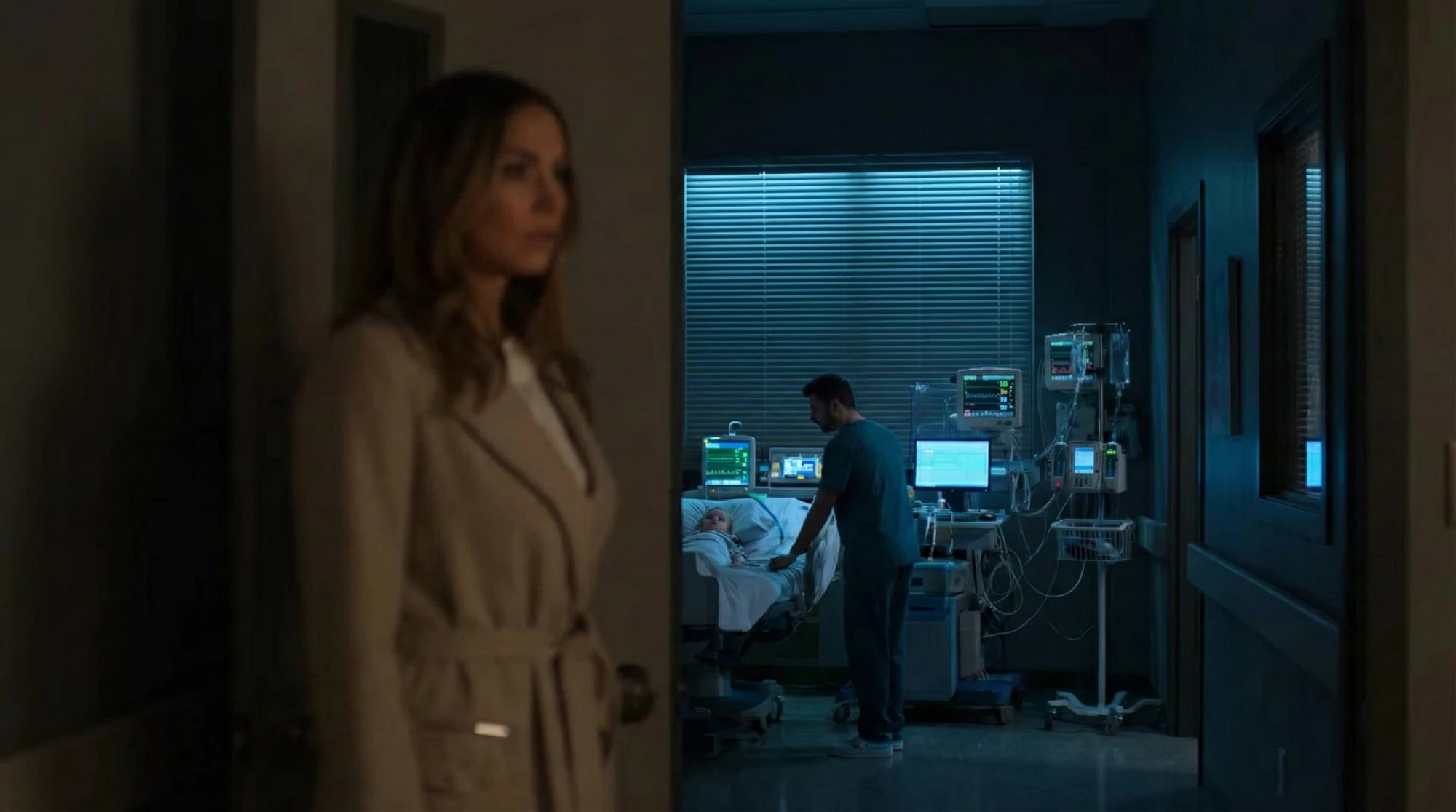
Victoria Ashford hadn’t spoken since the accident that killed her mother.
Three years of silence. Three years of the city’s best therapists, child psychologists, and specialists from London to Geneva. Nothing worked.
Her father, James Ashford, CEO of Ashford Industries, spent millions. Private clinics. Experimental treatments. Hypnotherapy. Art therapy. Music therapy with world-renowned professionals.
Victoria sat through it all like a statue. Eyes distant. Hands still. Silent.
“She’s protecting herself,” one therapist explained. “Trauma locked her voice away.”
James nodded, exhausted. He’d heard it before.
At home, their penthouse felt like a museum. Quiet dinners. No laughter. No arguments. Just the sound of silverware against plates and the hum of the city below.
Mrs. Chen, their housekeeper, watched Victoria color alone in her room every evening. “She used to sing constantly,” she whispered to James once. “Remember?”
He did. He remembered everything.
One Saturday, James took Victoria to a street fair in Brooklyn. His assistant suggested it—something different, something real.
They walked past food trucks and craft stalls. Victoria held his hand loosely, looking at nothing in particular.
Then the music started.
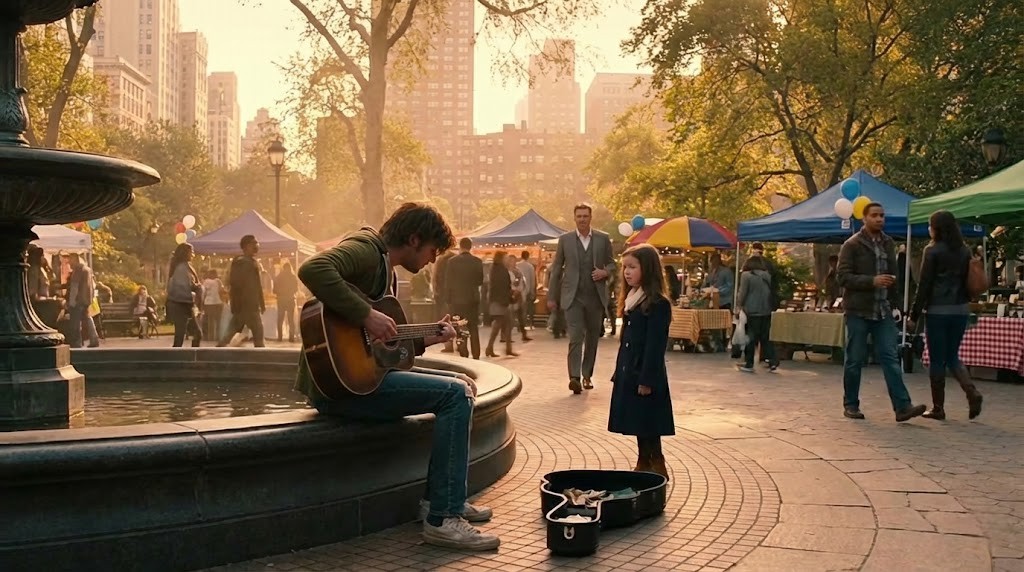
A young man sat cross-legged near the fountain, a battered guitar in his lap. He was maybe nineteen, twenty. Torn jeans. Worn sneakers. A cardboard sign read: Music for Hope.
He played a melody James didn’t recognize—simple, raw, honest.
Victoria stopped walking.
James felt her hand tighten around his. He looked down. Her eyes were fixed on the musician.
The young man noticed her staring. He smiled gently and shifted into a different song—slower, softer, almost like a lullaby.
Victoria’s lips parted.
James’s heart raced. “Victoria?”
She took a step forward. Then another. She stood right in front of the musician, trembling.
The young man stopped playing. “Hey,” he said quietly. “You okay?”
Victoria opened her mouth. “My mom used to sing that,” she whispered.
James gasped. Tears flooded his vision.
The musician’s eyes widened. “Really?”
Victoria nodded, tears streaming down her face. “Every night. Before bed.”
James dropped to his knees beside her, pulling her into his arms. She sobbed into his shoulder—deep, broken sounds she’d held inside for years.
“I’m sorry, Daddy,” she cried. “I’m so sorry.”
“You have nothing to be sorry for,” James choked out. “Nothing.”
The musician sat frozen, his guitar still in his hands.
James looked up at him through his tears. “What’s your name?”
“Marcus. Marcus Cole.”
“Marcus,” James said, his voice shaking. “I don’t know what you just did, but—thank you.”
Marcus shook his head slowly. “I didn’t do anything, man. That was all her.”
James stood, Victoria clinging to him. “Where do you live?”
Marcus hesitated. “Shelter on Atlantic Avenue. Sometimes.”
“Not anymore,” James said firmly. “Come with us.”
“What?”
“Please,” Victoria whispered, looking at Marcus. “Don’t go.”
Marcus stared at them both. “I… I don’t understand.”
“Neither do I,” James admitted. “But you gave me my daughter back. That’s enough.”
Marcus moved into the guest house that week. James hired him as Victoria’s “music companion”—a position he invented on the spot.
Victoria’s voice grew stronger daily. She sang in the mornings. Talked during meals. Laughed at Marcus’s terrible jokes.
“Why did you stop talking?” Marcus asked her once, gently.
Victoria was quiet for a moment. “Because when she died, it felt like my voice died too. Like if I stayed silent, maybe I could keep her close.”
“And now?”
“Now I know she’d want me to sing,” Victoria said. “Like you do. For hope.”
James’s board members thought he’d lost his mind.
“You hired a homeless kid off the street?” his CFO demanded.
“I hired the person who saved my daughter,” James replied coldly. “Meeting adjourned.”
His mother, Patricia Ashford, was more direct. “This is inappropriate, James. What will people think?”
“I don’t care what people think,” he said. “Victoria is speaking again. That’s what matters.”
Dr. Helen Morrison, Victoria’s primary therapist, came to observe. She watched Marcus and Victoria work through a song together, watched Victoria’s confidence bloom.
“This is extraordinary,” she admitted. “The emotional connection broke through where clinical methods couldn’t.”
James smiled. “Sometimes the best medicine doesn’t come from a prescription.”
Marcus revealed his story slowly. His parents died in a fire when he was sixteen. Foster care. Aged out at eighteen. Streets ever since.
“Music kept me alive,” he said simply. “Literally. People gave me enough to eat.”
James listened, heartbroken. “You’re nineteen years old. You should be in college.”
Marcus laughed bitterly. “With what money?”
“Mine,” James said. “Full scholarship. Juilliard, Berklee, wherever you want. And you live here while you study.”
Marcus stared. “Why would you do that?”
“Because talent like yours shouldn’t die on street corners,” James replied. “And because you’re family now.”
Victoria started lessons with Marcus—real lessons, structured but joyful. She performed at her school’s talent show. She joined the children’s choir. She smiled constantly.
One evening, James found Marcus on the guest house porch, guitar in hand, staring at the stars.
“Everything okay?” James asked.
Marcus nodded slowly. “I keep thinking this is a dream. That I’ll wake up under a bridge somewhere.”
“It’s not a dream,” James said. “You earned this. You gave me something money couldn’t buy.”
“I just played a song.”
“You gave me hope,” James corrected. “You showed me that miracles don’t always come from the places we expect.”
Marcus’s eyes filled with tears. “Thank you,” he whispered.
Six months later, Marcus enrolled at Berklee School of Music on full scholarship. He came home every weekend. Victoria called him her brother.
Patricia Ashford eventually apologized. “I judged too quickly,” she told Marcus stiffly. “You’ve been good for this family.”
Marcus smiled. “This family saved my life, ma’am. I’m the lucky one.”
One year after that day in Brooklyn, James organized a benefit concert. Marcus performed—not alone, but with Victoria singing beside him.
The song was the one from the fountain. The one that broke the silence.
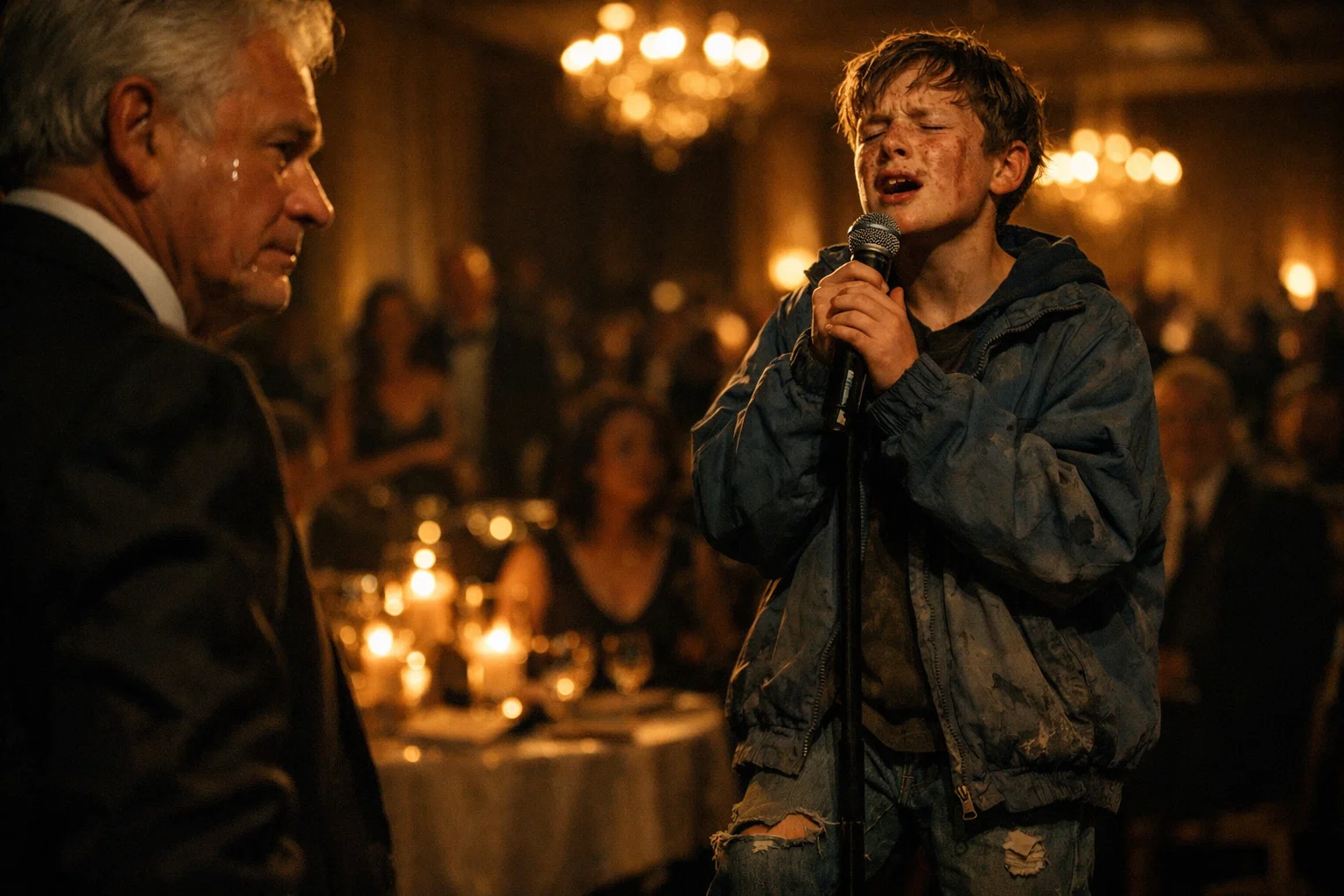
Victoria’s voice rang clear and strong. The audience wept. James stood in the wings, Mrs. Chen beside him, both crying openly.
“She’s flying now,” Mrs. Chen whispered.
“They both are,” James replied.
After the performance, Victoria hugged Marcus tight. “Thank you for coming into our lives.”
Marcus hugged her back. “Thank you for giving me a life worth living.”
That Christmas, the penthouse was full—Marcus, Victoria, Patricia, Mrs. Chen, Dr. Morrison, even some of Marcus’s friends from Berklee.
Laughter echoed through rooms that had been silent for too long. Music played. Victoria sang carols at the piano, Marcus accompanying her on guitar.
James raised his glass. “To second chances,” he said, voice thick with emotion. “To unexpected miracles. To the young man who taught us that sometimes the greatest gifts come from the most unlikely places.”
“And to family,” Victoria added, smiling at Marcus. “The family we choose.”
Marcus grinned, tears in his eyes. “To family.”
They drank together, the sound of joy filling every corner of the home.
Victoria never stopped singing. Marcus graduated top of his class and became a music therapist, working with traumatized children. James funded a foundation in his late wife’s name, providing music education to homeless youth.
And every Saturday, without fail, they returned to that fountain in Brooklyn—Marcus with his guitar, Victoria with her voice, both of them sharing hope with anyone who needed it.
The cardboard sign now read: Music Heals. Always.
Original fictional stories. AI-assisted creative content.