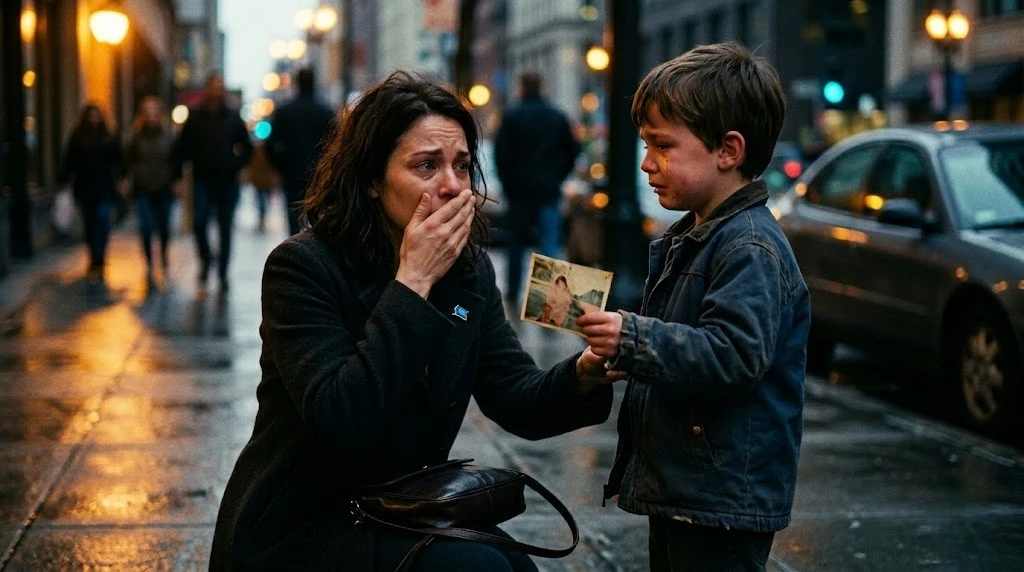
“Kelsey, your husband hit me with a baseball bat.”
It was 2:27 a.m. I was crossing the parking lot at Fort Meade, still in uniform after a twenty-four-hour shift, coffee in one hand and keys in the other.
My mother never called at that hour.
“Where are you, Mom?”
“Baltimore Central Police Station. Ryan told them I attacked him.”
My legs nearly gave out.
Nancy was seventy-one years old. She gardened, paid her own bills, rode public transportation alone. Ryan — my husband of fifteen years — was the man who carried groceries for neighbors, organized charity drives at church, and smiled in every family photo.
“Don’t sign anything. Demand an ambulance. I’m on my way.”
“I’m sorry, sweetheart. I never wanted to destroy your marriage.”
“You didn’t destroy anything.”
I made the drive in thirty-five minutes.
When I pushed through the station’s glass doors in full uniform, the room went quiet. A sergeant stood up immediately.
“Lieutenant Colonel Kelsey—”
“I’m seeing my mother first.”
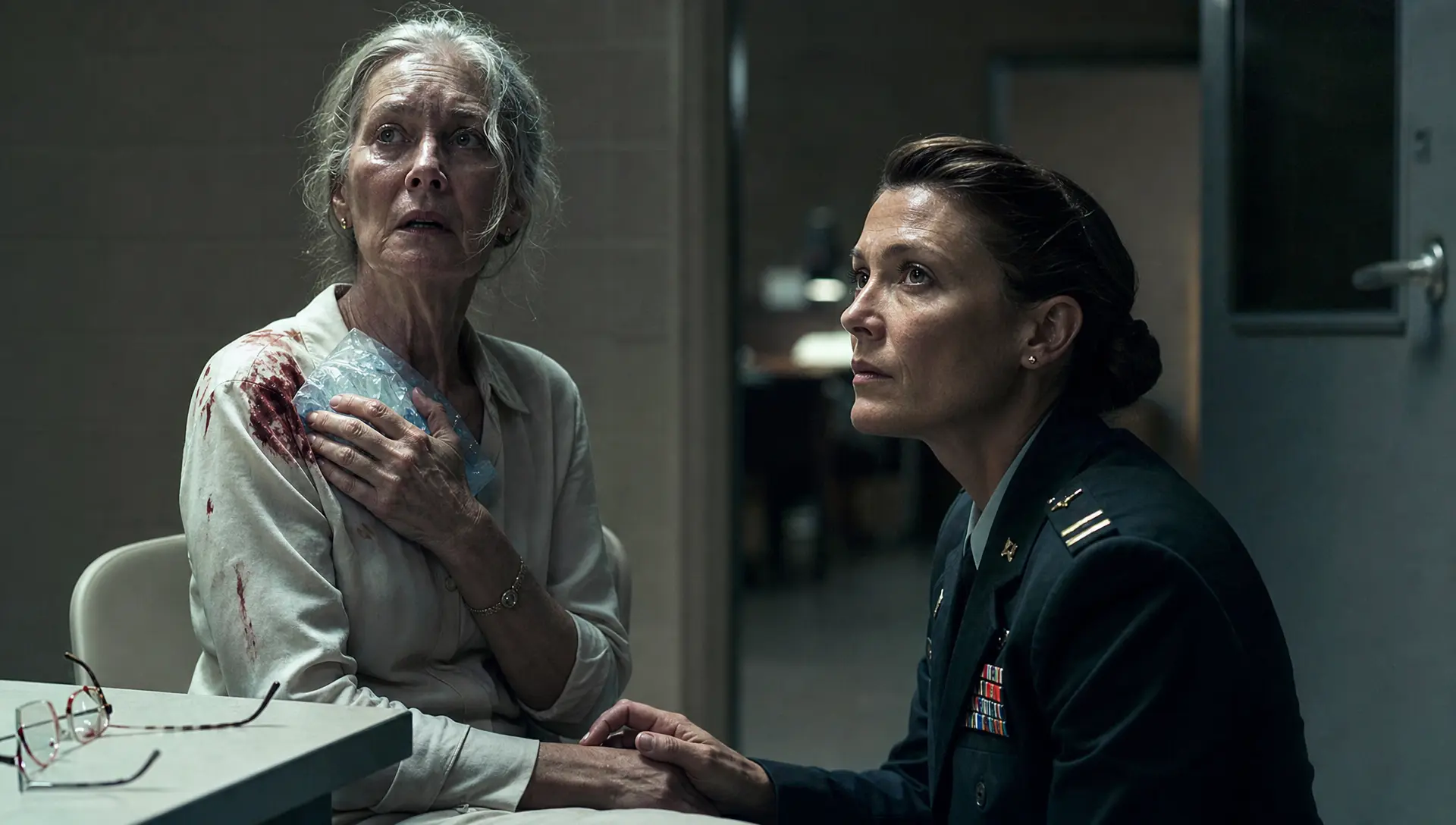
She was in an interview room, ice pack on her shoulder, dried blood on her blouse. Her glasses were broken. One lens was missing.
“I knew you’d come,” she whispered.
I turned to the nearest officer. “She needs paramedics. Now.”
Nobody argued.
While the paramedics wheeled her out, Sergeant Christopher led me into his office and opened the incident report. Ryan had told them my mother came at him with a fireplace poker. He claimed self-defense.
“Have you ever been to her house?” I asked.
“No.”
“There is no fireplace. She has electric heating. There is no poker.”
His expression changed.
He slid an evidence bag across the desk.
Inside was a shard of glass.
“Found embedded in the sole of your husband’s boot.”
I recognized the gold rim of my mother’s eyeglass lens.
If Ryan had been the victim — if he had never touched her — how had he stepped on her broken glasses?
That was the moment I stopped thinking about saving my marriage.
I requested copies of the initial statement, the evidence log, the 911 audio. I asked whether cameras had captured Ryan’s arrival and departure. I sealed my mother’s broken frames in a bag from my glove box and signed a hospital property note.
Paper first. Emotion later.
At the hospital, imaging confirmed fractured shoulder, cracked ribs, concussion protocol. Mom apologized again for the marriage.
“The marriage is not your debt to carry,” I told her.
By dawn I’d left a message for a civilian attorney named Ruiz who handled domestic violence and financial entanglement. In her office, I listed assets and the unease I had swallowed for years — Ryan’s private office, his irritation when Mom asked about “the business,” the statements that never appeared in joint folders.
Ruiz’s pen paused. “Any large insurance? Any company where he’s the only signatory?”
“He manages a consulting LLC. I’ve been on base. I didn’t dig.”
“Dig now,” she said. “Assault cases and money often share a drawer.”
The boot sole’s glass matched Mom’s lens under lab comparison.
The fireplace poker story collapsed in the supplemental report.
Charges moved from murky to specific.
The crime scene confirmed it: no poker, no fireplace — just an aluminum bat leaning against the trash bin outside her back door, as though Ryan had thought better of leaving it inside and not thought better enough.
Two neighbors had heard the sound of metal on something softer than metal.
At the hospital, Mom drifted in and out of the pain medication. Between drifts she said Ryan had talked about “papers” and “what Nancy thought she knew.” She hadn’t understood what he meant. She had only refused to agree that I needed protecting from my own mind.
That refusal had cost her a shoulder and two ribs.
I called Ryan once, recorded under Maryland’s rules. He answered with his church-potluck voice.
“Kelsey, your mother is confused. She came at me—”
“There is no fireplace poker,” I said. “There is glass from her lenses in your boot. There is a bat. Do not come to the hospital. Counsel only.”
I filed for legal separation and froze joint accounts.
Then Ruiz called with a deeper cut.
Ryan’s LLC held a beneficial interest in a commercial waterfront parcel worth millions if zoning held. Mom’s name appeared on an old witness affidavit from years back — something she’d signed at a kitchen table as a routine favor, without understanding the parcel’s later value.
A deposition was coming whether he liked it or not.
He hadn’t arrived at her house with pie to repair family.
He had arrived to test whether a seventy-one-year-old woman could be frightened off a paper trail.
Within a week the forensic accountant had traced the chain: Ryan’s consulting LLC fed a holding company; the holding company sat beside a development entity positioned for the waterfront parcel. Projected value sat in a range that made an aluminum bat look like a cheap tool for expensive silence.
Ryan surrendered on a quiet morning. I did not attend. His attorney released a statement about remorse and healing. I did not offer a counter-sermon.
The criminal track moved through motions. Evidence suppression attempts failed. Plea talks happened in rooms I was not required to enter.
Winter came.
Ryan accepted a plea that acknowledged the assault and the false report. Sentencing included incarceration within guidelines, restitution for medical costs, and a permanent no-contact order with Nancy. I attended the proceeding in dress uniform — not as a costume, but because it was simply who I was on a weekday morning.
Mom sat in the row behind the prosecution in a new pair of glasses.
When the factual basis was read aloud — pie, argument, aluminum bat, staged victimhood — Ryan stared at the table.
The kind smile had no camera left to find.
Outside the courthouse, his counsel spoke about healing. We walked past the microphones without stopping.
Ruiz squeezed my elbow. “Criminal track is done,” she said. “Civil still has miles.”
Those miles mattered. The development entity stalled under the weight of the arrest and the departure of partners with ethics clauses. The projected millions shrank under delay and disclosure. I felt no satisfaction — only the flat confirmation that motive had been real, and that Mom’s shoulder had been the cost of his risk management.
The divorce decree came in January.
Assets were divided under full disclosure. Ryan’s layered interests were treated as what the forensic work showed them to be. I kept the apartment near base, the accounts that were cleanly mine, and the right to breathe without a joint signature. He kept the consequences of the plea and the wreckage of a deal that had needed her silence.
I signed where Ruiz indicated. I did not write Ryan a letter.
Letters are for people who still share a future.
Mom asked me to help change her locks even though he was already barred. We replaced the cylinders together. She put the old keys in a drawer and then, after a moment, into the trash.
“I’m done giving him even metal,” she said.
I took the bag out myself.
Spring returned to her garden.
We planted tomatoes. She walked the whole garden path without a cane. At the fence she paused and looked at the rows of green and said quietly, “He didn’t take this.”
A year after the 2:27 a.m. call, Mom hosted a small birthday dinner — her rules, her guest list, no performances. I washed dishes while she directed with a wooden spoon.
When I left, she held my face in both hands the way she had when I was small.
“You believed me,” she said.
“I did.”
“That’s the whole of it.”
Driving back toward base, I passed the turnoff that could have led to the old joint life and did not take it.
The multimillion-dollar secret Ryan had tried to secure with aluminum had dissolved into litigation and the ordinary ruin of a man whose mask cracked under laboratory light.
My inheritance from that night was simpler:
A mother still alive to garden. A career still intact. A refusal to confuse community smiles with character.
At 2:27 a.m. years earlier, Nancy had whispered the truth into a phone while blood dried on her blouse.
She had been right to call.
And the boots had told the rest.
Original fictional stories. AI-assisted creative content.